



Extra Long Rug
An extra long rug spans narrow halls and staircases with extended rows of traditional motifs, bringing both historical depth and practical warmth to long spaces.
Extra Long Rug
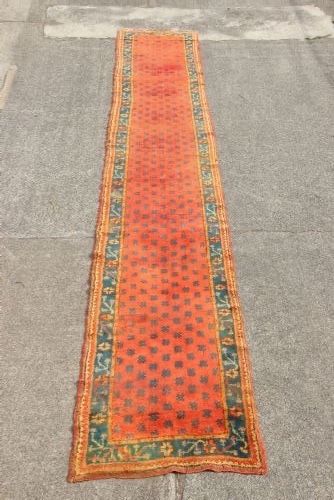
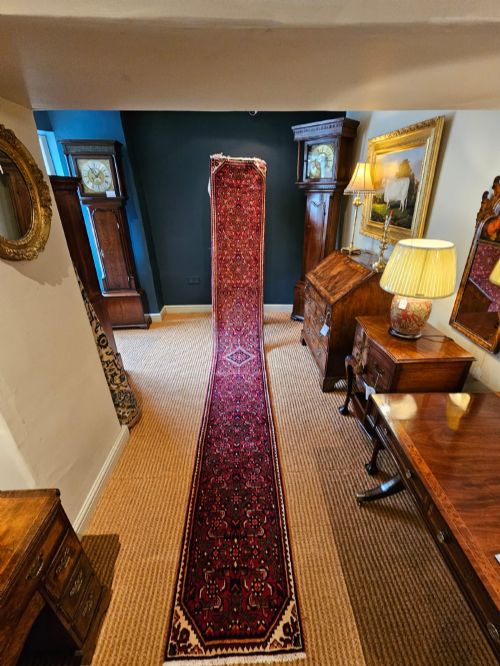
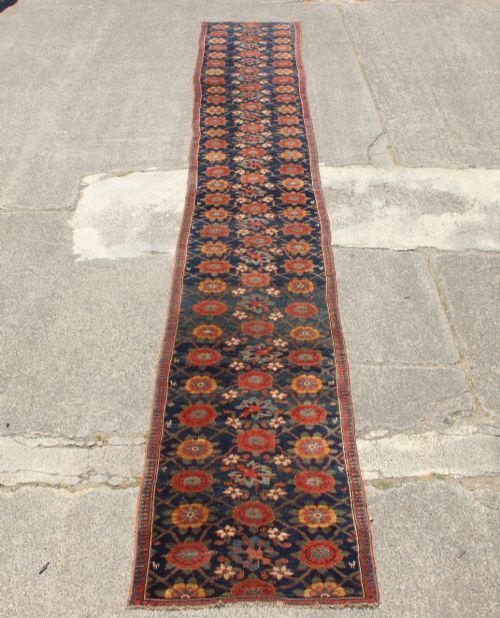
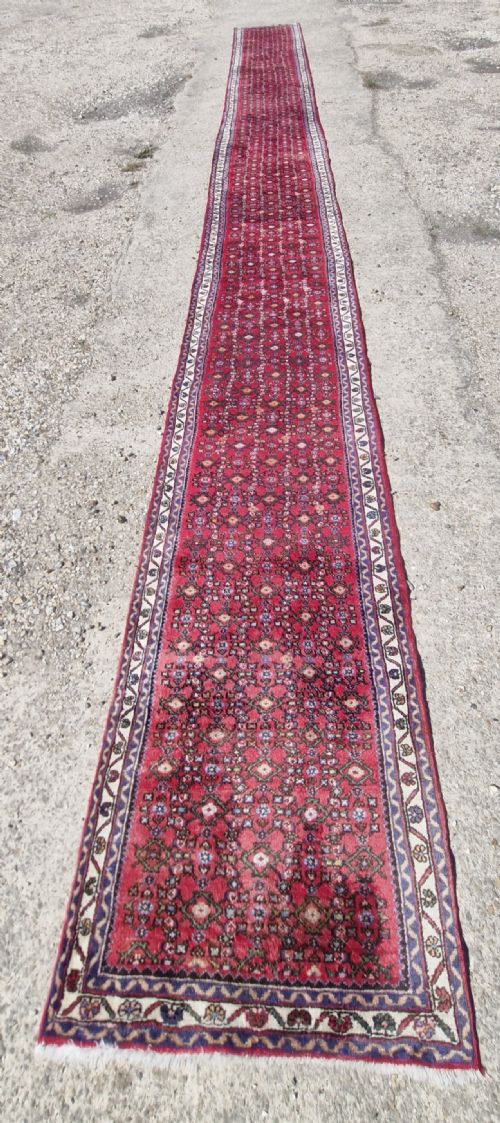
An extra long rug provides a narrow, extended format designed specifically for corridors, staircases, landings and long hallways. These pieces often measure well over four metres in length, stretching out narrow proportions to suit substantial architectural spaces.
The selections available here draw on traditional styles including Persian Heriz, Kurdish Tribal, Moroccan Berber, Ottoman and Turkish Oushak designs. Buyers frequently encounter formats ranging from traditional wool runners to extensive kilim runners dating across the nineteenth and twentieth centuries.
Materials and construction
These floor coverings utilise natural fibres, primarily wool and cotton, woven into durable structures that withstand heavy foot traffic in domestic corridors. Weavers construct these pieces using traditional hand-knotted and flatweave techniques passed down through generations in tribal and village workshops.
The reliance on sturdy wool piles and cotton foundations ensures structural stability across extraordinary lengths, maintaining straight edges and flat surfaces down spans reaching over ten metres.
Extra Long Rug Retail Price Guide 2026
Typical asking prices for extra long rug among the pieces listed under this phrase on Sellingantiques today, from the lower quarter to the upper quarter. They describe what is for sale here now, not the wider market.
Listings feature pieces spanning from the mid-nineteenth century through to the mid-twentieth century, constructed entirely from natural wool and cotton.
Determining quality in long formats
Quality in an extra long rug rests upon the precision of the geometry and the consistency of the narrow width across metres of continuous weave. Maintaining straight parallel borders over significant lengths demands immense skill from the weaver.
The integrity of the wool, the saturation of the natural dyes and the crispness of the tribal or traditional patterns elevate certain examples above standard utilitarian runners. Superior pieces balance dense pile construction with harmonious colour distribution from end to end.
The Extra Long Rug Glossary
- Runner
- A long, narrow carpet format traditionally used in hallways, corridors and on staircases. These pieces measure significantly longer than their width to fit architectural passageways.
- Kilim
- A flatweave carpet produced without a pile by tightly interlacing warp and weft threads. This technique creates a lightweight, reversible textile with sharp geometric patterns.
- Heriz
- A style of Persian carpet originating from the Northwest region, known for bold geometric medallions and robust structural durability. These pieces often feature strong rectilinear designs.
- Oushak
- A traditional Turkish rug style celebrated for softer colour palettes and large-scale floral or geometric motifs. These carpets originate from historic weaving centres in western Anatolia.
- Kelleh
- A large format Persian carpet proportioned longer than a standard room-size rug but wider than a typical corridor runner. These grand pieces suit substantial reception spaces.
Extra Long Rug: Frequently Asked Questions
Where should I place an extra long rug?
These extended formats suit long hallways, wide corridors, grand staircases and expansive landings where standard rugs fall short. They protect high-traffic wooden floors while visually connecting separate rooms.
Ensure you measure the walkway carefully, leaving a uniform border of exposed floorboards on either side to showcase the proportions properly.
How do I maintain an antique wool runner?
Regular gentle vacuuming without a rotating brush roll prevents dust and grit from settling deep into the wool fibres. Using a quality underlay prevents slipping and cushions the weave against hard flooring.
Professional cleaning by specialists familiar with antique textiles ensures the natural dyes and wool pile remain intact over decades of domestic use.
What styles are common in long runners?
The selection includes traditional Persian designs such as Heriz, Malayer, Bakhtiari and Kurdish tribal patterns alongside Moroccan Berber and Turkish Oushak flatweaves. Each tradition brings distinct geometric layouts or medallion structures to the narrow format.
Village and nomadic weavers adapted their larger carpet motifs to fit these restricted widths, creating rhythm through repeated borders and central fields.
How do I determine the age of these pieces?
Age is assessed through structural characteristics, dye types, wool quality and stylistic motifs typical of nineteenth and twentieth-century production. Examining the back of the weave reveals the tension, knot density and material preparation of the period.
Comparing the motifs against documented regional styles helps place the piece within a specific decade or era of manufacture.