

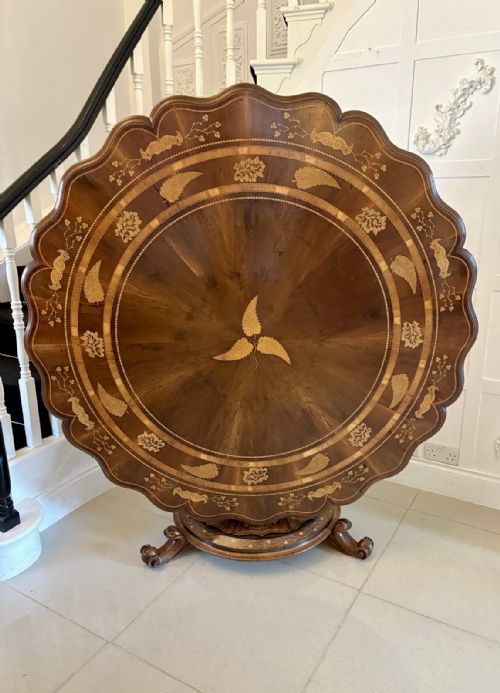


Exhibition Quality Table
An exhibition quality table represents the pinnacle of 19th-century and early 20th-century cabinet-making, offering exceptional craftsmanship and fine timber work for the discerning collector.
Exhibition Quality Table
An exhibition quality table encompasses a diverse range of forms including centre tables, card and games tables, library tables, and writing desks. These pieces span the Victorian and Edwardian periods, frequently demonstrating sophisticated revival styles or specific regional traditions such as Killarney ware.
Buyers encountering this category will find elaborate side tables and console tables alongside functional dining furniture. The selection draws heavily upon mid-19th-century manufacturing prowess, reflecting the competitive nature of international exhibitions and high-end retail commissions.
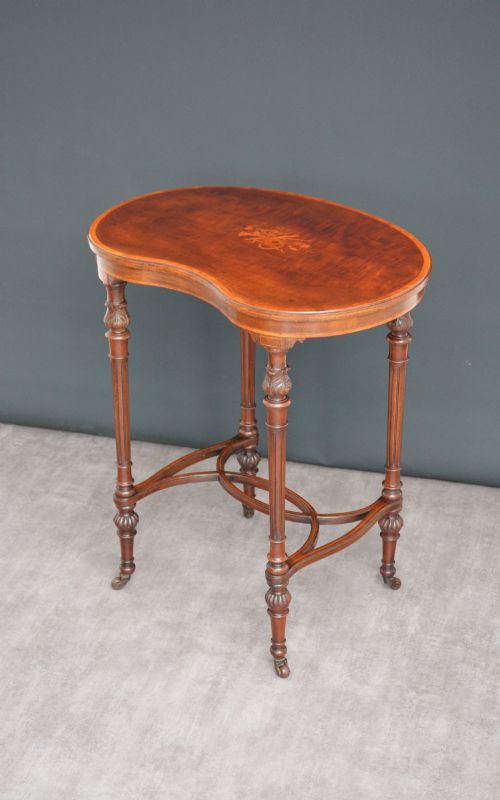
Many items within this group showcase complex multi-timber marquetry or sculptural carved elements like mirror backs. The forms range from compact kidney-shaped side pieces to substantial round entry hall tables intended to dominate a reception space.
Materials and construction methods
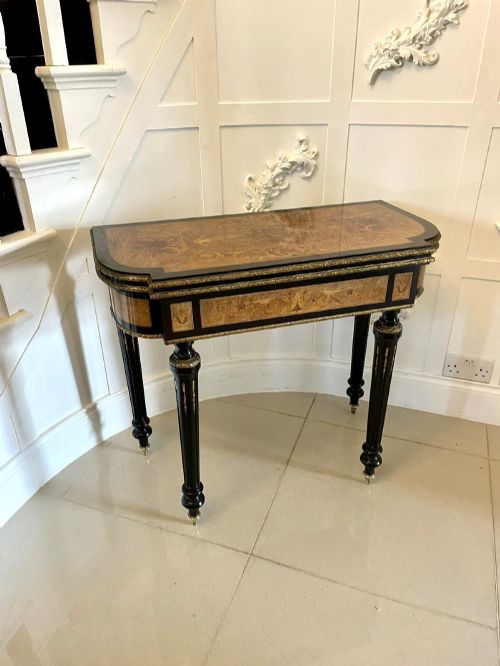
Cabinet-makers utilised dense figured hardwoods including mahogany, burr walnut, rosewood, and satinwood, often enhanced by intricate marquetry in contrasting woods like yew and sycamore. Metal mounts in ormolu and cast brass frequently accent the structural framing.
Advanced joinery underpins these works, supporting elaborate decorative programmes such as French-inspired gilt-bronze mounts and fine floral or geometric wood inlay. Surface treatments relied on traditional hand-polished finishes to accentuate the natural grain patterns of exotic veneers.
Exhibition Quality Table Retail Price Guide 2026
Typical asking prices for exhibition quality table among the pieces listed under this phrase on Sellingantiques today, from the lower quarter to the upper quarter. They describe what is for sale here now, not the wider market.
Listings feature woods including mahogany, walnut, rosewood, burr walnut, satinwood, kingwood, and coromandel.
Distinctions in execution
The degree of refinement in the carved ornamentation and the precision of the marquetry cutting dictate the standing of a piece. Finer examples display meticulous alignment in complex multi-timber inlay and deeply undercut, crisp wood carving rather than superficial surface decoration.
The choice of primary timber and the selection of highly figured veneers also separate standard production from superior output. Integration of high-grade Ormolu mounts and well-documented atelier attribution further elevate the standing of a specific work.
Collingson & Lock·George Faulkner Armitage·Marsh, Jones & Cribb·Pietro Ferrario·Jackson & Graham·Gillows of Lancaster·Henry Dasson
The Exhibition Quality Table Glossary
- Marquetry
- Decorative veneer work forming pictures or geometric patterns by fitting together small pieces of different woods. This technique requires immense skill to achieve seamless joints across curved or flat surfaces.
- Ormolu
- Gilt-bronze mounts applied to furniture for decorative effect. The metal is cast, chased, and gilded to provide metallic contrast against dark exotic woods.
- Burr Walnut
- Timber taken from a tree growth featuring intricate, swirling grain patterns highly prized for luxury cabinet work. It is typically sliced into thin veneers for decorative table tops.
- Whatnot
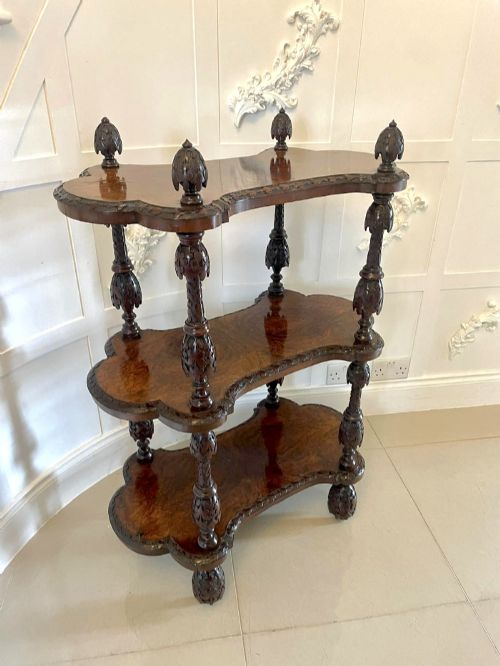
- A piece of freestanding furniture with multiple open shelves for displaying objects. These often feature elaborate turned supports and fine fretwork.
- Console Table
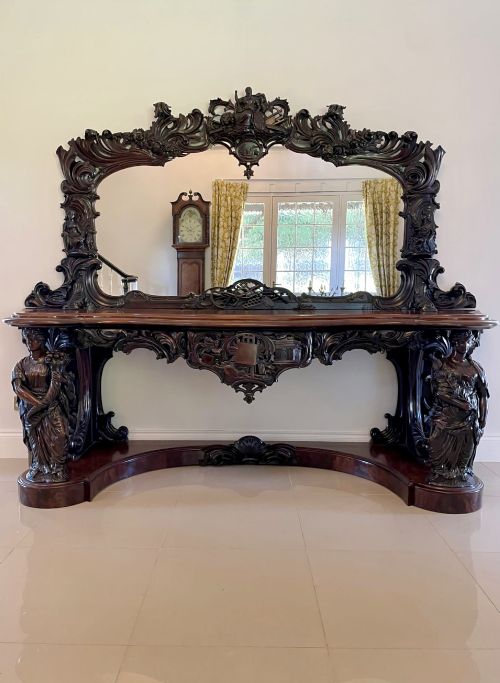
- A table designed to be fixed against a wall, frequently supported by decorative brackets or front legs. They often incorporate large mirror backs in Victorian iterations.
Exhibition Quality Table: Frequently Asked Questions
What defines an exhibition quality table?
These pieces represent the highest standard of Victorian and Edwardian cabinet-making, often created for international trade shows or luxury retail showrooms. They distinguish themselves through superior timber selection, intricate marquetry, and advanced decorative techniques.
Craftsmen spared no expense in their construction, utilising exotic veneers, hand-chased ormolu mounts, and sculptural carving. This sets them apart from standard domestic furniture of the same period.
Where should I place a centre table?
A centre table functions best as a focal point in a spacious room, such as an entrance hall or a principal drawing room. Because these pieces are finished on all sides, they allow for 360-degree viewing and work independently of walls.
Ensure the scale of the table allows for comfortable movement around it. Placing a central decorative object on top can help anchor its visual weight in the space.
How do I care for antique marquetry?
Protect delicate wood inlay by keeping the table away from direct sunlight and heat sources, which cause veneers to dry out and lift. Regular dusting with a soft, dry cloth helps maintain the finish without introducing moisture.
Apply a microcrystalline wax periodically to nourish the wood and protect the surface from minor spills. Avoid silicone-based polishes that can permanently alter the traditional patina.
How do I identify the period of a table?
Dating relies on examining the secondary timbers used in the internal framing, the style of the joinery, and the overarching design aesthetic. Mid-19th-century pieces often favour heavy mahogany or rosewood with revival motifs, whilst later Victorian works introduce lighter satinwood or elaborate marquetry.
Cabinet-makers sometimes incorporated signatures, stamps, or paper labels beneath the carcase. Comparing the construction methods with documented pieces from known workshops provides further clarity on the date of manufacture.