

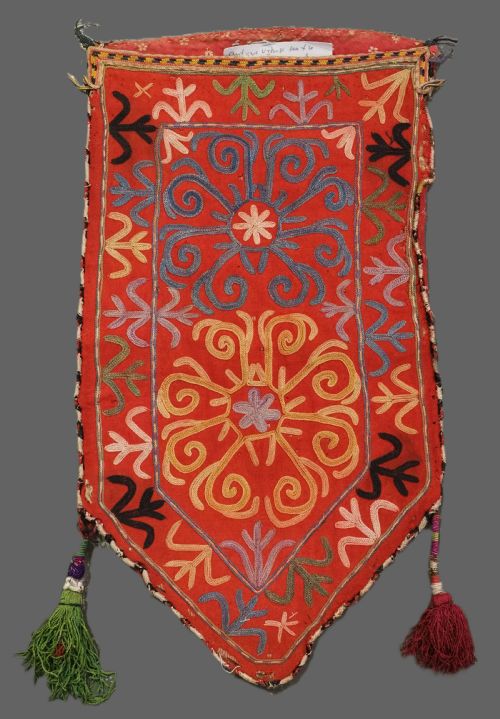


Ethnic Textile Bag
An ethnic textile bag carries the bold geometry and tactile history of nomadic and tribal weaving traditions straight into a modern room.
Ethnic Textile Bag
When you search for an ethnic textile bag, you encounter utilitarian wall hangings, small purses, and horse-cover fragments originating from Central Asia and Persia. These pieces include Uzbek Lakai uut kapilgich examples, Yomut and Teke Turkmen torba sections, and Afshar nomadic saddle-bag faces.
The objects most frequently met on this page span the mid-nineteenth century to the early twentieth century, reflecting nomadic and tribal domestic life. Makers fashioned these items for functional storage, ceremonial dowry display, or personal carriage rather than purely decorative display.
Forms range from small double-sided silk ikat purses to large hand-woven bag face cushions and double-faced wall hangings. Each item demonstrates the distinct visual vocabulary of its specific tribe or regional workshop across Turkmenistan, Uzbekistan, and Southern Persia.
Materials and construction
Weavers relied upon locally sourced natural fibres, combining wool, hand-spun wool, cotton, and silk to build resilient ground fabrics and intricate pile surfaces. Artisans frequently integrated glass beads into the design structure for added texture and visual emphasis.
Techniques varied from dense pile weaving and flat-woven nomadic structures to luminous silk ikat dyeing and needlework embroidery. These methods ensured the textiles endured the rigorous demands of nomadic transport and daily utility.
Ethnic Textile Bag Retail Price Guide 2026
Typical asking prices for ethnic textile bag among the pieces listed under this phrase on Sellingantiques today, from the lower quarter to the upper quarter. They describe what is for sale here now, not the wider market.
Nomadic weavers packed these vibrant bags with everything from tea bricks to tent pegs, turning everyday storage into portable art.
Assessing quality in tribal weaving
Quality rests upon the tightness of the weave, the clarity of the tribal iconography, and the integrity of the natural dyework. Superior examples display precise symmetry in geometric motifs and secure structural foundations across the cotton or wool backing.
The refinement of needlework and the complexity of supplementary embellishments, such as glass bead placement or silk ikat patterning, distinguish exceptional pieces. Condition and the preservation of original edges and borders further define the standing of a textile.
The Ethnic Textile Bag Glossary
- Torba
- A small Turkmen bag used for storage inside a yurt or tent, often featuring intricate tribal guls and border patterns.
- Ikat
- A dyeing technique where yarns are tie-dyed before weaving to create characteristic feathered edge designs in silk or cotton.
- Lakai
- An Uzbek tribal group renowned for dynamic, asymmetrical embroidered wall hangings and utility bags utilising bright silk threads.
- Chuval
- A large storage bag produced by Turkmen tribes, traditionally part of a bride's dowry furnishings.
- Gul
- A repeating medallion or octagonal motif central to the design systems of Central Asian and Turkmen tribal rugs and bags.
Ethnic Textile Bag: Frequently Asked Questions
What is an ethnic textile bag?
These items are functional woven or embroidered pieces created by tribal groups in Central Asia and Persia for storage, travel, or domestic decoration.
They include utilitarian horse-cover fragments, storage sacks, small purses, and bag faces produced during the nineteenth and early twentieth centuries.
How were these bags used originally?
Nomadic and village communities utilised them inside tents and yurts to store household goods, bedding, or personal possessions.
Larger pieces like torbas and chuvals served as functional dowry items, whilst smaller purses and bag faces accommodated daily transport needs.
How do I care for an antique textile?
Protect fragile wool, silk, and cotton fibres from direct sunlight and excessive moisture to prevent fading and material degradation.
Display wall hangings using professional support systems that distribute weight evenly across the entire upper edge.
How can I tell different tribal styles apart?
Tribes expressed distinct cultural identities through specific geometric motifs, colour palettes, and structural weaving techniques.
For instance, Turkmen pieces often feature repeating octagonal guls, whilst Lakai Uzbek items showcase energetic embroidered needlework.