



Etched Spirit Bottle
An etched spirit bottle brings Victorian and Edwardian craftsmanship to the table, offering a functional vessel that holds spirits while displaying delicate wheel-cut floral patterns.
Etched Spirit Bottle
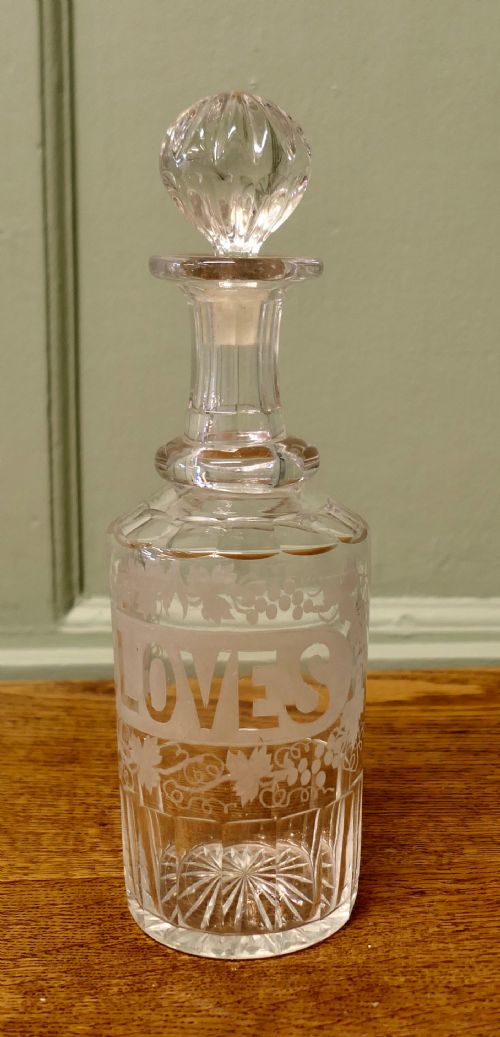
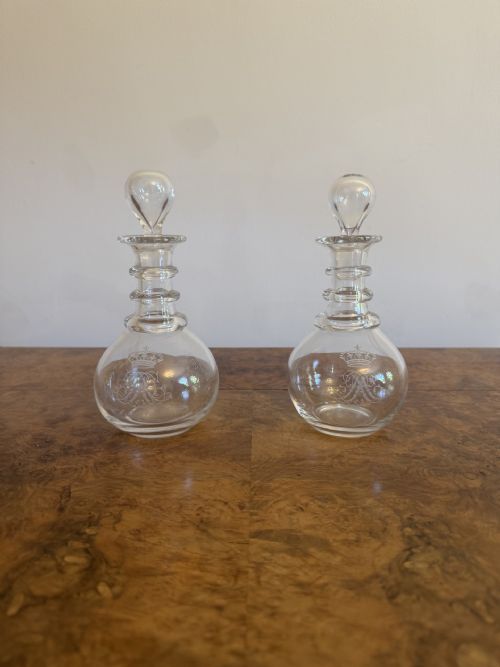
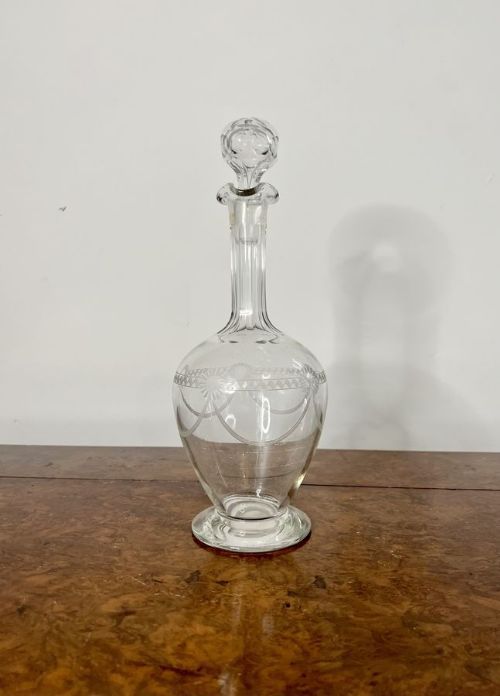
An etched spirit bottle generally takes the form of a decanter or perfume bottle dating from the Victorian and Edwardian eras. These containers serve to hold and pour liquor or scent while adding a decorative element to a sideboard or tray.
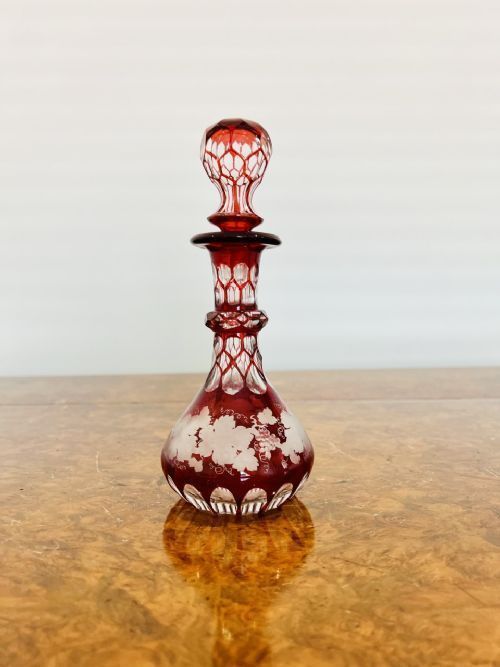
The versions most commonly met on this page include clear and ruby glass decanters featuring floral etching, often paired with matching stoppers. Some examples incorporate silver mounts or collars to finish the neck.
Makers and origins span British Victorian production alongside French pieces such as those by Orfèvrerie Produx Saint Hilaire. Forms range from tall cut glass shapes to hourglass silhouettes.
How they were made
Glassmakers utilised lead crystal and clear or ruby glass, blowing and shaping the material by hand before applying surface decoration. Cut glass techniques created faceted bodies that catch the light.
The ornamentation relied on wheel-engraving and etching to press floral motifs into the glass surface. Silversmiths then added cast silver mounts, figurine tops, or collars to complete the vessels.
Listings span the Victorian and Edwardian periods, stretching from eighteen-sixty to nineteen-hundred, alongside pieces created later than nineteen-sixty.
What varies in quality
The distinction between tiers rests upon the depth and precision of the glass cutting and the crispness of the floral etching. Heavier lead crystal bodies with substantial stoppers indicate finer manufacture than lighter, plain glassware.
The presence of hallmarked silver mounts and detailed figurine tops elevates a piece above standard domestic decanters. Overall balance, glass clarity, and intact matching stoppers determine the desirability of each bottle.
The Etched Spirit Bottle Glossary
- Decanter
- A vessel used for holding and serving alcoholic spirits. These glass containers usually include a fitted stopper to preserve the contents.
- Lead crystal
- A type of glass containing lead oxide, which increases weight, brilliance, and clarity. This material allows for deeper and sharper cutting.
- Ruby glass
- Glass coloured red by the addition of gold or copper compounds during melting. It appears frequently in Victorian decanters.
- Stopper
- The glass or metal plug inserted into the neck of a bottle to seal the contents. Original matching stoppers add significantly to the integrity of the piece.
- Silver collar
- A metal band fitted around the neck of a bottle, sometimes bearing silver hallmarks. These collars often accompany Edwardian and later glass vessels.
Etched Spirit Bottle: Frequently Asked Questions
What is an etched spirit bottle used for?
These bottles serve primarily to hold, decant, and pour spirits such as whisky or brandy on a dining table or sideboard. They combine practical storage with decorative display.
Historically, households used them to transfer liquor from plain bulk containers into more presentable vessels for guests.
How do I date an antique glass decanter?
Dating relies on examining the manufacturing techniques, such as hand-blown pontil marks, the depth of the cut glass, and the overall Victorian or Edwardian style. Silver mounts often carry hallmarks with specific date letters.
Comparing the shape and decorative motifs to documented period pieces helps narrow down the decade of production.
Are ruby glass decanters rare?
Ruby glass examples appear less frequently than clear glass versions in standard domestic collections. The rich red colour required specific mineral additives during the glassmaking process.
Pairs of ruby glass decanters hold a particular appeal for collectors seeking matching sets.
How should I clean an old glass decanter?
Cleaning requires lukewarm water and mild detergent, avoiding sudden temperature changes that can crack old glass. Residue inside the bottle responds best to specialised cleaning beads rather than harsh abrasives.
Silver collars must be kept dry and polished gently with a cloth to protect the surrounding glass.
Do antique decanters always have stoppers?
Many survive with their original stoppers, but replacements occur frequently due to breakage over the decades. A matching stopper that fits snugly and shares the same glass tint or cut pattern maintains the piece.
Collectors prefer decanters that retain their original fitted stoppers.