




Etched Green Glass Vase
These etched green glass vase examples combine naturalistic plant motifs with rich coloured glass, bringing organic Art Nouveau design straight into your room.
Etched Green Glass Vase
When you search for an etched green glass vase, you encounter decorative vessels shaped by turn-of-the-century European glassworks. The selection on this page centres predominantly on early twentieth-century and late nineteenth-century productions, particularly those associated with the Art Nouveau movement.
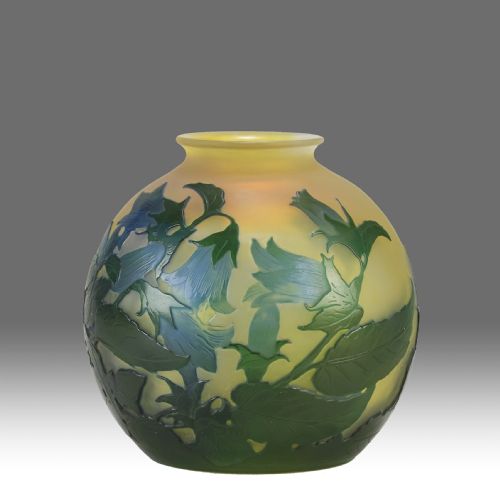
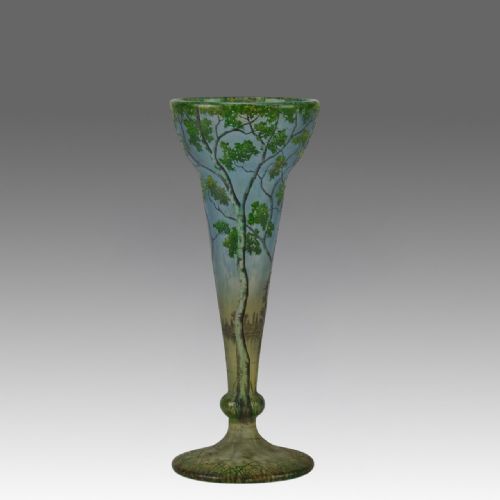
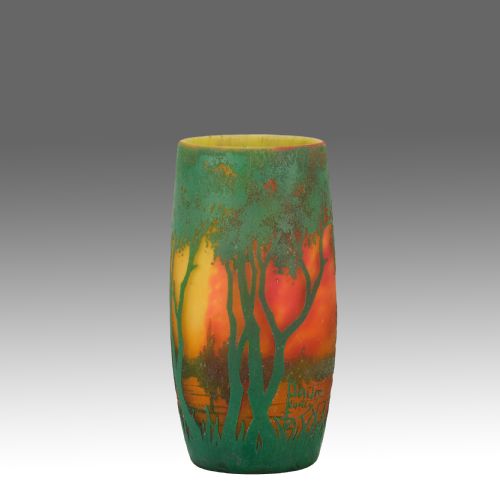
Most pieces you meet here belong to the cameo glass tradition, where layers of contrasting glass are carved away to reveal intricate botanical subjects. Plant themes dominate the forms, showing campanulas, cornflowers, oak leaves, acorns, landscapes, blackberries, and floral botanica.
Makers from this era utilised acid-etching alongside wheel-carving to achieve deep relief and tonal variation across the green ground. These objects function as expressive display pieces rather than utilitarian vessels, capturing the naturalist sensibilities of their period.
How they were made
Glassmakers built these vessels using multiple layers of coloured glass fused together while hot, creating distinct strata for the background and the design. Cameo glass technique required immense skill to carve through the outer layers without breaching the delicate green body underneath.
Workshops employed acid-etching to eat away unwanted surface areas rapidly, followed by hand-finishing with wheels and engravers to sharpen details. Artisans frequently enhanced the composition using enamel highlights and gold leaf details applied directly onto the etched surface.
If you look closely at the botanical titles, blackberries and acorns sit alongside delicate campanulas and cornflowers in this miniature glass forest.
What varies in quality
Quality rests upon the depth of the carving and the precision with which the acid and wheel define the botanical motifs. Superior examples display crisp relief where the foliage stands out clearly from the textured background without blurring or loss of control.
The sophistication of the colour palette also separates standard production from exceptional work, as shaded glass gradients create atmospheric depth. Furthermore, the presence of supplementary hand-applied enamel or gold leaf signals greater workshop investment in the finished piece.
Emile Gallé·Daum Frères·Baccarat
The Etched Green Glass Vase Glossary
- Cameo Glass
- A vessel formed of two or more distinct layers of fused glass where portions of the outer layer are carved away to create a raised design. This technique demands exceptional control by the glassblower and cutter.
- Acid-Etched Glass
- Glass exposed to hydrofluoric acid to eat away the surface and create matte textures or shallow patterns. The process allows for intricate repeating backgrounds that would take excessive time to cut by hand.
- Frosted Glass
- Glass treated to create a translucent, matte surface finish rather than a transparent sheen. It softens the light passing through the vessel and highlights the carved details.
- Enamelled Glass
- Glass decorated with melted glass-based paints fused to the surface during a secondary firing. This adds vibrant polychrome colour to specific parts of the botanical design.
- Gold Leaf
- Extremely thin sheets of beaten gold applied to portions of the glass surface to provide metallic accents. It catches ambient light and brings warmth to the green glass tones.
Etched Green Glass Vase: Frequently Asked Questions
What periods do these vases come from?
The pieces seen here originate primarily from the late nineteenth century and the early decades of the twentieth century. This timeframe captures the height of the Art Nouveau movement in European glass production.
Dates cluster heavily around eighteen ninety to nineteen twenty, reflecting the most active years for cameo glass experimentation and production.
Where should I display my vase?
Place your vessel near a natural light source such as a windowsill or a well-lit mantelpiece so illumination can pass through the translucent green glass. Good lighting reveals the layered depth of the cameo carving and any subtle enamel work.
Keep the piece out of high-traffic areas where it might be knocked, as these decorative vessels require stable placement away from everyday movement.
How do I care for antique glass?
Dust your vase gently with a soft, dry microfibre cloth to prevent the accumulation of particles on textured or carved surfaces. Avoid harsh chemical cleaners or abrasive scouring pads that might damage delicate enamel or gold leaf details.
If washing is necessary, use lukewarm water with mild soap and dry immediately with a lint-free cloth to prevent water spots.