



Etched Glass Bowls
Etched glass bowls are tactile vessels of light and pattern, sought after for their refined surface detail and period character.
Etched Glass Bowls
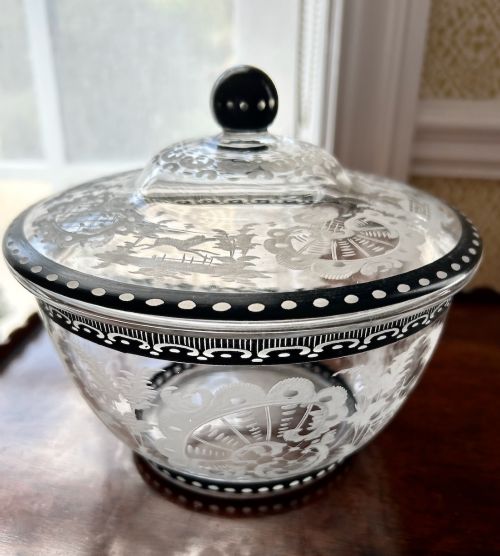
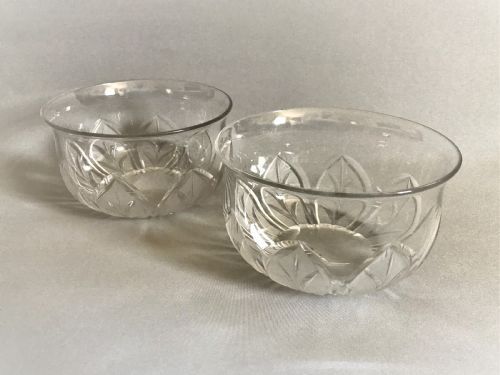
When you search for etched glass bowls, you encounter a range of forms spanning the Victorian era into the Art Deco period. These vessels include decorative table centrepieces, pedestal tazzas, and finger bowls designed for dining rituals.
The Victorian examples frequently display geometric motifs like the Greek key pattern or floral arrangements, often combined with cut glass elements. Later twentieth-century pieces shift toward French Art Deco designs and Bohemian colour overlays.
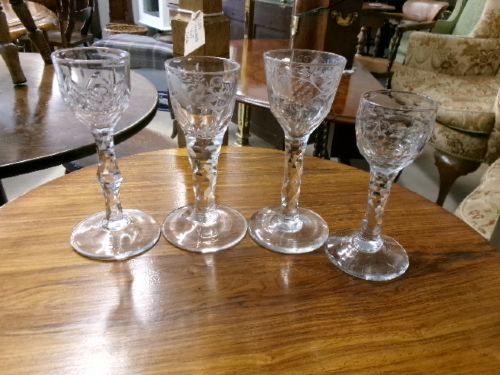
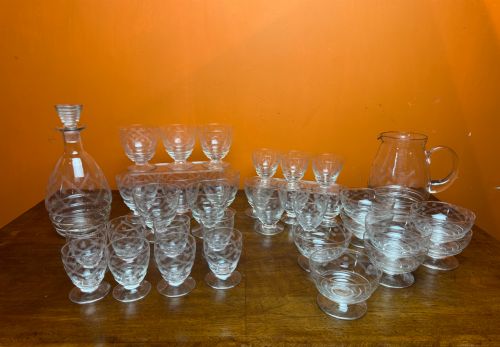
You are most likely to meet Victorian finger bowls and pedestals on this page, alongside sets of rinsers and stemmed drinking glasses featuring engraved decoration.
How they were made
Makers utilised clear glass, lead crystal, and frosted glass, occasionally pairing them with brass, copper, or silver-plated mounts. The body of the vessel was blown or moulded before artisans applied surface decoration.
Techniques involved wheel-engraving and acid-etching to cut patterns into the material, creating contrast between polished and frosted surfaces. Overlay pieces involved casing one colour of glass over another to expose contrasting tones through carving.
Etched Glass Bowls Retail Price Guide 2026
Typical asking prices for etched glass bowls among the pieces listed under this phrase on Sellingantiques today, from the lower quarter to the upper quarter. They describe what is for sale here now, not the wider market.
Black Forest bears occasionally keep watch over the crystal, reminding us that Victorian dining tables appreciated a touch of the wild woods.
What varies in quality
The distinction between tiers rests upon the crispness of the wheel engraving and the weight of the crystal. Finer pieces demonstrate precision in the depth of the cut and clarity in the metal of the glass.
Design complexity also separates standard production from superior examples, particularly where multi-layered colour overlays or intricate animal and floral subjects demand advanced proficiency from the artisan.
Walker & Hall·Paul Nicolas·Baccarat
The Etched Glass Bowls Glossary
- Finger bowl
- A small bowl filled with water used for rinsing fingers between courses at formal dinners. These often feature matching etched or cut patterns.
- Tazza
- A low pedestal bowl or cup used for serving fruit or sweets on a table. The form elevates the etched display above the tablecloth.
- Epergne
- A large table centrepiece featuring a central bowl with branching holders for fruit, flowers, or smaller vessels. They frequently combine glass with silver plating or carved wood.
- Cameo glass
- A method of glass-making where multiple layers of different colours are fused together and carved away to create a raised design. This technique requires considerable patience and skill.
Etched Glass Bowls: Frequently Asked Questions
What are etched glass bowls?
These pieces are decorative and functional glass vessels featuring surface designs created through acid or mechanical abrasion. They range from small Victorian finger bowls to large centrepieces.
Craftsmen produced them across multiple decades, adapting patterns from classical Greek motifs to botanical illustrations and modernist geometry.
How were etched bowls used?
Victorian examples generally served practical dining functions, such as holding water for rinsing fingers or presenting sweetmeats and fruit during formal meals. Table centrepieces and tazzas stood in the middle of the dining arrangement for display.
Later twentieth-century versions functioned primarily as decorative interior objects or lighting components.
How can I tell periods apart?
Victorian pieces frequently display heavy lead crystal, cut glass elements, and traditional motifs like fruiting vines or Greek keys. Edwardian and Arts and Crafts examples often embrace lighter structural forms.
Art Deco and later twentieth-century items introduce stylized animal decoration, cameo glass techniques, and streamlined profiles.