



Etched Cranberry Shade
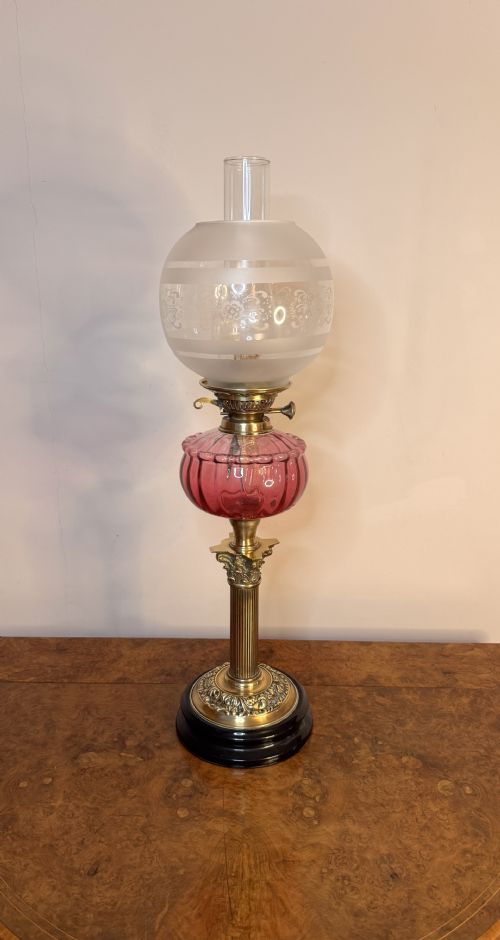
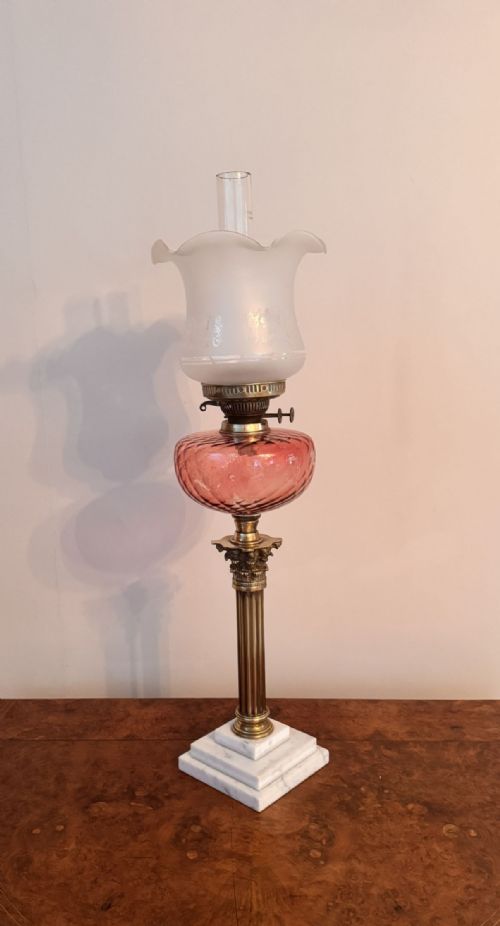
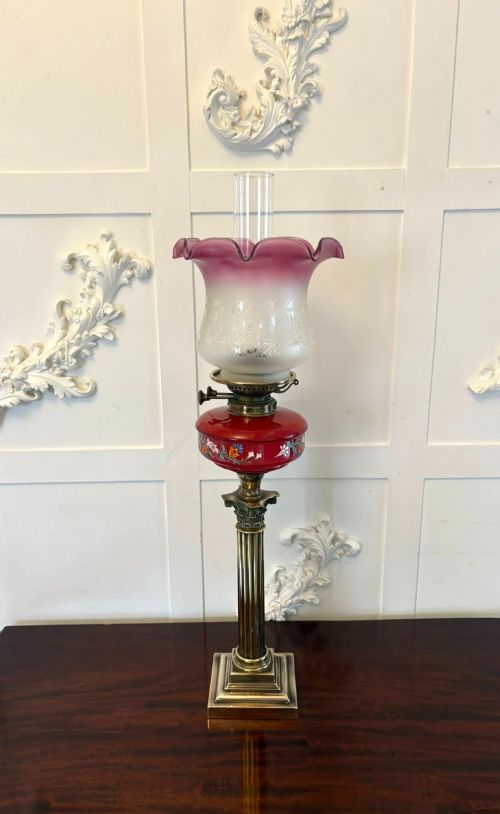
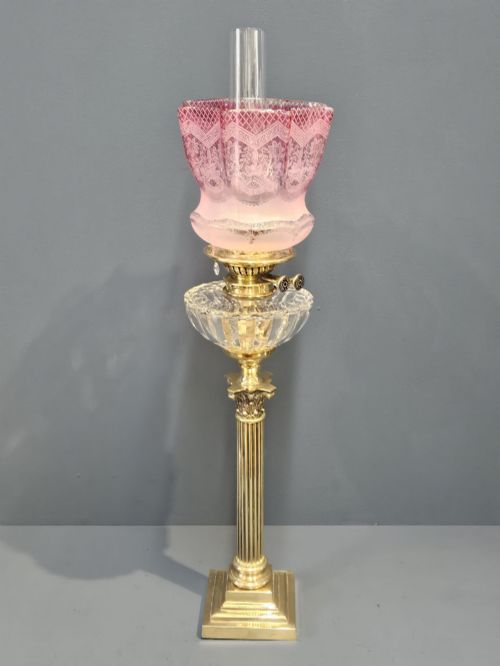
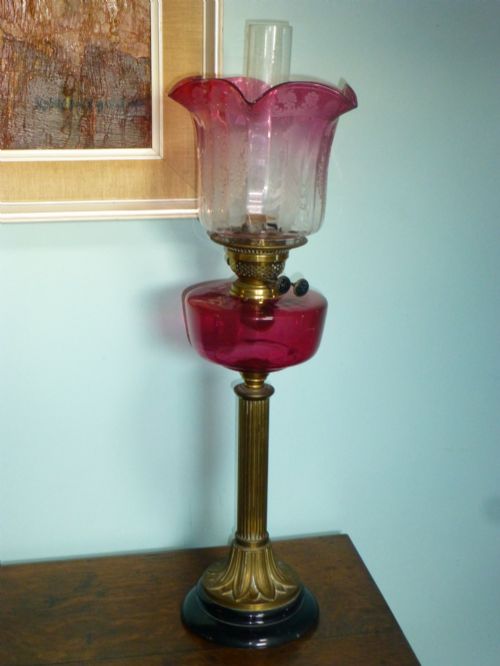
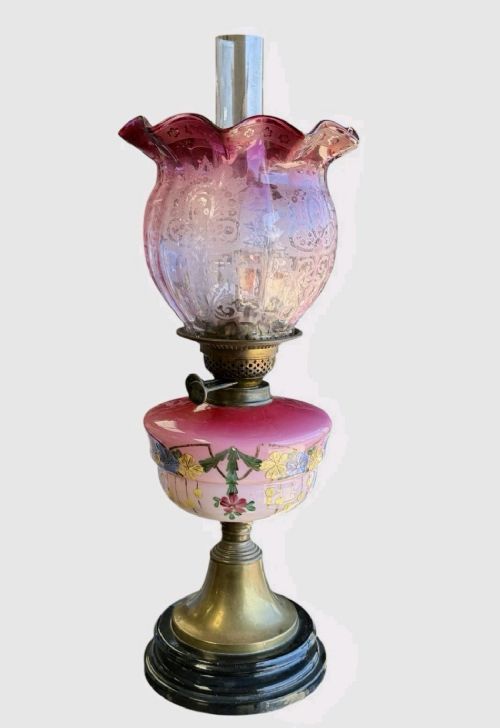
An etched cranberry shade brings a rich ruby glow to Victorian oil lamps and table lights, casting a warm hue across a room.
Etched Cranberry Shade
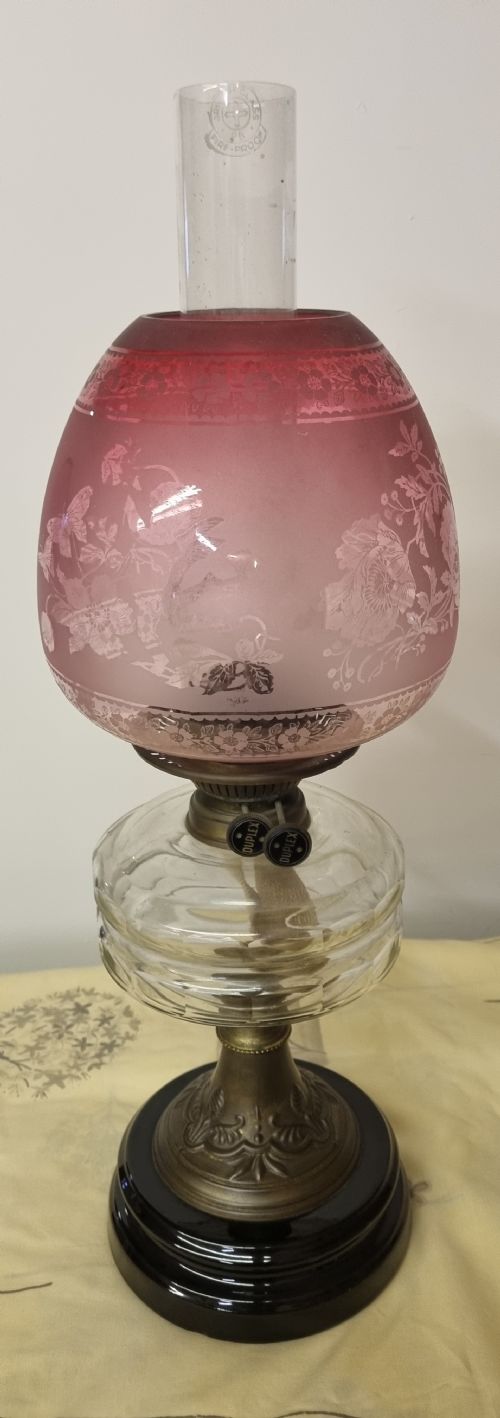
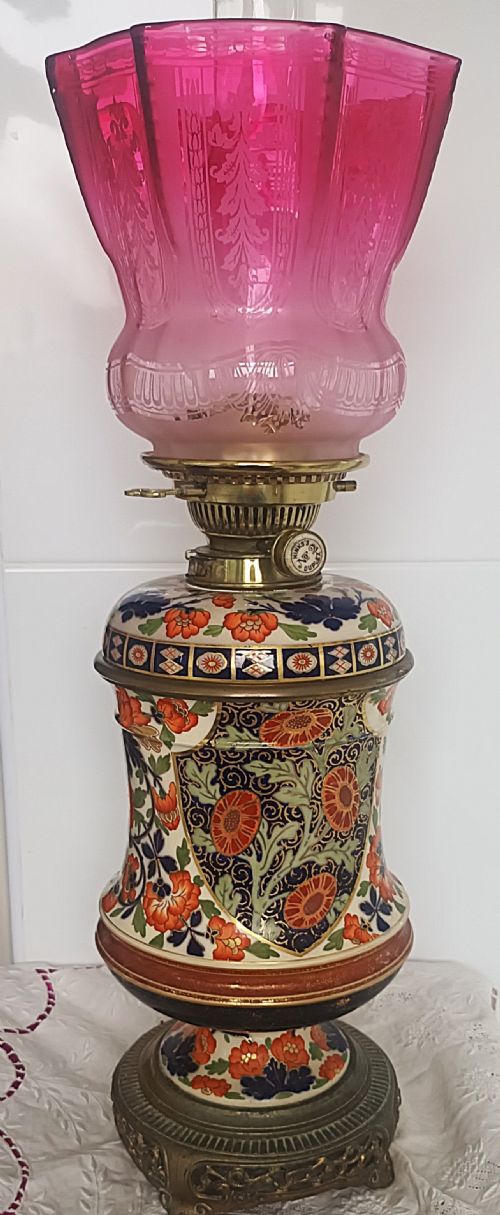
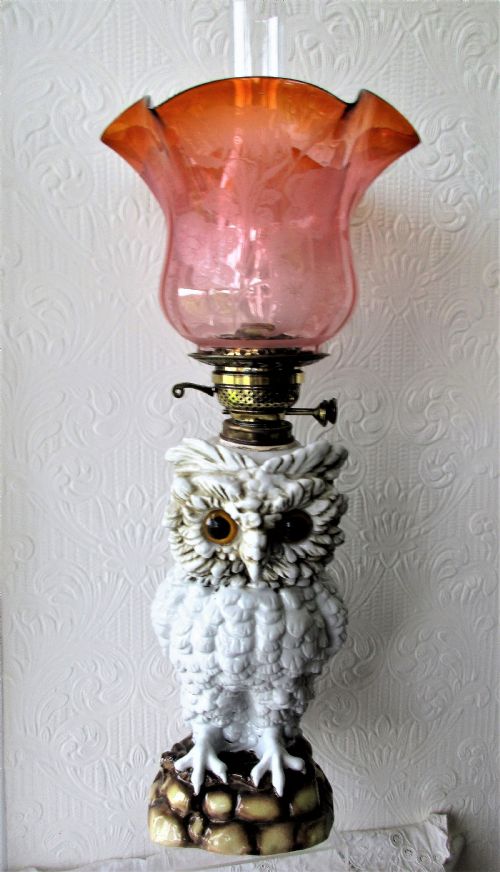
An etched cranberry shade is primarily found crowning Victorian oil lamps, table lamps, and pendant lights from the nineteenth century up to the early twentieth century. These components sit atop brass or ceramic bodies, diffusing light through deep pink or ruby tinted glass.
The version most commonly met on this page is the Victorian oil lamp shade, often paired with a brass Corinthian column or a duplex burner base. Pieces span from the 1860s through to the Edwardian period, appearing in simple forms as well as hand-painted or frilled designs.
How they were made
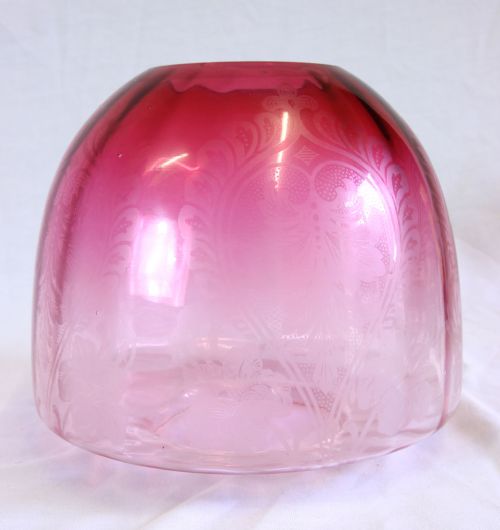
These shades combine glass-blowing techniques with chemical colouration, using gold chloride in the glass batch to achieve the characteristic cranberry hue. Craftsmen then applied surface decoration through acid etching or hand painting.
Etched Cranberry Shade Retail Price Guide 2026
Typical asking prices for etched cranberry shade among the pieces listed under this phrase on Sellingantiques today, from the lower quarter to the upper quarter. They describe what is for sale here now, not the wider market.
Listings feature 19th Century, Victorian, Edwardian, and 1920s periods, using brass, glass, porcelain, and ceramic materials.
What varies in quality
Quality depends upon the depth and consistency of the cranberry glass colour alongside the crispness of the acid-etched patterns. Better examples show precise detailing in motifs such as botanical designs or hunting themes.
The overall standard is also governed by the harmony between the shade and its base, particularly in matching pairs or comprehensive oil lamp assemblies featuring brass and porcelain components.
Hinks·Taylor Tunnicliff·Sitzendorf
The Etched Cranberry Shade Glossary
- Cranberry Glass
- A transparent red glass produced by adding gold to the molten metal mix. The resulting shade ranges from pale pink to a deep ruby tone.
- Acid Etching
- A technique using acid to cut designs into the glass surface. This method creates frosted patterns that contrast with the clear cranberry background.
- Duplex Burner
- A twin-wick burner mechanism commonly found on larger nineteenth-century oil lamps. It provides a brighter illumination requiring a stable glass shade.
- Corinthian Column
- A classical architectural column style frequently utilised for the brass stems of Victorian lamps. It lifts the glass font and shade to a prominent height.
- Peg Lamp
- A small oil lamp featuring a protruding metal pin at the base. This allows the lamp to drop directly into a candlestick or separate receptacle.
Etched Cranberry Shade: Frequently Asked Questions
How do I clean an etched cranberry shade?
Wash the glass gently in lukewarm water using a mild, non-abrasive detergent. Avoid harsh scrubbing around the acid-etched areas to preserve the frosted surface.
Dry the shade thoroughly with a soft lint-free cloth before mounting it back onto the brass collar of the lamp.
Are these shades interchangeable between different lamps?
Shades depend heavily on the fitter size, which is the bottom rim measurement that rests inside the brass gallery. Matching the exact diameter is essential for a secure fit.
Victorian lamps varied in gallery dimensions, so a shade from one period may not sit correctly on another maker's burner.
What period do most of these shades belong to?
The majority of pieces date from the Victorian era, spanning the mid to late nineteenth century. Production continued into the Edwardian period and up to the 1930s.
Earlier examples often accompany heavy brass Corinthian column lamps, while later pieces appear on simpler table and desk lighting.
How can I tell if the glass is genuine cranberry?
Genuine cranberry glass displays a distinct pinkish-red tone derived from gold content in the batch rather than surface painting. The colour appears even throughout the body when held to the light.
Surface-flashed glass shows clear glass underneath if chipped, whereas true cranberry glass maintains its colour right through the material.