

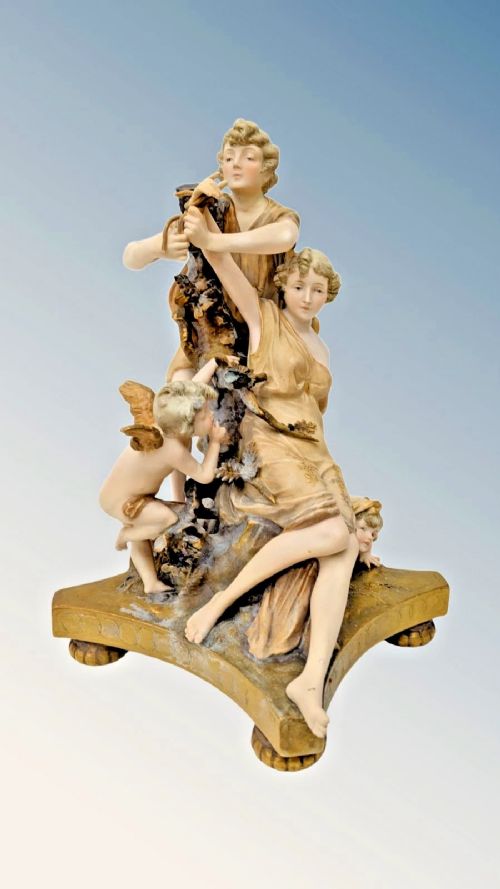


Ernst Wahliss Teplitz
Ernst Wahliss Teplitz pieces bring expressive ceramic artistry into your home through flowing forms and delicate painting.
Ernst Wahliss Teplitz
Ernst Wahliss Teplitz items span the nineteenth century into the twentieth century, bringing distinctive ceramic art to the market. You will encounter decorative figures, sculptural busts, and vases that reflect the aesthetic shifts of their era.
Art Nouveau examples dominate the selection, showing organic lines and figurative subjects like watercarriers and classical figures. Neoclassical influences also appear alongside Turn-Teplitz and Turn Vienna productions, offering variety in form and ornamentation.
The objects take the form of cornucopia vases, spill vases, large sculptural groups, and individual figures. These pieces showcase the diverse output of the Wahliss manufactory in Austria during its active decades.
How they were made
Maker artisans utilised porcelain and earthenware as the primary ceramic bodies for these sculptures and vessels. Careful moulding captured intricate details in figures such as Daphne and the Amynthas and Sylvia group.
Decoration relied on applied enamel colours and gilding, including gold leaf accents. Glazes completed the surface treatment, giving the porcelain and earthenware their finished sheen.
Ernst Wahliss Teplitz Retail Price Guide 2026
Typical asking prices for ernst wahliss teplitz among the pieces listed under this phrase on Sellingantiques today, from the lower quarter to the upper quarter. They describe what is for sale here now, not the wider market.
Watercarriers and mythological figures share shelf space with cornucopias, proving that nineteenth century ceramics had a theatrical streak.
What varies in quality
The application of enamel painting and the preservation of gilding influence the visual impact. Crisp, precise decoration enhances the overall appeal of these ceramic pieces.
Ernst Wahliss·Alexandra Porcelain Works Ernst Wahliss
The Ernst Wahliss Teplitz Glossary
- Art Nouveau
- A style of decorative art characterised by flowing lines and organic motifs. This movement heavily influenced late nineteenth century and early twentieth century ceramic design.
- Earthenware
- Porous pottery fired at lower temperatures than porcelain. It forms the body of specific sculptural spill vases in this selection.
- Porcelain
- A fine ceramic material fired at high temperatures to achieve a vitrified, translucent body. It serves as the base for many Wahliss vases and figures.
- Turn-Teplitz
- A ceramic production centre located in Bohemia, associated with numerous factories including Wahliss. Pieces bearing this designation reflect regional manufacturing traditions.
Ernst Wahliss Teplitz: Frequently Asked Questions
What periods do Ernst Wahliss Teplitz pieces come from?
These ceramics date from the nineteenth century through to the early twentieth century. Production spans several decades, capturing late nineteenth century historicism and early twentieth century design.
The listings reflect periods such as the eighteen eighties, eighteen nineties, and nineteen hundreds. Pieces from around nineteen eighteen also appear, showing the progression of the manufactory.
How are the different styles identified?
Art Nouveau items feature characteristic flowing lines, organic shapes, and figurative subjects like women with scarves. Neoclassical influences bring classical symmetry and traditional motifs to specific vessels.
Turn-Teplitz and Turn Vienna designations point to regional production centres and stylistic affiliations. Examining the modelling and decorative motifs helps distinguish between these aesthetic approaches.
What forms do these ceramic objects take?
The selection includes various object types such as vases, decorative figures, and sculptural busts. Examples range from cornucopia vases and spill vases to large sculptural groups.
Figurative works depict subjects like watercarriers and mythological figures such as Daphne. These forms serve both decorative and sculptural purposes within interior spaces.