



Equine Racehorse Art
These equine racehorse art pieces capture the speed and lineage of celebrated thoroughbreds through period oils and prints.
Equine Racehorse Art
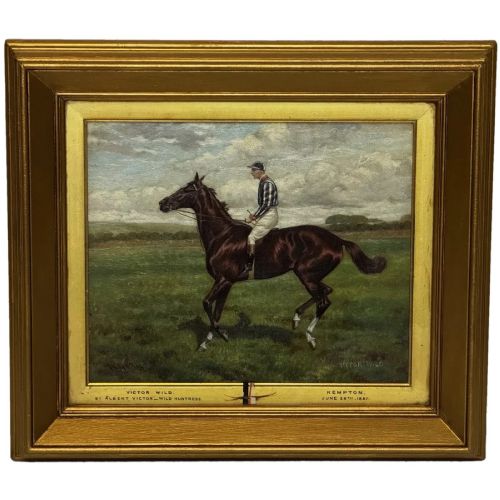
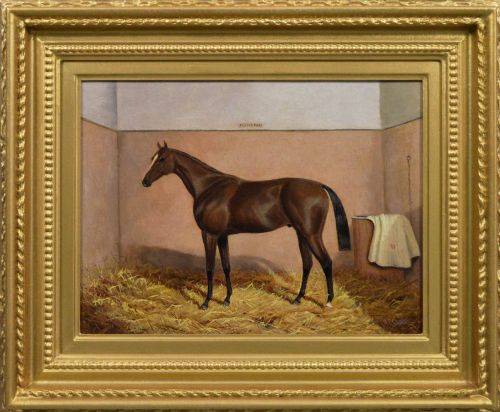
When you search for equine racehorse art, you encounter a specialised selection of nineteenth and early twentieth century depictions focused on thoroughbreds, jockeys, and racing scenes. The pieces on this page span the Victorian, Edwardian, and nineteen-thirties eras, reflecting the enduring British passion for the turf.
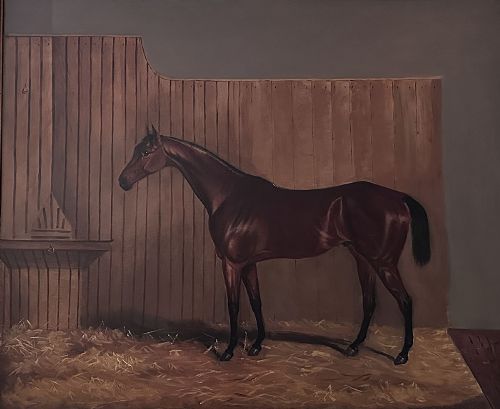
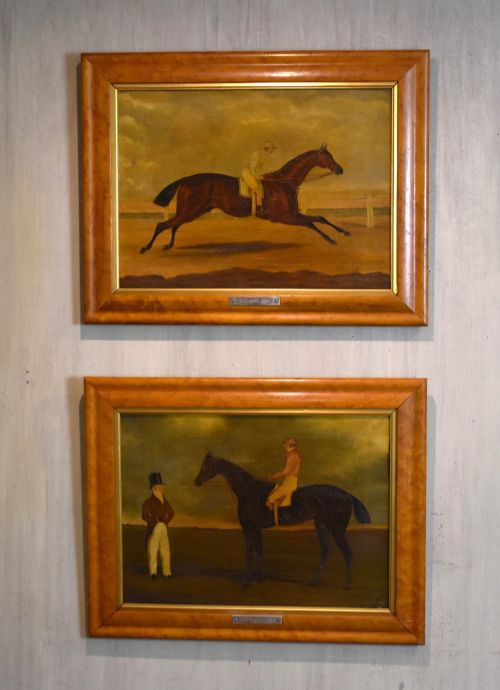
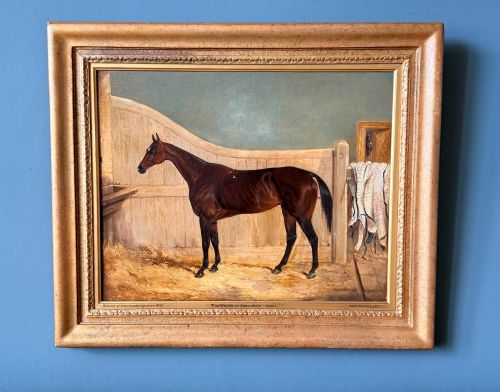
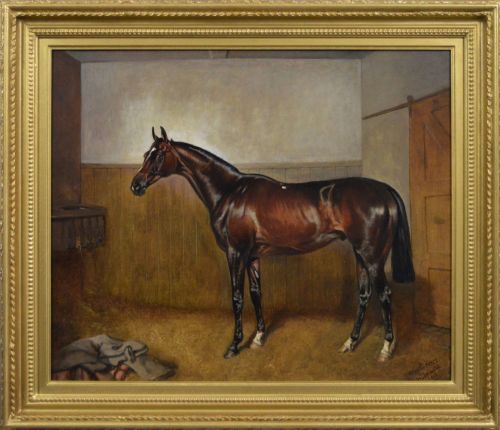
Oil paintings on canvas dominate the selection, often presenting named champions alongside their jockeys or trainers in detailed portraiture. Alongside these original oils, you find framed prints and photographic sets recording famous racehorses and historic race meetings.
Many works connect directly to notable animals and owners, ranging from royal thoroughbreds to winners of historic handicaps. These paintings and prints serve as visual archives of equestrian history, produced during periods when racing culture held a central place in society.
Materials and methods
Artists working on these subjects utilised oil paint applied to canvas, capturing the sheen of a horse coat and the tension in its musculature. These canvases are typically housed within period giltwood or gilt wood frames that complement the traditional subject matter.
Printed works utilise paper under glass, preserving photographic prints and painted reproductions of famous subjects. The framing materials reflect the standards of the Victorian, Edwardian, and later periods in which the works were produced.
Equine Racehorse Art Retail Price Guide 2026
Typical asking prices for equine racehorse art among the pieces listed under this phrase on Sellingantiques today, from the lower quarter to the upper quarter. They describe what is for sale here now, not the wider market.
Listings feature canvas, oil paint, paper, and glass, housed within giltwood frames across Victorian, Edwardian, and 1930s periods.
Assessing quality
Quality in these works rests upon the precision of the animal anatomy and the painter skill in rendering movement and expression. Stronger examples capture the specific conformation of a named racehorse rather than relying on a generic equine template.
The sophistication of the background landscape and the inclusion of identifiable jockeys or historical figures elevate a piece. Additionally, the survival of the original giltwood frame contributes significantly to the integrity of a Victorian or Edwardian painting.
Albert Clark·John Alfred Wheeler·Thomas Walker Bretland·John Frederick Herring Snr·Walter Herbert Wheeler·John Parker Davis
The Equine Racehorse Art Glossary
- Giltwood
- Wood carved and covered with a thin layer of gold leaf or gold paint. It provides an ornate and reflective border popular for framing nineteenth-century oil paintings.
- Thoroughbred
- A horse breed developed for racing, tracing back to seventeenth and eighteenth-century foundation sires. They form the primary subject matter of sporting art.
- Equestrian
- Relating to horse riding, horse care, or the representation of horses in art. Sporting art frequently incorporates equestrian themes.
- Canvas
- Heavy woven fabric stretched across a wooden frame to serve as a foundation for oil painting. It allows artists to build rich textures and deep colour tones.
Equine Racehorse Art: Frequently Asked Questions
What periods do these pieces date from?
The works span the nineteenth and early twentieth centuries, encompassing Victorian, Edwardian, and nineteen-thirties examples. Each era brings distinct framing styles and artistic approaches to sporting subjects.
Most items reflect the height of British racing culture during the Victorian and Edwardian periods, utilising traditional oil painting techniques on canvas.
How do I identify a named racehorse?
Inscriptions on the canvas or frame often record the horse name, sometimes alongside the jockey, owner, or race title. Historical records and stud books help verify the lineage and racing history of the subject.
Artists frequently painted celebrated winners of major events, making provenance an important aspect of equine art.
What is the difference between oils and prints?
Original oil paintings feature textured brushwork directly on canvas, offering unique hand-rendered detail and depth of colour. Prints and photographic sets provide multiples or reproductions intended for decorative display.
While oils represent individual artistic commissions, framed prints made historical racehorse imagery accessible to a wider Victorian and Edwardian audience.
How should I display equine art?
These traditional pieces suit studies, libraries, or living rooms with classic interior schemes. Keeping them away from direct sunlight protects the oil pigments and paper prints from fading.
Maintaining stable humidity levels preserves both the canvas tension and the original giltwood frames.