




Equine Portrait on Canvas
An equine portrait on canvas captures the presence and power of the horse through oil paint, carrying centuries of tradition into your room.
Equine Portrait on Canvas
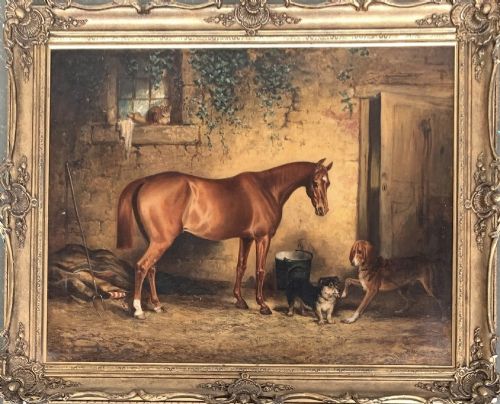
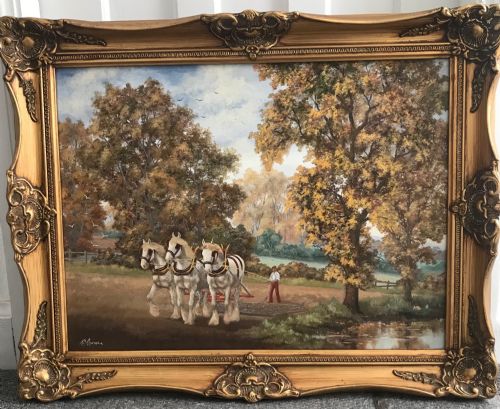
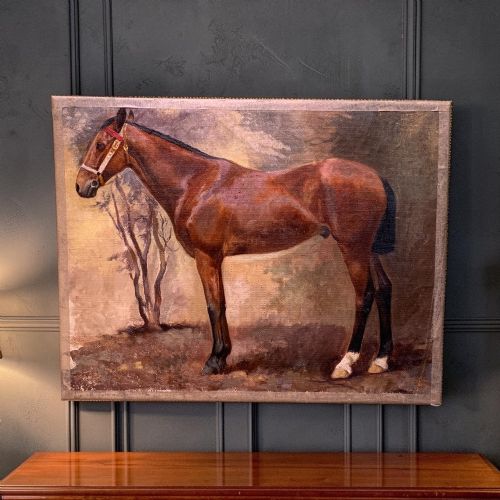
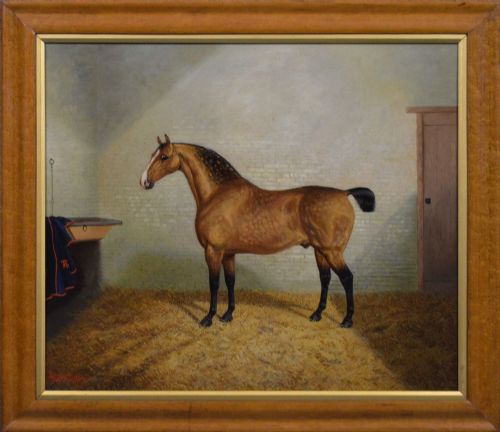
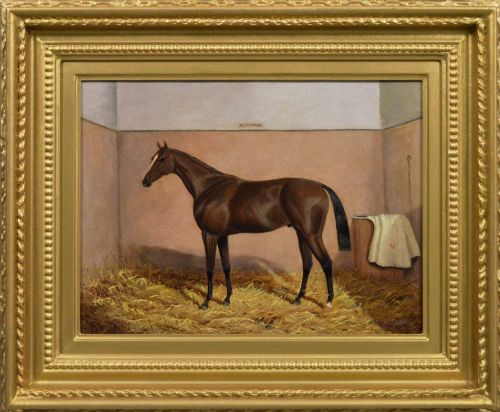
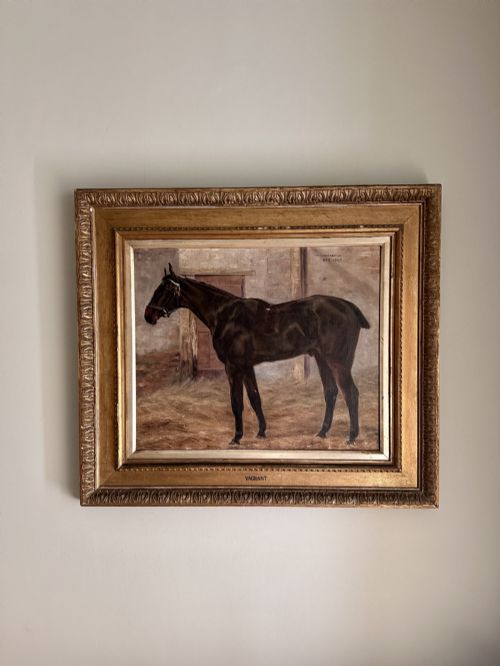
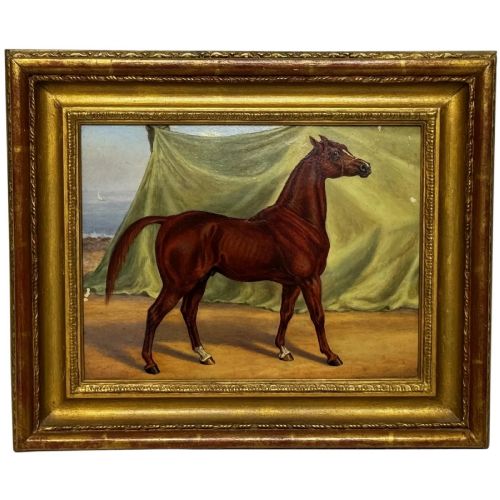
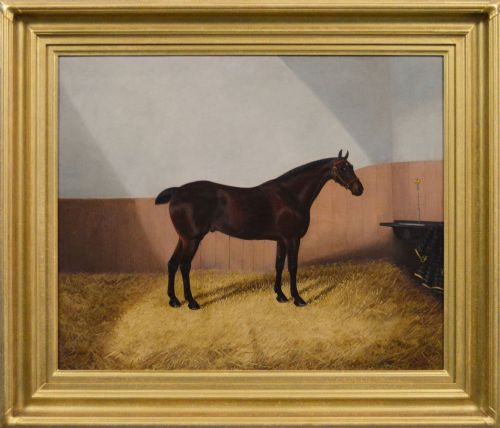
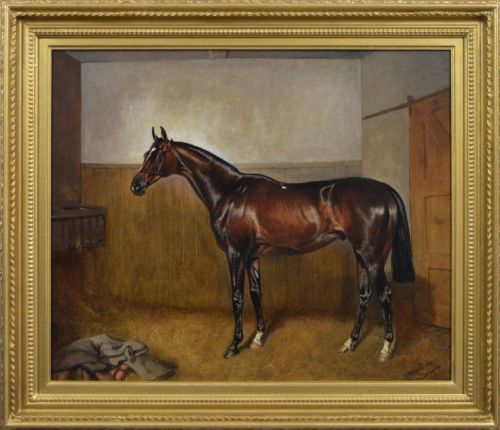
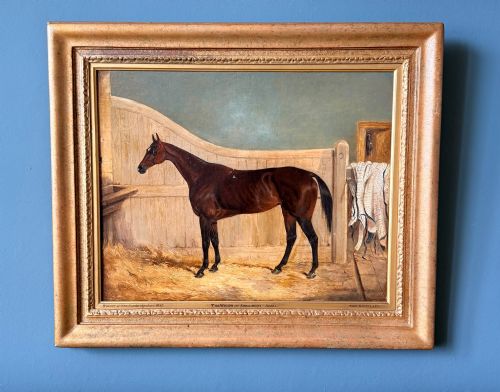
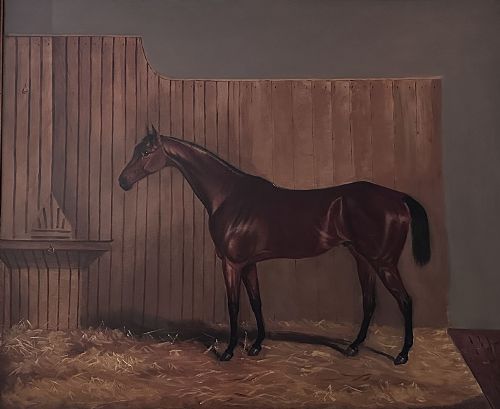
An equine portrait on canvas is a painted study of a horse, ranging from celebrated racehorses and royal thoroughbreds to sturdy working hunters and shire horses. When you search this phrase, you meet works that span the nineteenth century and the Edwardian era, alongside mid twentieth century studies.
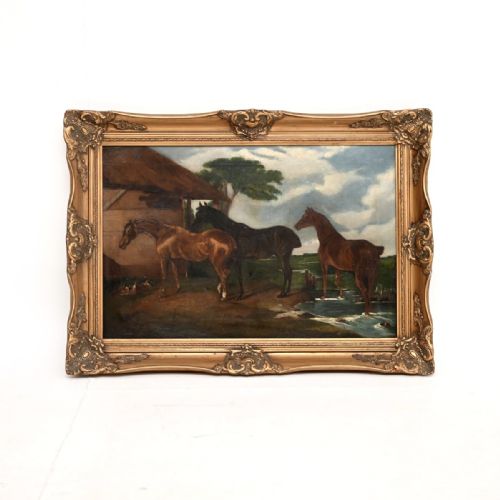
Most pieces on this page originate from the Victorian period, capturing named champions, stable scenes, and rural working life in oil paint. These paintings vary from intimate head studies to grand depictions of horses with jockeys or grooms in open landscapes.
The subjects reflect the immense social and economic importance of the horse in British life, recording individual animals whose names and pedigrees often survive in the canvas records. You encounter both accomplished portraits by named animal painters and anonymous works depicting village life and rural scenes.
Materials and Technique
These works are built on woven canvas supports stretched over wooden frames, providing a stable ground for layers of oil paint. Artists utilised oil pigments mixed with drying oils to build depth in the musculature and coat of the animal.
Several horses recorded here outlived their jockeys and still hold track records that puzzle modern trainers.
Judging Quality
Quality in an equine portrait rests upon the artist's anatomical understanding and command of light across the horse's coat and muscle structure. A superior painting captures the distinct personality and correct conformation of the animal rather than presenting a generic silhouette.
The handling of the background, whether a detailed stable interior or an atmospheric landscape, distinguishes accomplished regional artists from standard commercial output. Provenance and a clear attribution to a recognised sporting painter elevate the standing of the piece within the tradition.
Henry Barraud·Albert Clark·Fred Fitzpatrick·John Alfred Wheeler·Thomas Walker Bretland·John Ferneley Senior·George E Sharpe·Benjamin Cam Norton·Clifton Tomson·Alfred Moginie Bryant·Abraham Cooper RA·Charles Bilger Spalding RA·Walter Herbert Wheeler·James Barenger·William Shayer Snr
The Equine Portrait on Canvas Glossary
- Gesso
- A plaster mixture applied to wooden frames as a smooth base before gilding. This material provides the foundation for decorative giltwood moulding.
- Giltwood
- Wood carved and coated with gold leaf or metallic powder to create a lustrous finish. It surrounds many traditional oil paintings from the nineteenth century.
- Provenance
- The documented history of ownership of an artwork. A recorded lineage helps confirm the authenticity and subject of a historical portrait.
- Stable Interior
- A genre of painting focused on horses housed within farm or training stalls. These compositions often emphasise the close relationship between the animal and its groom.
Equine Portrait on Canvas: Frequently Asked Questions
What is an equine portrait?
An equine portrait is an oil painting dedicated to depicting a specific horse, often recording its name, owner, and achievements. These works range from formal racing commissions to affectionate studies of farm animals.
Historically, owners commissioned these canvases to document prized hunters, champions, and working horses. They serve as both fine art and historical records of equestrian culture.
How do I date these paintings?
Dating relies on stylistic evidence within the painting, including the cut of the jockey's silks, the harness design, and the framing materials. Victorian and Edwardian works often carry inscriptions on the canvas or stretcher bars.
Clothing styles of accompanying grooms and jockeys provide reliable chronological markers. Signatures and archival records further help narrow the decade of creation.
Where should I hang an equine portrait?
These traditional oil paintings suit libraries, studies, and hallways where their rich tones and dark backgrounds complement wood panelling and heritage decor. They require placement away from direct sunlight to protect the oil pigments.
Matching the weight of the frame to the room's proportions ensures the artwork sits comfortably in the space. Traditional lighting helps illuminate the detailed brushwork of the horse's coat.
Who painted these historical horse portraits?
A mix of specialised sporting artists, Royal Academy members, and regional painters produced these works. Some artists travelled extensively to record winning racehorses at various stables and tracks.
Others focused on rural agricultural scenes, capturing working shire horses and hunters alongside farmers and grooms. Many pieces remain unsigned, representing the broad output of nineteenth century jobbing artists.