




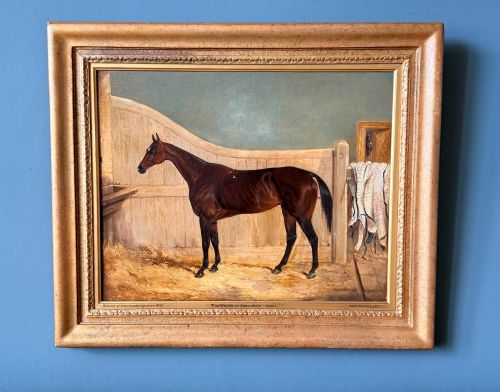
Equine Oil Portrait
An equine oil portrait captures the muscle, character and presence of a prized horse through traditional pigment and brushwork.
Equine Oil Portrait
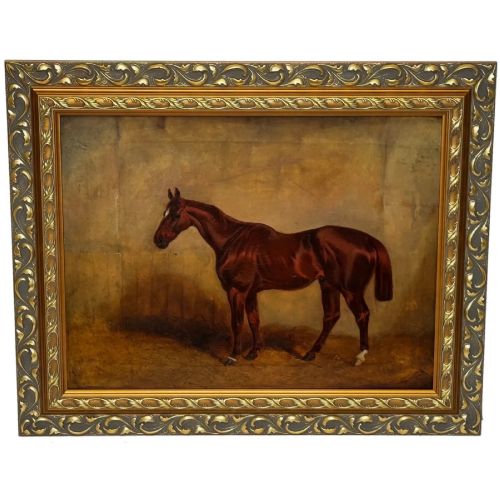
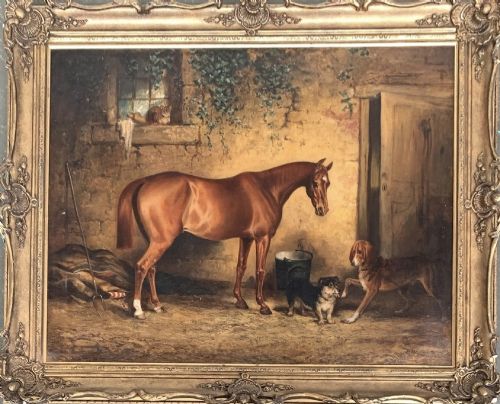
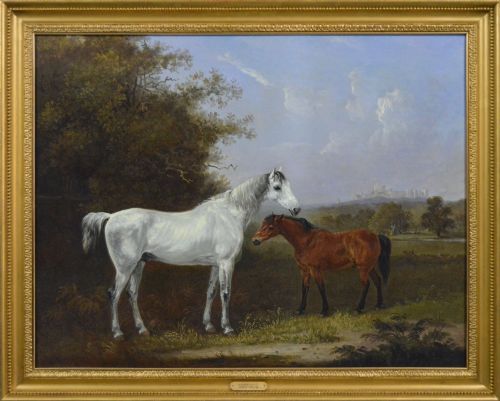
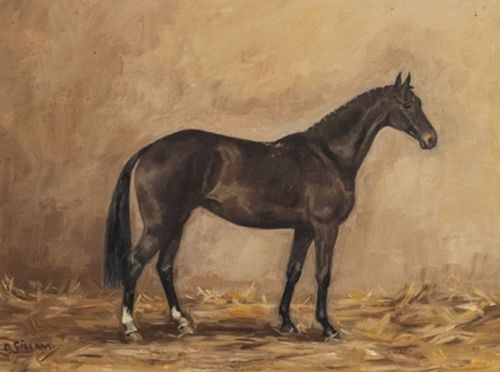
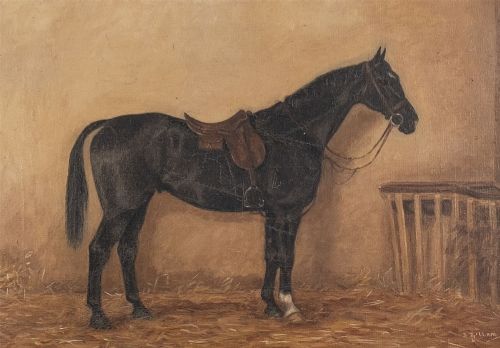
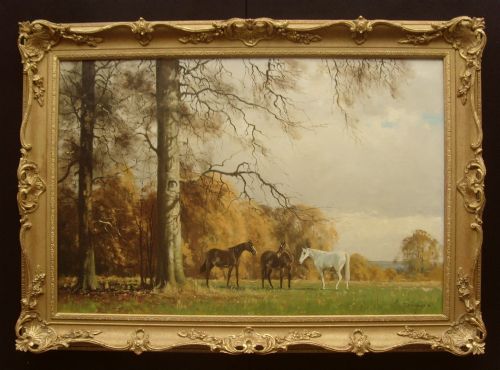
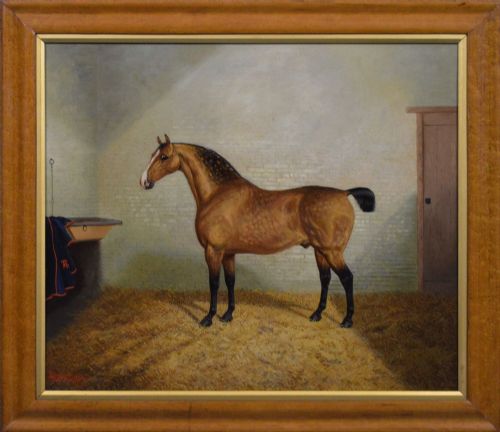
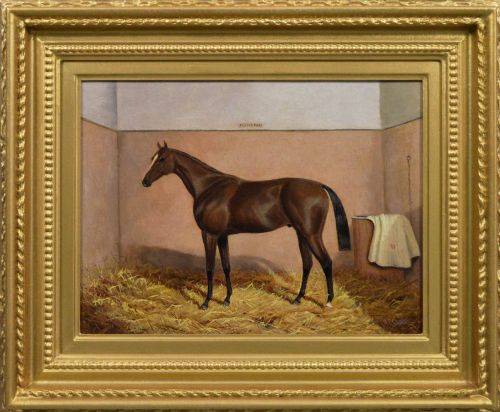
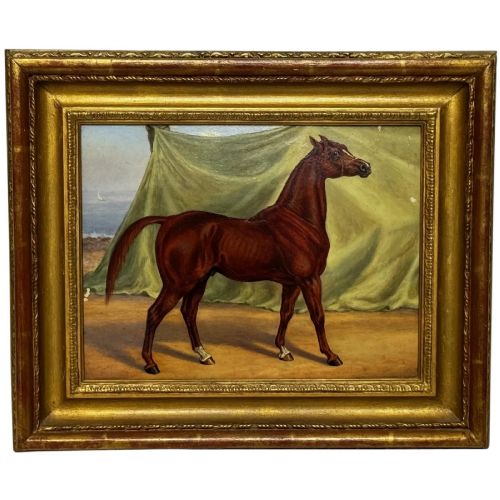
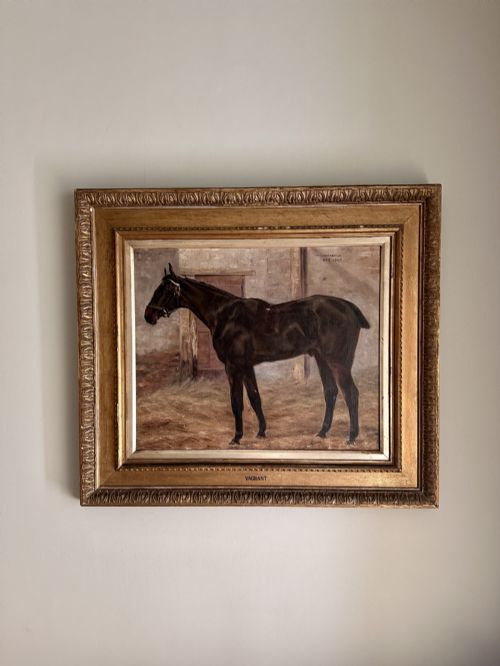
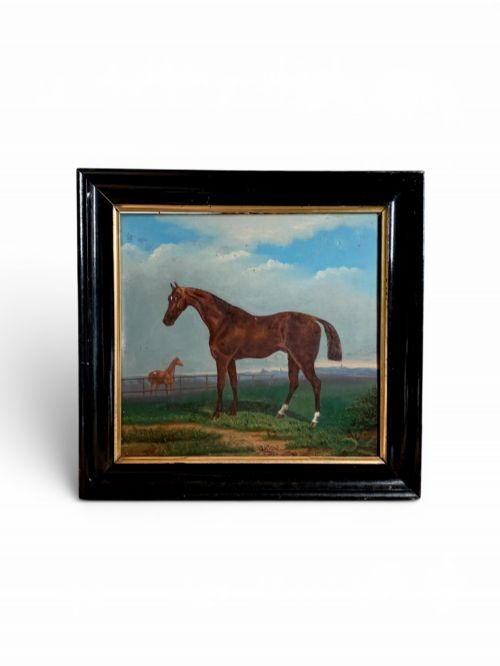
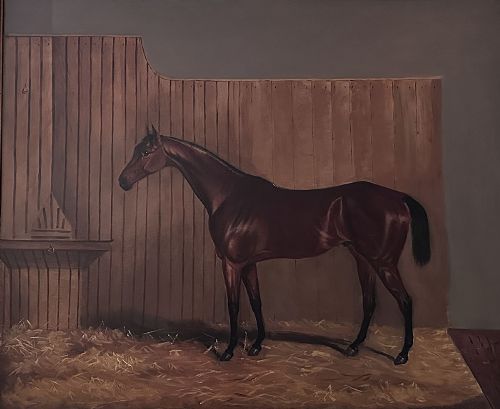
An equine oil portrait represents horses in various settings, ranging from individual studies of famed racehorses to working animals in rural landscapes. Buyers most frequently encounter nineteenth-century canvases depicting bay hunters, stable interiors and champion thoroughbreds.
The selections span distinct eras including Georgian, Victorian and Edwardian periods, alongside later twentieth-century examples. These works often identify specific animals by name, such as historic race winners or estate hunters.
Compositions alternate between intimate head studies and wider views showing horses with grooms, stable lads or ploughing fields. Each piece records the distinct conformation and coat colour prized by past owners.
Materials and construction
Artists applied oil paint using fine brushes onto stretched canvas or prepared wooden panels made from oak, pine or mahogany. This traditional medium allowed painters to build up deep, translucent layers that rendered the sheen of a horse coat and the play of light across muscle.
Many surviving works retain their original giltwood and gesso frames, which often feature decorative moulding characteristic of the Victorian or Georgian periods. Gold leaf was frequently applied to frame highlights, complementing the warmth of the oil pigments within.
Equine Oil Portrait Retail Price Guide 2026
Typical asking prices for equine oil portrait among the pieces listed under this phrase on Sellingantiques today, from the lower quarter to the upper quarter. They describe what is for sale here now, not the wider market.
Subjects range from named racehorses with jockeys to working shire horses ploughing fields in rural landscapes.
Evaluating painting quality
Quality rests principally upon the artist skill in rendering equine anatomy accurately, capturing the tension in a shoulder or the intelligent expression in an eye. Lesser works rely on stiff, formulaic outlines, whereas superior paintings display a convincing understanding of bone structure and movement.
The handling of the background distinguishes finer portraits, where landscape or stable details are rendered with purposeful brushwork rather than hasty filler. Provenance and legible signatures by established sporting artists further elevate a piece within the field.
Henry Barraud·Albert Clark·Fred Fitzpatrick·John Alfred Wheeler·Thomas Walker Bretland·John Ferneley Senior·George E Sharpe·Benjamin Cam Norton·Clifton Tomson·Alfred Moginie Bryant·Abraham Cooper RA·Charles Bilger Spalding RA·John Nost Sartorius·Walter Herbert Wheeler·James Barenger·William Shayer Snr·George Morland
The Equine Oil Portrait Glossary
- Gesso
- A white paint mixture consisting of a binder mixed with chalk, gypsum or pigment, used as a prepared surface on wood panels or to build up relief on frames before gilding.
- Giltwood
- Wood that has been treated with a thin layer of gold leaf or gold paint, frequently seen on antique picture frames surrounding nineteenth-century canvases.
- Provenance
- The chronological record of ownership, custody or location of a historical painting, which helps establish its authenticity and history.
- Sporting art
- A genre of painting dedicated to depicting bloodstock, hunting scenes, racing and rural field sports, prevalent throughout the Georgian and Victorian eras.
Equine Oil Portrait: Frequently Asked Questions
How do I identify the horse in an old painting?
Many portraits include contemporary inscriptions on the canvas, stretcher bars or frame naming the animal, owner or race. Examining racing records or estate archives often confirms the identity of famous thoroughbreds and hunters.
Where no name is written, clues may lie in specific stable colours worn by a jockey or distinctive estate backgrounds recorded in the landscape.
What is the difference between a hunter and a racehorse portrait?
Hunter portraits typically show sturdier animals built for endurance across rural fields, often accompanied by grooms, hounds or rustic stable architecture. They emphasise stamina and steady temperament.
Racehorse portraits focus on fine-boned thoroughbreds shown in profile, sometimes with a jockey up or standing proudly within a paddock to highlight speed and lineage.
How should I care for an antique oil painting?
Keep canvases away from direct sunlight, high humidity and sudden temperature fluctuations that cause paint and wood panels to warp or crack. Dust the surface and frame gently with a soft, dry brush without applying pressure.
Avoid using water, chemical cleaners or damp cloths on the oil paint or gilded frame. Consult a professional conservator if the canvas requires cleaning or structural repair.
How can I tell the period of an equine portrait?
Dating relies on examining the clothing and top hats of any human figures, the style of the wooden frame and the canvas preparation methods. Victorian works often feature deep giltwood frames and rich, dark varnish.
Earlier Georgian pieces display different canvas textures and pigment formulations, while Edwardian and later twentieth-century paintings show shifts in artistic palette and looser brush techniques.