




Equine Landscape Painting
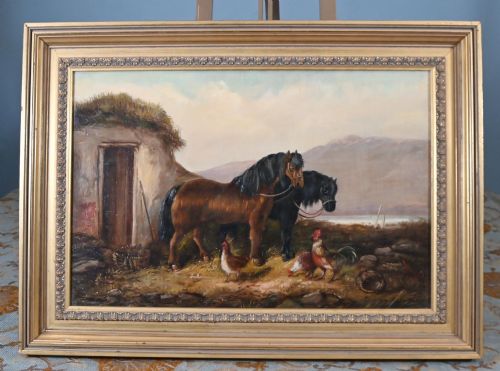
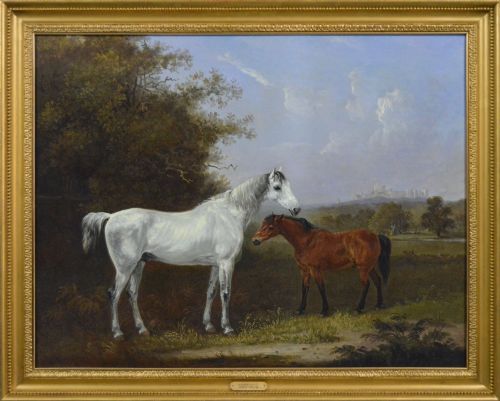
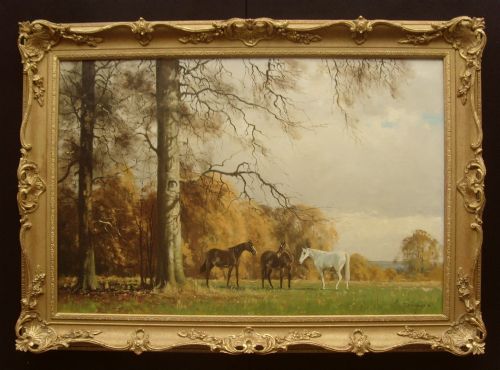
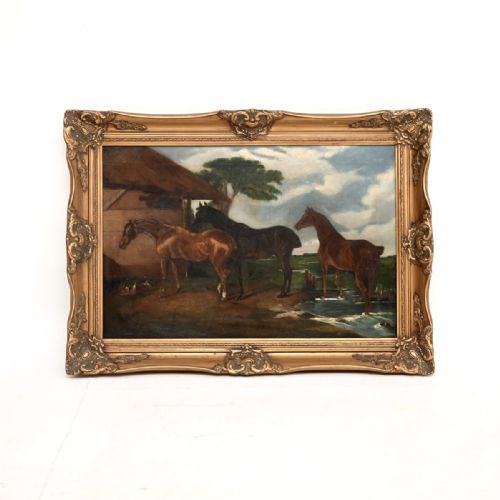
These equine landscape painting works place horses firmly within pastoral and rural settings, combining animal portraiture with expansive natural views.
Equine Landscape Painting
An equine landscape painting captures horses situated in fields, farmyards, river valleys, and country estates. These works span the Georgian, Victorian, and later periods, reflecting changing rural economies and leisure pursuits.
Most examples found here utilise oil paint on canvas or wood panels, though occasional watercolours appear. They range from intimate portrayals of farm ponies to grand sporting portraits set against recognisable landmarks.
The compositions balance the specific conformation of the animal with the atmospheric conditions of the surrounding countryside. Painters often included stable hands, agricultural workers, or hounds to ground the scene in daily rural life.
Materials and Construction
Artists relied primarily on oil paint applied to stretched canvas or wooden boards, building up rich textures through layered brushwork. Canvas provided a flexible support capable of holding large, detailed compositions of animals and scenery.
Equine Landscape Painting Retail Price Guide 2026
Typical asking prices for equine landscape painting among the pieces listed under this phrase on Sellingantiques today, from the lower quarter to the upper quarter. They describe what is for sale here now, not the wider market.
Pigs, ducks, and attendant hounds frequently share the canvas, proving that equine artists rarely let a horse stand alone.
Factors of Quality
The finesse of the animal anatomy and the naturalism of the background distinguish superior works from standard regional pieces. Master artists rendered muscle structure, light on coats, and atmospheric perspective with precise observation.
The integration between horse and landscape determines the overall artistic success of the composition. Weaker pieces often treat the animal and the scenery as separate elements, whereas accomplished examples unite them through coherent lighting and handling of paint.
Walter Robin Jennings·Edmund Bristow·John Ferneley Senior·Eugene Joseph Verboeckhoven·John Frederick Herring·Clifton Tomson·Arthur Winter Shaw·George Goodwin Kilburne·Ernest Higgins Rigg·Edward Lloyd·James Barenger·George Cole
The Equine Landscape Painting Glossary
- Canvas
- A heavy woven fabric stretched across a wooden frame to serve as a support for oil paint. It provides a durable surface that responds well to traditional varnishes.
- Gesso
- A plaster-like mixture applied to wooden panels or frame mouldings to create a smooth base for gilding or painting. It helps protect the underlying material from moisture.
- Sporting art
- A genre of painting dedicated to horses, hounds, shooting, and rural sports. These works frequently document prized animals and specific country estates.
- Oil paint
- A slow-drying medium consisting of pigments suspended in a drying oil such as linseed. It allows artists to blend tones smoothly and achieve deep, luminous colours.
Equine Landscape Painting: Frequently Asked Questions
What defines an equine landscape painting?
These works combine detailed portraits of horses with rural scenery, coastal views, or farmyard settings. They focus as much on the atmosphere of the countryside as on the animal itself.
The genre ranges from working farm horses to thoroughbred hunters set against country house estates.
How do I date an antique horse painting?
Stylistic clues in the human costume, framing techniques, and the preparation of the canvas or wood panel help establish the period. Victorian and Georgian works often display distinct brushwork and palette choices.
Signatures, inscriptions on the reverse, and historical labels also provide reliable dating evidence.
Where were these paintings displayed originally?
Country houses, estate offices, and the homes of rural gentry frequently displayed these works to celebrate prized animals and land ownership. Smaller rural scenes also found a place in Victorian domestic parlours.
Today, they suit traditional studies, hallways, and living rooms with classic country house decor.
How do I care for an oil painting on canvas?
Keep paintings away from direct sunlight, high humidity, and rapid temperature fluctuations to protect the canvas and oil pigments. Dust the surface gently with a soft, dry brush without applying pressure.
Professional conservators should handle any cleaning or repair work to avoid damaging the original paint layers.