


Equestrian Boot Jack
An equestrian boot jack is a practical device designed for pulling off riding boots cleanly, and you want one for its enduring utility and classic country house charm.
Equestrian Boot Jack
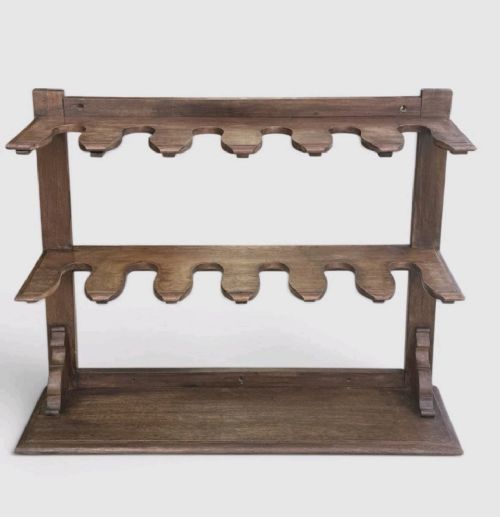
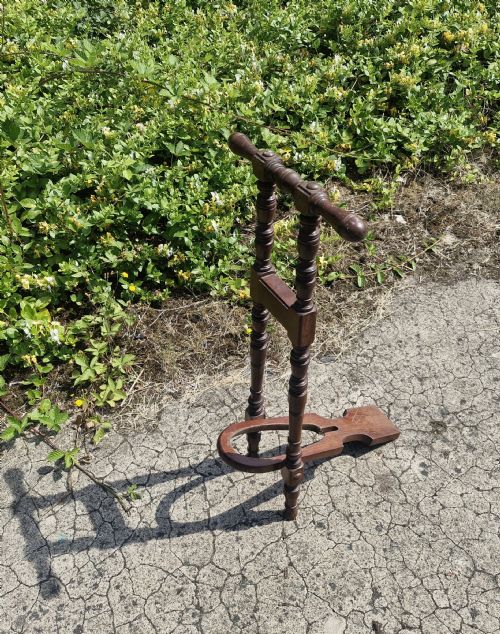
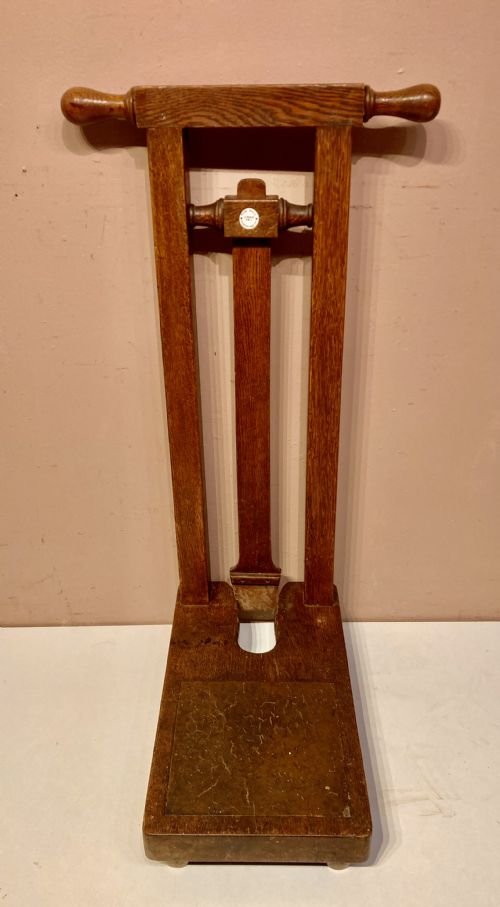
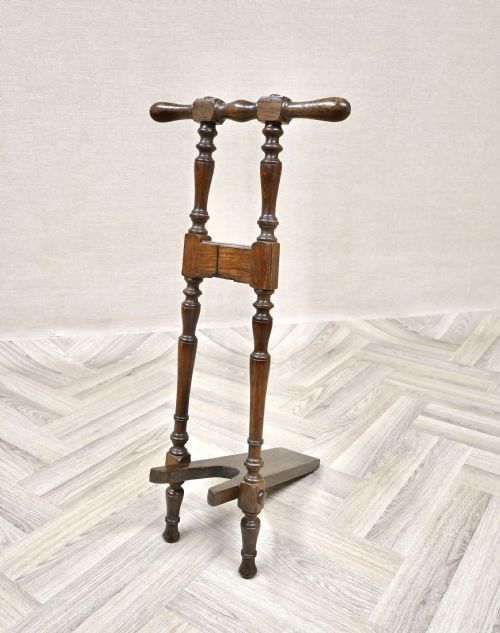
When you search for an equestrian boot jack, you are looking at functional hall and boot room accessories designed to remove tall riding boots without damaging the leather. The pieces seen here span the Victorian, Georgian, and Edwardian periods, bringing robust utility into domestic spaces.
Forms include dedicated boot jacks alongside related boot racks and hallway shoe stands designed for heavy daily use. Their origins are rooted in practical equestrian life, serving halls, boot rooms, and officers' quarters alike.
Materials and construction
Makers utilised dense hardwoods such as oak, mahogany, and walnut to withstand the physical leverage required to pull off tight riding boots. These timbers were polished or stained to highlight the natural grain.
Metal components, notably brass and iron, form the hinges, folding hooks, and mounts that allow campaign examples to fold flat or provide secure gripping points. Leather elements occasionally appear on related boot pulls and accessories.
Carpentry techniques focused on robust joints and folding hardware to ensure the devices endured repeated pressure in estate boot rooms and military fields.
The listings here feature pieces spanning the Georgian, Victorian, and Edwardian eras, constructed primarily from oak, mahogany, and walnut with brass hardware.
Assessing quality and character
The distinction between standard utility items and finer examples lies in the selection of timber, such as deeply figured mahogany or choice oak, coupled with the quality of brass mounts. Finer pieces often feature integrated folding mechanisms or matched tool sets.
Proportion and execution define the better specimens, where brass hinges fit flush and the timber retains a rich, warm patina from decades of handling. Simpler utilitarian versions remain honest to their working origins without superfluous ornament.
Tom Hill
The Equestrian Boot Jack Glossary
- Campaign military
- Portable furniture and equipment built for officers on active service, featuring folding designs and robust brass hardware.
- Boot jack
- A V-shaped device held down by one foot while the other boot is slipped into the notch and pulled off.
- Country house style
- An aesthetic associated with large English residences, favouring practical, hard-wearing materials like oak and mahogany.
- Boot pull
- A handheld tool with a hook, sometimes folding, used alongside boot jacks to assist in removing footwear.
Equestrian Boot Jack: Frequently Asked Questions
What is an equestrian boot jack used for?
These devices are designed to remove tight riding boots without bending down or straining the leather. They provide leverage by anchoring the heel while the foot slides out.
Historically placed in hallways, boot rooms, and military quarters, they kept muddy footwear manageable in busy households.
How do I date an antique boot jack?
Dating relies on timber choice, hardware style, and period characteristics such as Georgian proportions or Victorian campaign folding mechanisms. Oak and mahogany dominate across the nineteenth century.
Examine the brass hinges and screw types, as hand-turned components and specific patination point towards earlier periods.
What is a campaign boot jack?
Campaign versions were made for travel and military use, often featuring clever folding designs, brass mounts, and integrated pull hooks. They packed down easily for officers on the move.
These pieces combine sturdy oak or walnut construction with ingenious space-saving engineering.
Where should I place a boot jack at home?
They suit entrance halls, boot rooms, and porches where muddy footwear is naturally removed and stored. Their tactile wooden forms look entirely appropriate alongside traditional umbrella stands and coat hooks.
Many collectors simply display them on the floor as functional sculptures with a clear history of use.