
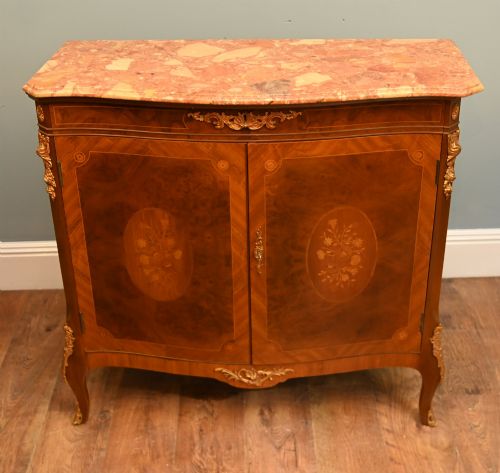
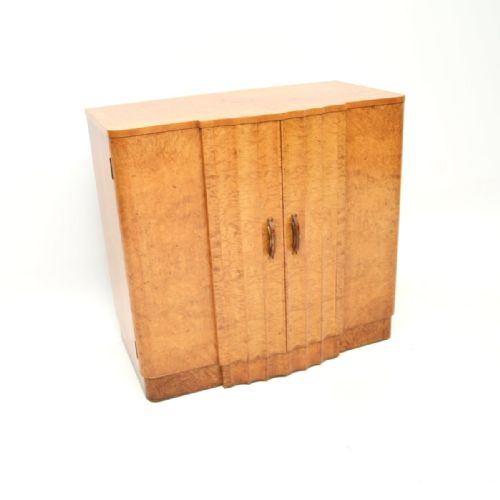


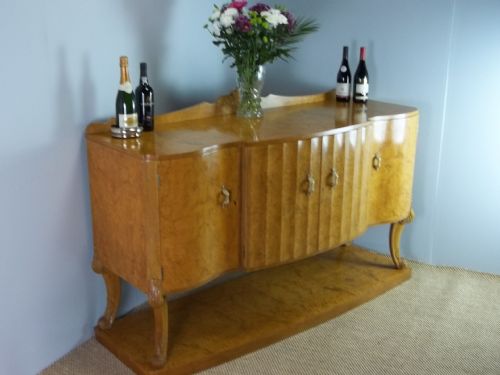
Epstein Walnut Sideboard
An epstein walnut sideboard brings bold twentieth-century curves and rich figured timber into a dining room or living space.
Epstein Walnut Sideboard
When you search for an epstein walnut sideboard, you are looking at substantial dining furniture and serving tables rooted in the Art Deco period. These pieces function as sideboards, serving tables, and multi-use cocktail cabinets with integrated storage.
The pieces on this page are concentrated in the 1930s era, displaying distinct forms such as U-shaped console tables and cloud-shaped cupboard designs. They combine the traditional utility of a serving table with the exuberant geometry of early twentieth-century design.
Makers such as Harry and Lou Epstein shaped this category, alongside items described in the Queen Anne Revival style or attributed to the maker's London workshops. Buyers encounter everything from standard sideboards to specialised drinks cabinets equipped for entertaining.
How they were made
Makers constructed these cabinets using sturdy wood carcasses finished with carefully matched walnut veneer and burr walnut surfaces to create striking grain patterns across the front doors and top surfaces. Burr maple also appears in certain archived pieces to provide interior contrast.
Metal components such as brass hardware and specialised handles punctuate the dark timber, while occasional elements utilise glass, bakelite, and mixed metal details to complete the modernist aesthetic characteristic of the workshop.
Several pieces adopt a distinct cloud shape, proving that even a serious dining room sideboard can indulge in a bit of 1930s whimsy.
What varies in quality
Quality in these sideboards rests upon the choice of timber and the symmetry of the veneer work across large curved surfaces. Workshops selected burr walnut sections with intense natural figuring, placing the grain patterns to create balanced visual movement across the cabinet doors.
The complexity of the silhouette also distinguishes the pieces, ranging from straightforward rectilinear sideboards to ambitious cloud shapes and U-shaped consoles requiring advanced cabinetmaking skill.
Harry and Lou Epstein
The Epstein Walnut Sideboard Glossary
- Burr Walnut
- A specialised wood cut from walnut tree growths, yielding intricate, swirling grain patterns highly prized for cabinet fronts. It forms the primary decorative surface on these Art Deco pieces.
- Art Deco
- A design movement spanning the 1920s and 1930s characterised by sleek geometric shapes, streamlined forms, and modern materials. This style defines the visual language of the Epstein pieces.
- Cocktail Cabinet
- A dedicated furniture form fitted for storing bottles, glassware, and mixing accessories. Many sideboards in this category incorporate these dual entertaining functions.
- Veneer
- A thin layer of superior wood applied over a stable secondary timber base. This technique allowed makers to display dramatic burr walnut figuring across large structural panels.
Epstein Walnut Sideboard: Frequently Asked Questions
How do I identify an authentic Epstein sideboard?
Authentic pieces typically display the robust construction methods, distinctive London workshop silhouettes, and dramatic burr walnut grain matching associated with the Epstein brothers.
Compare the proportions and curved carcass shapes against documented examples from the 1930s Art Deco period.
Were these sideboards used for dining rooms?
These cabinets served primarily as dining room serving tables, offering surface space for food presentation alongside deep cupboards for crockery and cutlery.
Many examples also incorporate dedicated cocktail and drinks compartments for evening hospitality.
How do I care for walnut veneer surfaces?
Protect the polished wood from direct sunlight and excessive moisture by using coasters and mats during daily use.
Dust the burr walnut gently with a soft, dry cloth to preserve the depth of the grain and the original sheen.
What interior features do these cabinets have?
Interiors frequently feature fitted shelves, designated bottle storage, and specialised compartments designed for glassware and serving accessories.
Some variations include contrasting wood veneers inside the cupboards and drawers.