

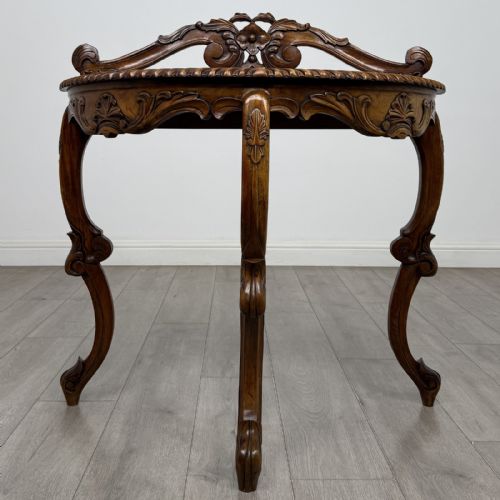
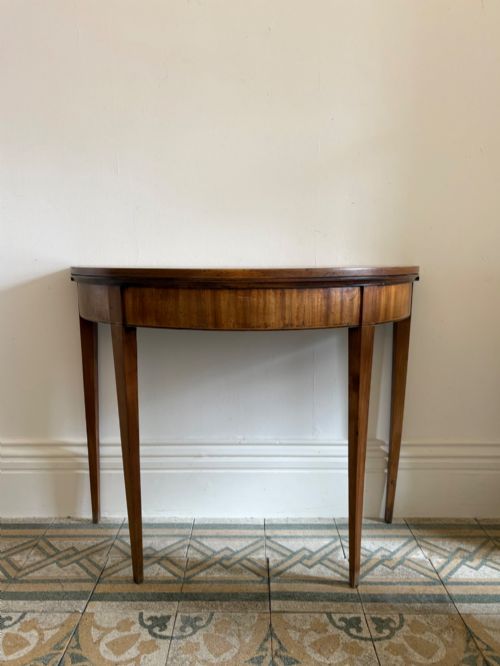
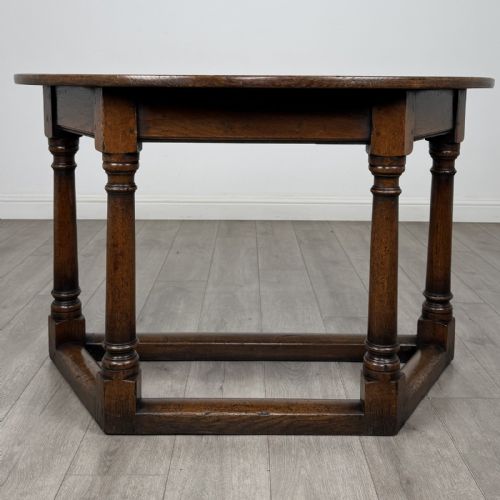
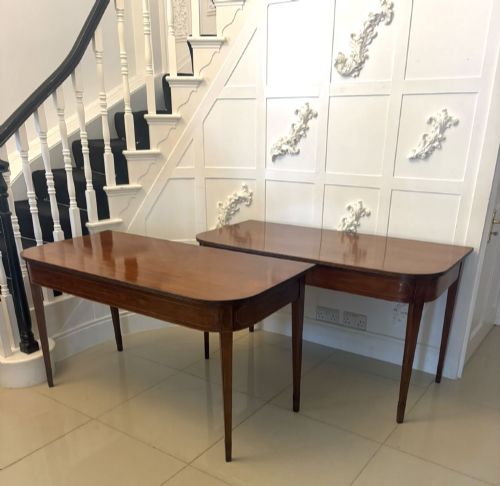


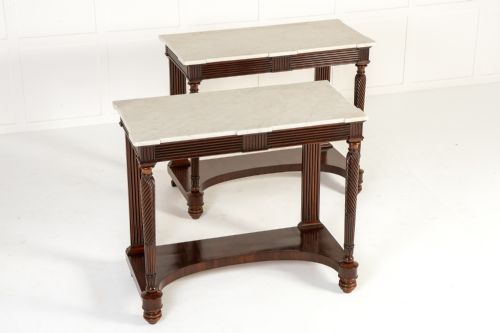

Entryway Wall Table
An entryway wall table provides a striking focal point in a hallway, anchoring the space with period character and practical surface area.
Entryway Wall Table
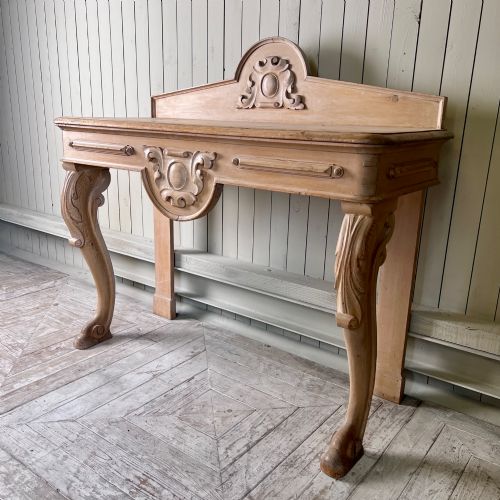
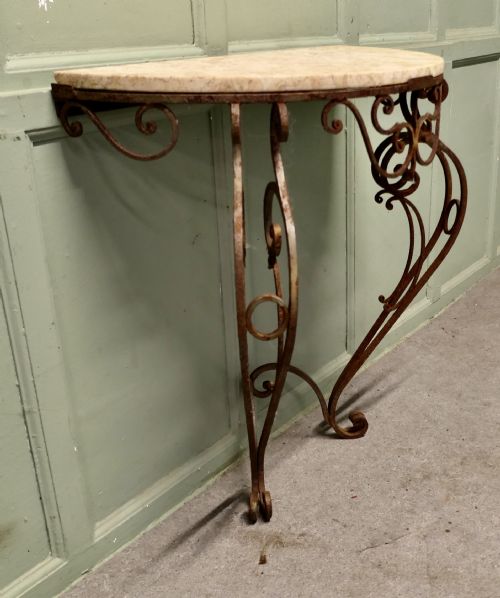
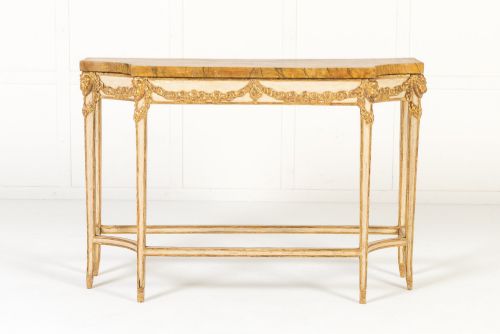
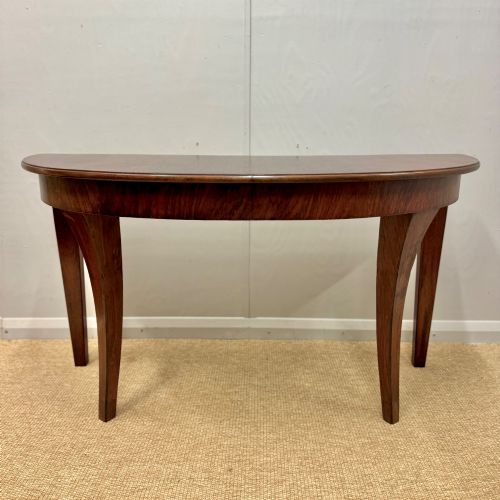
An entryway wall table appears primarily as a console table or hall table designed to stand flat against a partition, often accompanied by a matching wall mirror. These pieces derive from various European traditions, including Georgian, Regency, Victorian and continental styles.
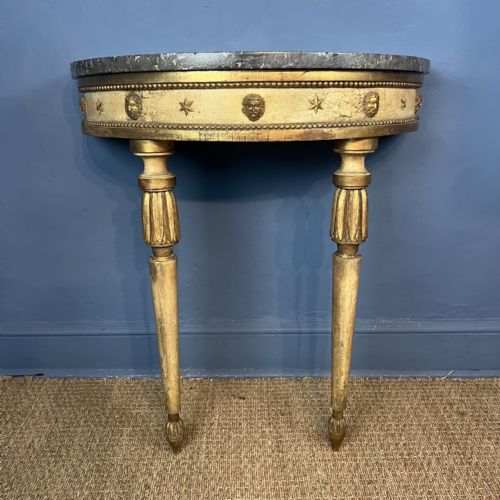
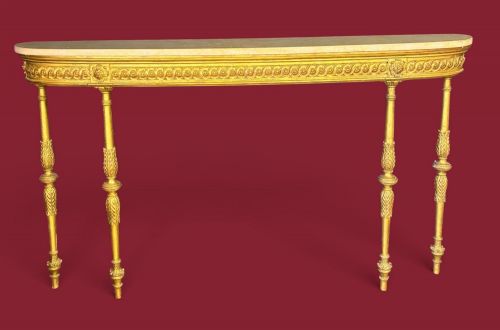
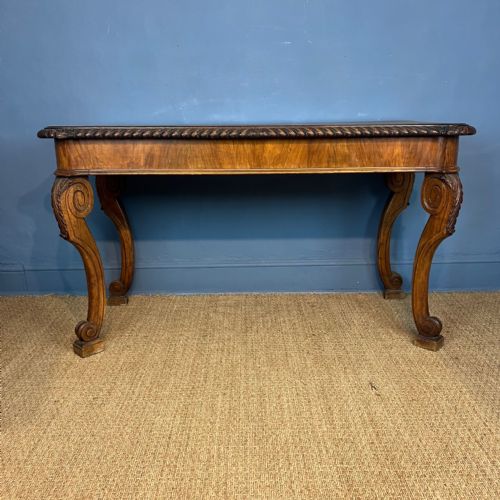
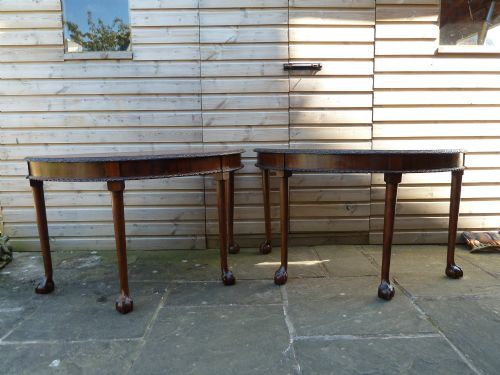
The materials span traditional cabinet timbers such as mahogany, oak and walnut, alongside more decorative surfaces finished in paint, giltwood or marble. Buyers encounter forms ranging from semi-circular demi-lune shapes to rectilinear side tables supported by console brackets.
Origin points vary across English workshops, French provincial centres and Italian studios, reflecting the tastes of the eighteenth, nineteenth and early twentieth centuries. The selection on this page demonstrates the enduring appeal of these wall-mounted and console formats for domestic interiors.
Materials and Technique
Cabinetmakers utilised dense hardwoods such as mahogany and oak for structural integrity, often employing veneer work and fine inlay to create patterned surfaces on tabletops. Joinery techniques varied according to the period, supporting heavier additions like inset marble slabs.
Decorative finishes involved hand-applied paint, gesso moulding and gold leaf parcel gilding, particularly on Italian and French pieces designed to catch the light in reception rooms. Wrought iron and carved pine also appear in regional interpretations.
Carved details such as cabriole legs, lion paw supports and serpentine outlines required skilled hand-tooling by makers who balanced structural support with ornate stylistic flourishes.
Entryway Wall Table Retail Price Guide 2026
Typical asking prices for entryway wall table among the pieces listed under this phrase on Sellingantiques today, from the lower quarter to the upper quarter. They describe what is for sale here now, not the wider market.
Several pieces feature lion paw supports, ensuring your post sits atop the watchful gaze of carved fauna.
Craftsmanship and Proportion
The distinction between ordinary and exceptional examples rests upon the crispness of the carving and the quality of the timber selection, such as figured flame mahogany or dense pollard oak. Superior pieces display harmonious proportions where the depth of the top balances the weight of the supporting legs or wall brackets.
Surface treatment dictates much of the visual success, with original gilding, undisturbed patination on walnut and intact marble tops marking out superior examples. Lesser items may show heavy restoration or unsympathetic repainting that obscures the original hand of the maker.
The Entryway Wall Table Glossary
- Demi-lune
- A half-moon shape used for tabletops and console designs that sit flush against a wall. This format maximises floor space in narrow corridors.
- Giltwood
- Timber that has been coated with a thin layer of gold leaf over a prepared gesso ground. It provides a reflective surface popular in neoclassical and baroque designs.
- Console table
- A table supported by wall brackets or decorative legs rather than four freestanding supports. These pieces rely on wall attachment for stability.
- Breccia
- A type of marble composed of broken rock fragments embedded in a fine-grained matrix. It yields a variegated, highly decorative surface on nineteenth-century tabletops.
Entryway Wall Table: Frequently Asked Questions
How do I fix a wall table securely?
Most console tables designed for wall placement require structural fixing to ensure stability, particularly when topped with heavy marble slabs. Brackets or hidden fixings anchor the frame directly to the masonry or studwork behind.
Consult a professional restorer or joiner to assess the weight distribution and select appropriate wall fixings that respect the antique timber.
Where should I place an entryway wall table?
These tables suit narrow circulation areas, entrance halls and landings where floor space is limited. Positioning the piece beneath a matching wall mirror creates a balanced focal point upon entering the home.
Ensure sufficient clearance remains for doors to open and for everyday passage through the hallway.
How do I care for antique marble tops?
Marble surfaces require gentle cleaning with a damp cloth and mild, pH-neutral soap to avoid etching the stone. Acidic substances like citrus juice or wine can permanently mark unsealed marble.
Applying a specialist stone wax periodically helps protect the polish and maintains the character of the material.
How do I identify the period of a console table?
Dating relies on observing construction methods, timber choice and stylistic motifs such as Regency reeding or Victorian cabriole legs. Tool marks on the underside and the nature of the fixings provide clues to manufacturing age.
Comparing the proportions and decorative vocabulary to documented examples helps narrow down the decade of production.