

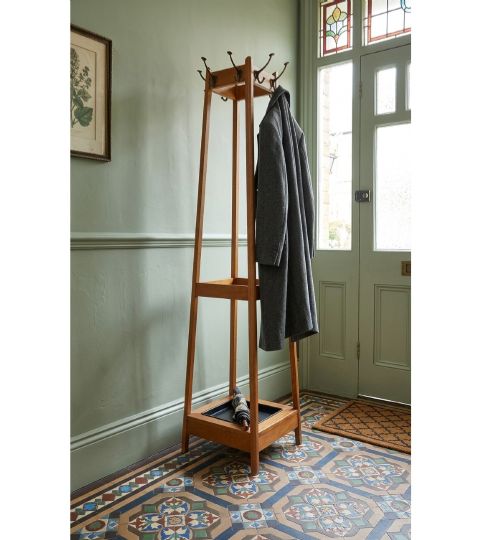
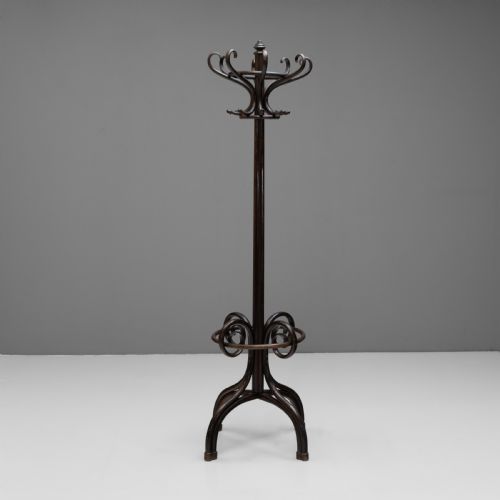

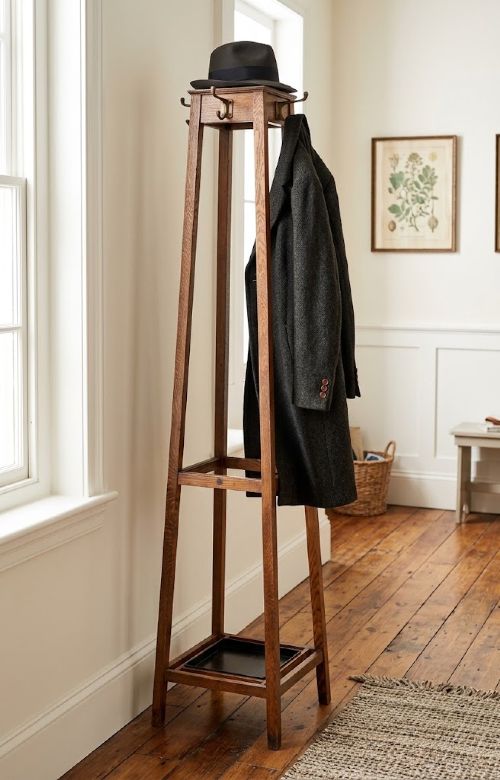
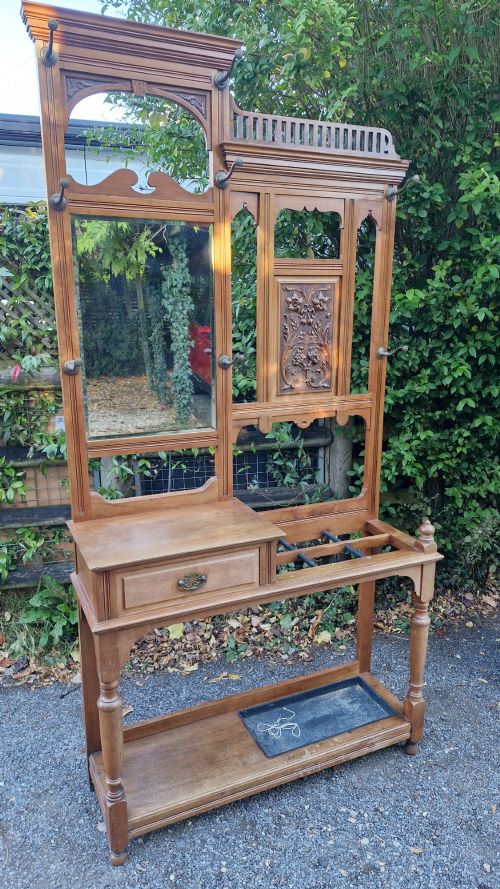

Entryway Hat Stand
An entryway hat stand meets the practical demands of the hall through period timber, cast iron and clever hanging space.
Entryway Hat Stand
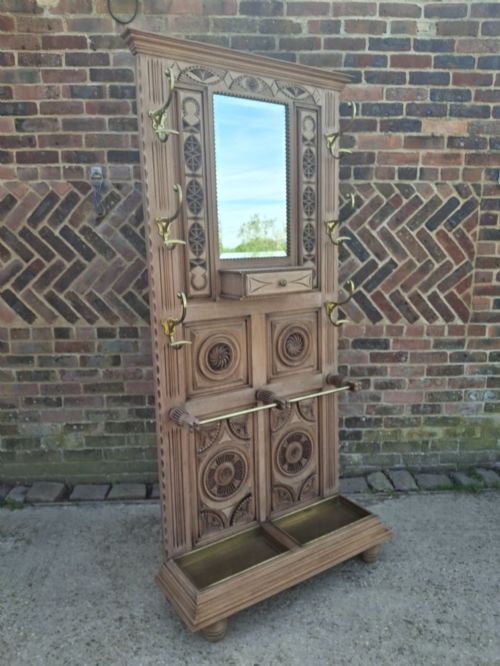
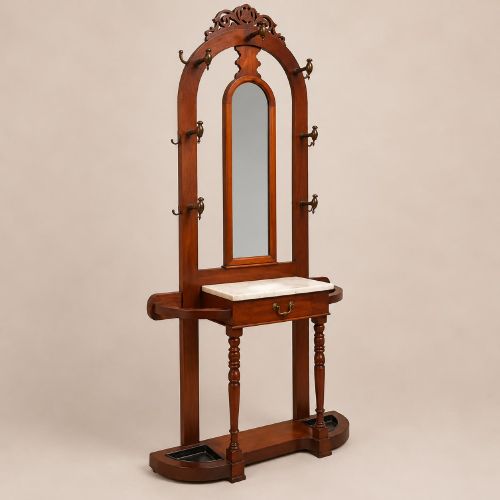
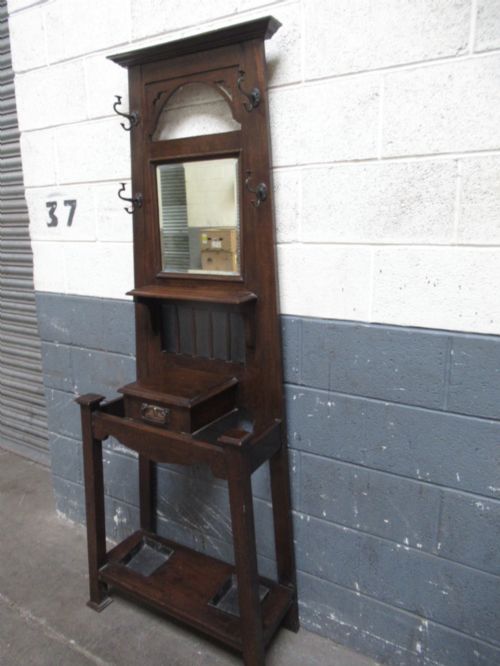
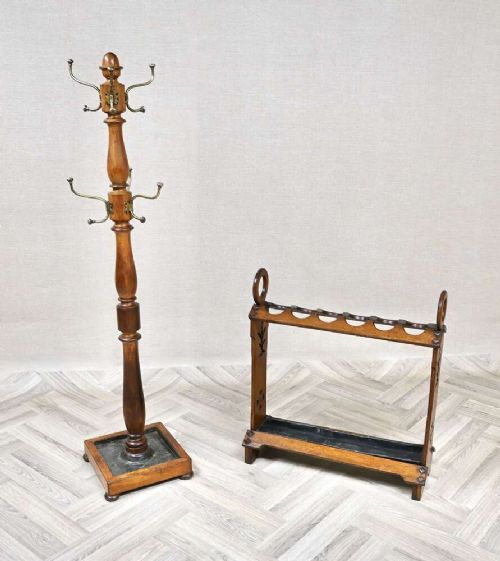
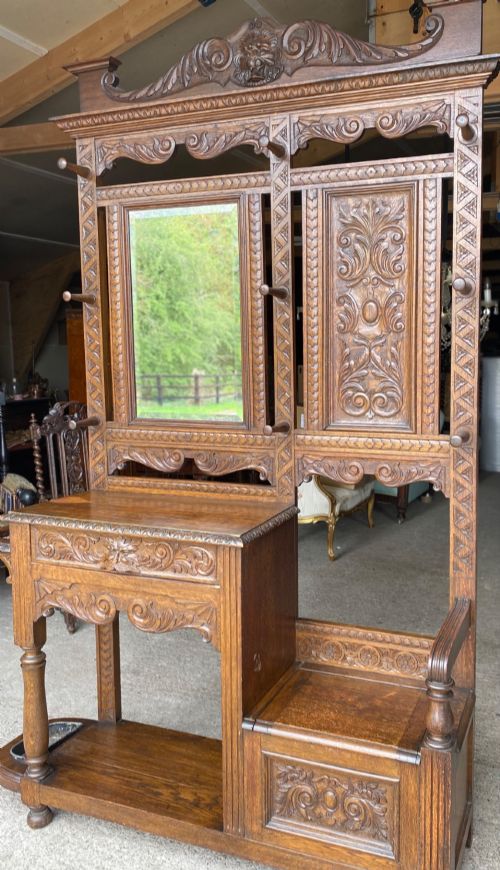
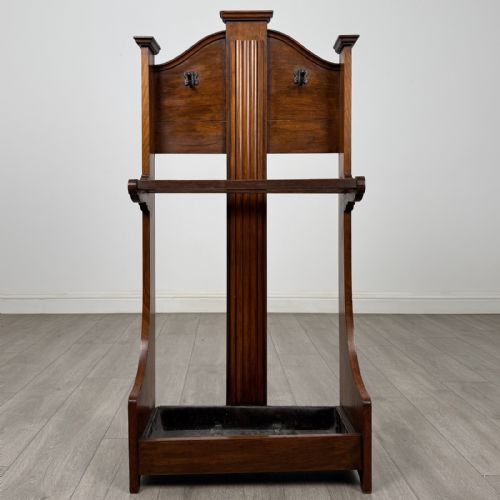
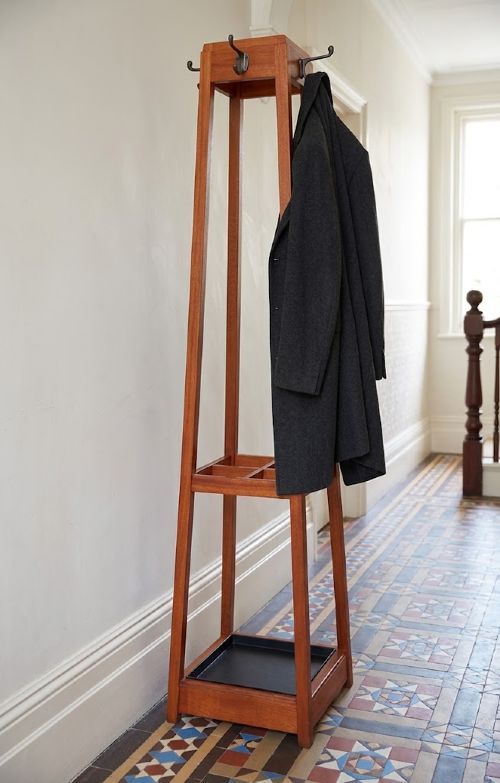
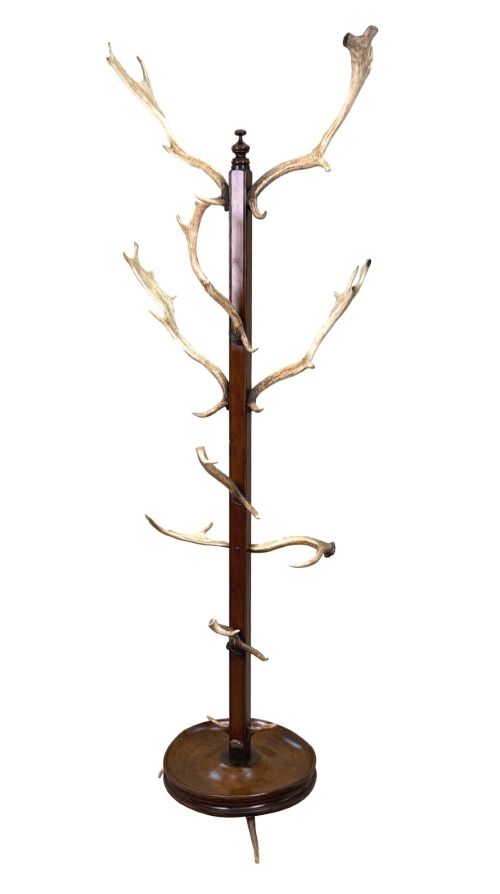
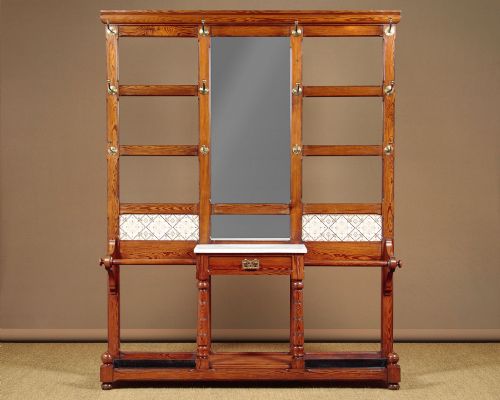
When you search for an entryway hat stand, you encounter hall stands, coat racks and umbrella stands spanning the Victorian, Edwardian and Arts & Crafts periods. These pieces range from substantial carved oak and walnut furniture incorporating mirrors and drip trays to streamlined wall-mounted racks designed for compact spaces.
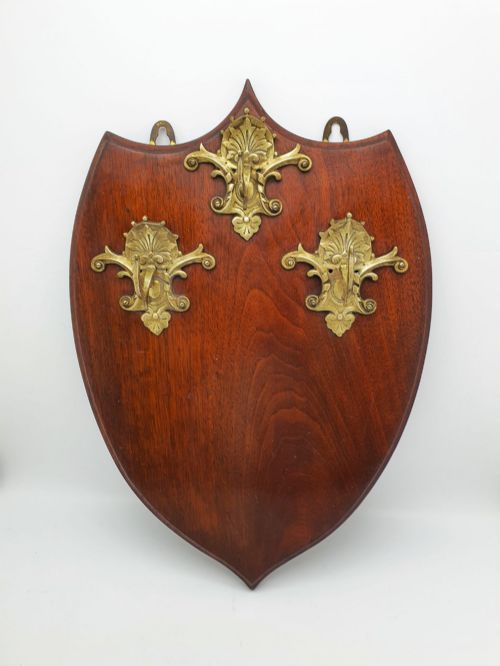
The selections on this page lean heavily towards late nineteenth and early twentieth-century examples, produced in woods like mahogany, oak and walnut alongside alternative materials such as cast iron and bamboo. You will find floor-standing units meant to anchor a hallway alongside smaller wall-fixed plaques fitted with brass hooks.
Makers and designers experimented across various movements, yielding everything from Aesthetic bamboo frames and Black Forest carvings to Austrian bentwood and Art Nouveau curves. This variety ensures that whether your interior calls for heavy carved Victorian presence or lighter Edwardian utility, the functional core remains the same.
Materials and Construction
Cabinetmakers constructed these pieces using dense hardwoods like oak, walnut and mahogany, often shaping them with deep relief carving or steam-bending beech for bentwood frames. Cast iron versions relied on robust foundry casting to create rigid, decorative frameworks capable of supporting heavy garments.
Metal components played a structural and decorative role, with brass hooks, drip pans and mirror frames screwed directly into the timber backings. Bamboo and faux bamboo frameworks utilised natural joints and binding to create sturdy yet lightweight hall furniture.
Entryway Hat Stand Retail Price Guide 2026
Typical asking prices for entryway hat stand among the pieces listed under this phrase on Sellingantiques today, from the lower quarter to the upper quarter. They describe what is for sale here now, not the wider market.
Listings feature woods spanning oak, mahogany, walnut, pine and bamboo alongside cast iron and brass.
Evaluating Construction and Detail
Superior examples distinguish themselves through the depth of hand-carved ornamentation, such as figural motifs like the Green Man or integrated Black Forest animal carvings. The choice of timber grain, particularly in golden oak and figured walnut, dictates the visual weight of the piece.
Hardware integrity separates standard production from finer work, seen in the weight of cast brass hooks and the quality of bevelled mirror glass secured within the frame. Bentwood quality rests on the precision of the steam-bent curves and the stability of the joined components.
Falkirk Foundry·Fischel
The Entryway Hat Stand Glossary
- Hall stand
- A large piece of hall furniture combining hat and coat hooks, a mirror, umbrella storage and frequently a small glove drawer or bench seat. It anchors the entryway of a period home.
- Bentwood
- Wood shaped by steaming it until pliable and bending it into curved forms. This technique created lightweight, durable coat stands popular around nineteen hundred.
- Aesthetic movement
- A late nineteenth-century design style emphasising visual beauty over narrative, often reflected here in the use of bamboo and clean structural lines.
- Drip tray
- A metal or ceramic tray placed at the base of a stand to catch water from wet umbrellas. It protects the timber floor from moisture damage.
- Cast iron
- An iron-carbon alloy poured into moulds to create rigid shapes. It allowed makers to produce intricate, openwork frames for heavy-duty coat stands.
Entryway Hat Stand: Frequently Asked Questions
What is an entryway hat stand?
An entryway hat stand is a piece of furniture designed to hold outdoor garments, headwear and walking gear near the front door. They range from compact wall-mounted racks to large floor-standing units with integrated mirrors and umbrella holders.
These items served as the primary storage point for family and visitors arriving from the outdoors in nineteenth and early twentieth-century homes.
How were they used in period homes?
Families used them daily to store coats, hats, scarves, walking sticks and umbrellas immediately upon entering the house. The central mirror allowed a final check of one's appearance before stepping back outside.
Some designs included small compartments or trays for calling cards, gloves and keys, keeping the hallway tidy.
How do I fit one in a modern hall?
Floor-standing models require adequate clearance against a solid wall to prevent tipping when heavily loaded with winter coats. Wall-mounted racks suit smaller hallways where floor space is limited.
Ensure the wall fixings or placement can handle the weight of heavy oak, walnut or cast iron structures.
How do I date a hall stand?
Dating relies on the prevailing style, wood choice and manufacturing techniques visible in the piece. Victorian examples often feature heavy carving, dark oak and elaborate crests, while Edwardian and later pieces lean towards simpler lines or bentwood.
Hardware styles, mirror bevelling and foundry marks also help narrow down the decade of production.