




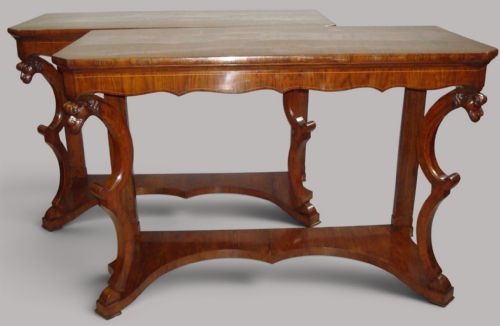

Entryway Furniture Pair
An entryway furniture pair brings symmetry and purpose to a hall, uniting matching console tables or seating.
Entryway Furniture Pair
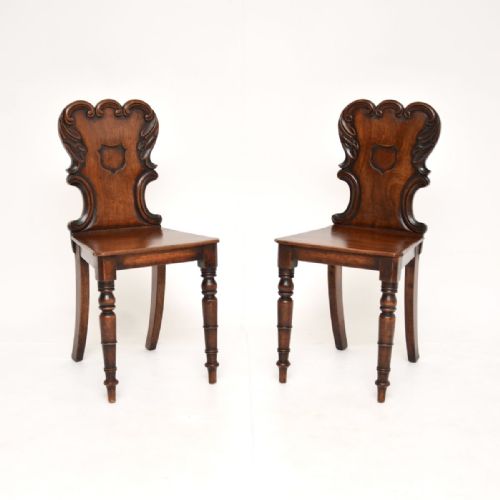
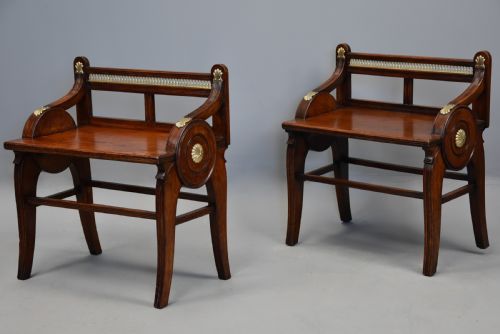
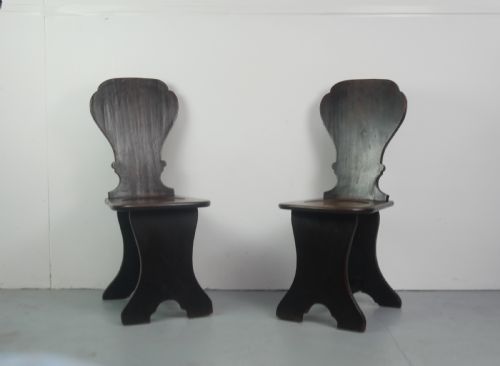
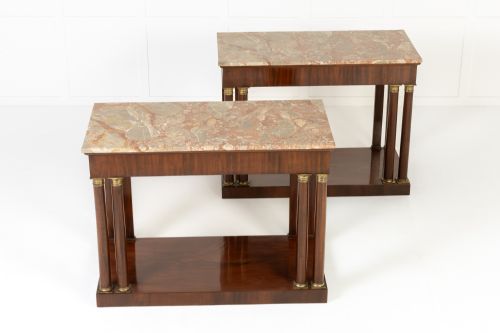
An entryway furniture pair serves the hall or reception room through matched console tables, hall chairs, benches, and settles. These pieces establish a formal balance at the entrance of a house, designed to greet visitors with utility and style.
The selections span several periods, with 19th century items and Victorian pieces appearing most frequently alongside Georgian, Regency, and William IV examples. Mahogany, oak, pitch pine, and walnut provide the primary timber foundations for these matched sets.
Forms vary from robust oak hall benches and panelled box settles to carved mahogany hall chairs and elaborate marble-topped console tables. Italian, French, Scottish, and Chinese origins introduce regional carving traditions to the group.
Materials and construction
Makers utilised dense hardwoods such as mahogany, oak, and walnut to construct sturdy frames capable of enduring heavy daily use in busy hallways. Carved details frequently adorn the backs of hall chairs and the aprons of console tables.
Surface ornamentation incorporates brass fittings, giltwood finishes, and inset marble slabs such as breccia. Glass and mirror elements appear in specific console arrangements to reflect light within narrower spaces.
Entryway Furniture Pair Retail Price Guide 2026
Typical asking prices for entryway furniture pair among the pieces listed under this phrase on Sellingantiques today, from the lower quarter to the upper quarter. They describe what is for sale here now, not the wider market.
Solid oak settles hide boots and capes beneath hinged seats, keeping the Victorian hallway tidy.
Distinctions in craftsmanship
The standard of timber selection and the depth of hand-carved ornamentation dictate the refinement of a pair. Fine execution is evident in crisp relief work on chair backs and substantial marble tops supported by carved lion's paw feet.
Attribution to known makers or documented design influences elevates the significance of certain groupings. Consistency of grain and matching proportions across both objects distinguish higher grade sets from simpler utility pieces.
James Shoolbred and Co·Gillows·Richard Bridgens
The Entryway Furniture Pair Glossary
- Console table
- A table designed to be fixed against a wall, frequently supported by ornate brackets or legs rather than four independent vertical posts.
- Hall chair
- A rigid wooden seat traditionally placed in an entrance hall, often featuring a solid carved back displaying a crest or shield.
- Box settle
- A high-backed wooden bench with storage space enclosed beneath the seat.
- Giltwood
- Timber that has been coated with a thin layer of gold leaf or gold paint for decorative effect.
- Breccia marble
- A composite stone made of broken fragments embedded in a fine-grained matrix, used for decorative table tops.
Entryway Furniture Pair: Frequently Asked Questions
Where should an entryway furniture pair be placed?
Console tables function best against a clear wall beneath a mirror, while matching chairs or benches anchor opposing sides of a spacious reception hall.
Arranging these matching items symmetrically creates a formal focal point immediately upon entering the property.
How were these matched pieces used historically?
Hall chairs and benches provided brief seating for visitors waiting to be announced by household staff. Console tables served as surfaces for calling cards, keys, and decorative lighting.
Their sturdy wooden construction was intended to withstand the heavy wear of an entrance thoroughfare.
How do I care for antique hall furniture?
Maintain timber surfaces by applying appropriate wax polish periodically to nourish the grain and protect the finish. Avoid placing wooden pieces near direct heat sources or in strong sunlight.
Clean marble tops gently with a damp cloth, avoiding acidic cleaners that can etch the stone surface.
What defines Regency style in these items?
Regency designs draw inspiration from classical antiquity, featuring clean structural lines, sabre legs, and understated carved decoration. Mahogany remains a dominant timber for this aesthetic.
Pieces from this era often exhibit disciplined proportions and restrained classical motifs.