


Entryway Coat Umbrella Stand
An entryway coat umbrella stand greets visitors by holding hats, coats, and sticks the moment they step inside.
Entryway Coat Umbrella Stand
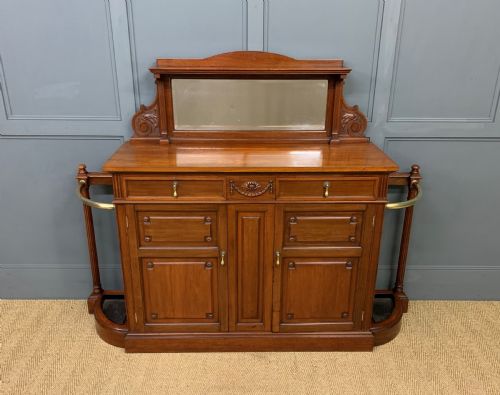
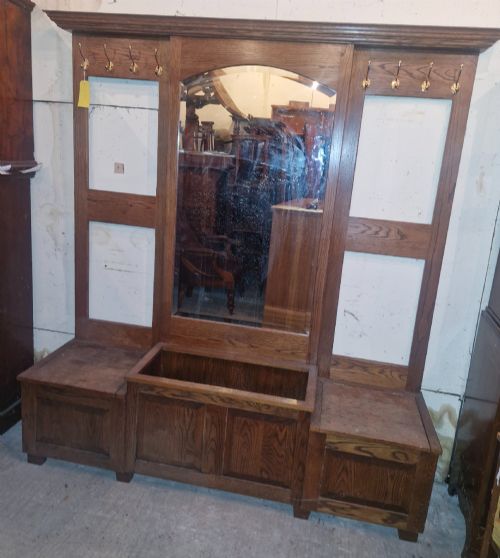
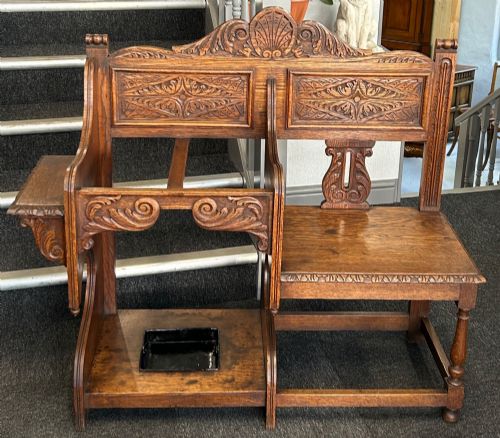
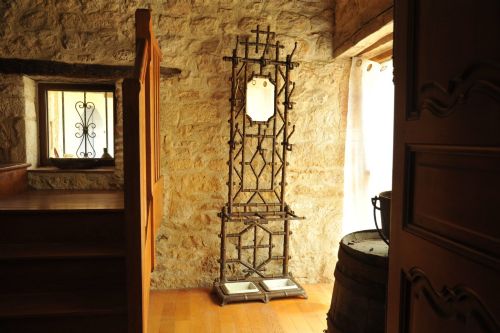
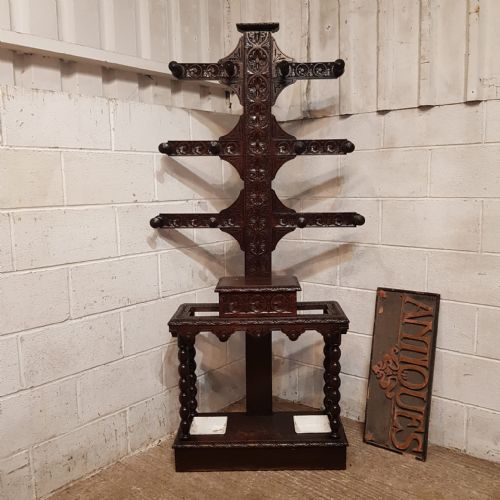
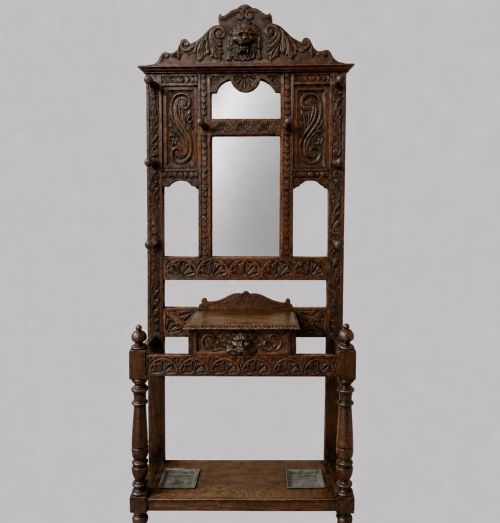
An entryway coat umbrella stand encompasses hall stands, hallstands, coat stands, and hall seats that organise domestic entranceways. These pieces emerge predominantly in Victorian and Edwardian periods, stretching from the nineteenth century into the early twentieth century.
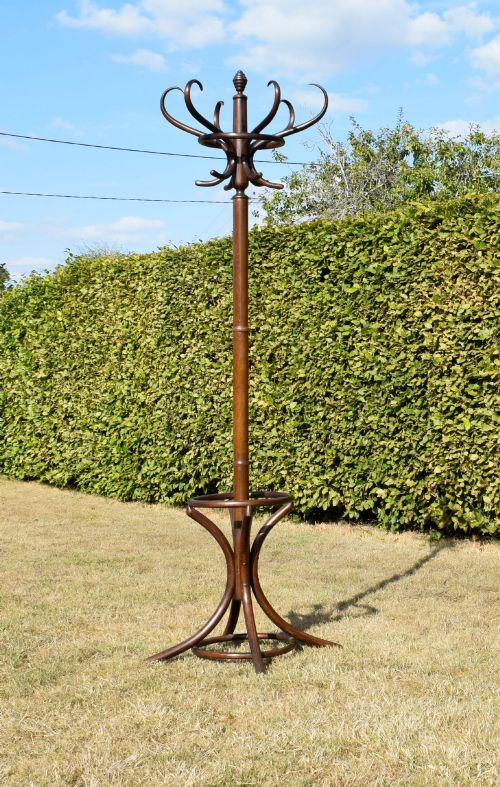
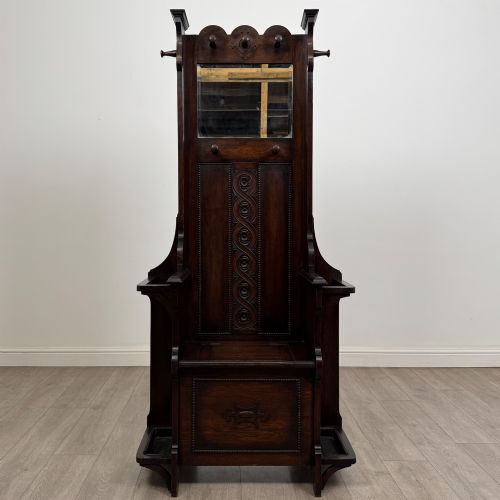
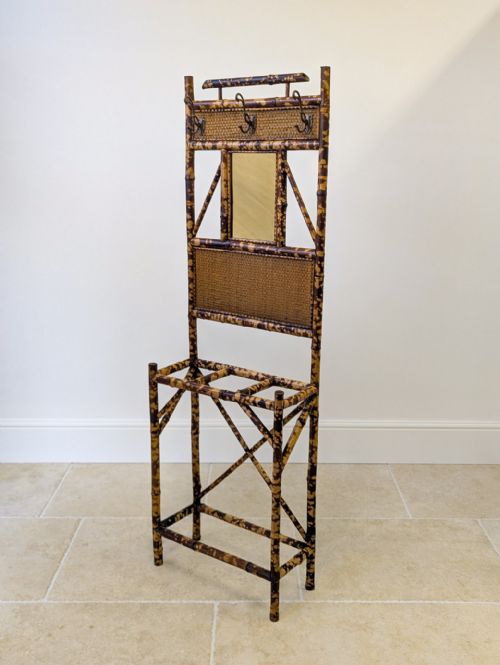
The objects appear in various configurations, ranging from heavy carved oak structures with integral mirrors to lighter bamboo and bentwood versions. French and British workshops produced these items to serve practical needs in grand hallways and modest vestibules alike.
Materials and Technique
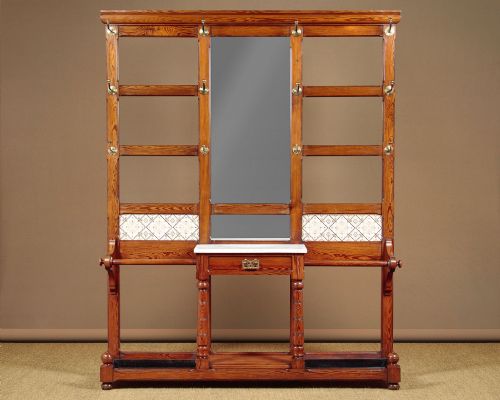
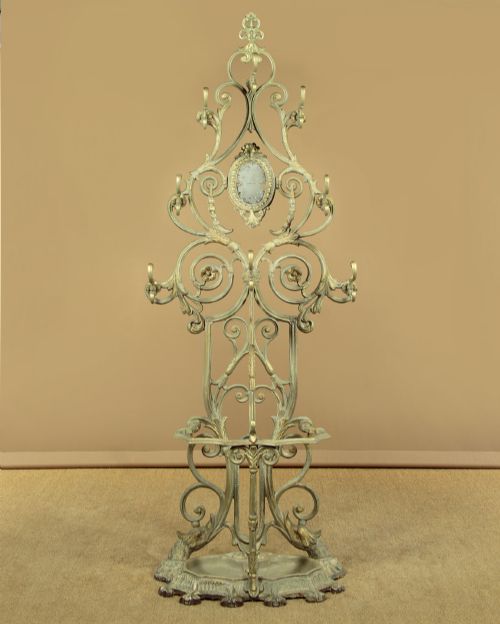
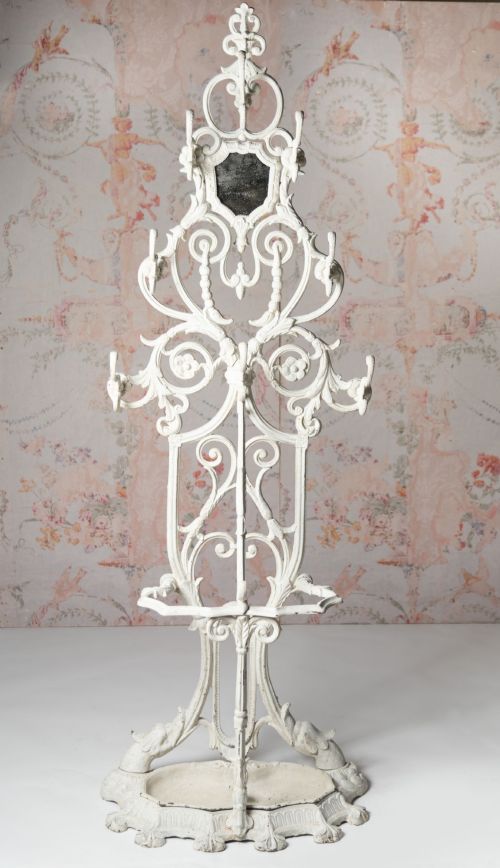
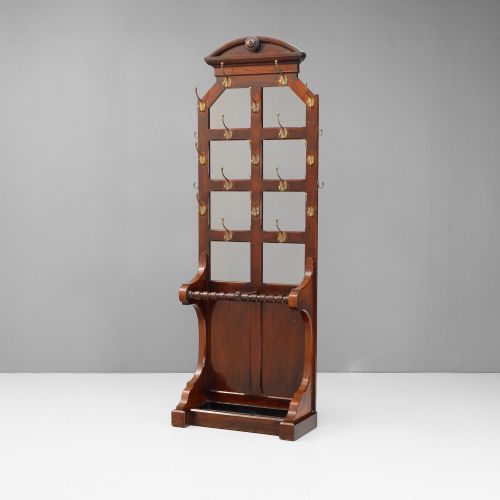
Maker construction relies heavily on timbers such as oak, walnut, mahogany, and pine, frequently shaped through traditional joinery and detailed carving. Cast iron and wrought iron also feature prominently, utilised for structural rigidity and intricate framework in hall stands.
Auxiliary components include brass hooks for garments, metal drip pans for umbrellas, and mirrored panels set into the wooden backboards. Alternative materials like bamboo and beech, the latter formed via bentwood techniques, provide lighter structural alternatives.
Periods represented span from the Victorian era and Edwardian period through to the early twentieth century.
The Measure of Quality
Quality rests upon the selection of timber and the ambition of the carving, distinguishing robust architectural statements from simpler utility items. Substantial proportions, dense hardwoods like oak or walnut, and crisp joinery separate standard examples from finer commissions.
The integration of secondary materials defines the upper tier, seen in bevelled mirror glass, heavy brass hardware, and original cast iron drip trays. Finer pieces display deliberate stylistic cohesion, whether adhering to Aesthetic Movement bamboo designs or Arts and Crafts movement ideals.
Shoolbred and Co·Falkirk Foundry·Fischel
The Entryway Coat Umbrella Stand Glossary
- Hall stand
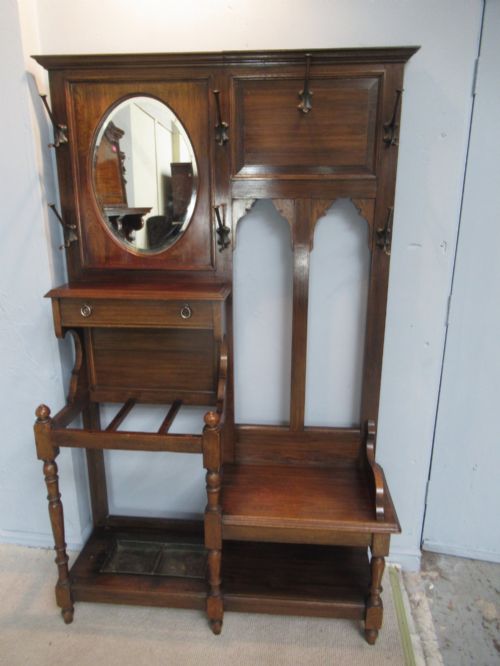
- A large piece of entrance furniture combining clothes hooks, a mirror, and umbrella wells. These items anchor the hallway by consolidating storage for outer garments and walking sticks.
- Bentwood
- Wood softened by steam and pressed into curved shapes using metal straps and moulds. This technique produced lightweight, fluid frames popular in the late nineteenth and early twentieth centuries.
- Faux bamboo
- Wood turned and carved to imitate natural bamboo stalks. Makers utilised this decorative finish during the Victorian Aesthetic Movement to satisfy demand for exotic visual styles.
- Aesthetic Movement
- A late nineteenth-century design current prioritising visual beauty over narrative or moral function. Pieces from this movement often incorporate Japanese-inspired bamboo elements.
- Green Man
- A sculptural architectural motif representing a human face entwined with foliage and vines. Carved examples appear frequently on the crests of nineteenth-century oak hall stands.
Entryway Coat Umbrella Stand: Frequently Asked Questions
What is a hall stand?
A hall stand is a tall piece of furniture designed for entrance halls to hold coats, hats, and umbrellas. They typically incorporate hooks, a central mirror, and lower umbrella stands with drip trays.
These pieces served as the primary storage point for outdoor apparel in nineteenth-century and early twentieth-century homes. Their robust construction allowed them to handle heavy winter garments and wet walking gear daily.
How do I identify Victorian hall stands?
Victorian hall stands usually feature dark timbers like oak or mahogany, elaborate carving, and heavy brass coat hooks. Many examples include central mirrors framed by architectural pediments and ornate mouldings.
Later Victorian variations incorporate aesthetic movement bamboo or cast iron components. Examining the construction methods and wood ageing helps distinguish these nineteenth-century pieces from later reproductions.
Where should I place an umbrella stand?
An umbrella stand belongs immediately beside the entrance door where wet items are shed upon entry. This placement protects interior flooring from moisture while keeping walking sticks accessible.
Free-standing versions or integrated hall stands require adequate clearance to allow doors to open fully. Placing them on hard floors or over protective trays prevents water damage to surrounding carpets.
What is bentwood furniture?
Bentwood furniture is constructed by steaming lengths of timber until pliable, then bending them into curved forms. This technique creates strong, lightweight frames without requiring complex joinery.
Originating largely in Austria, bentwood coat and hat stands became popular for their organic curves. They suit modern interiors well due to their minimalist profiles and practical functionality.