



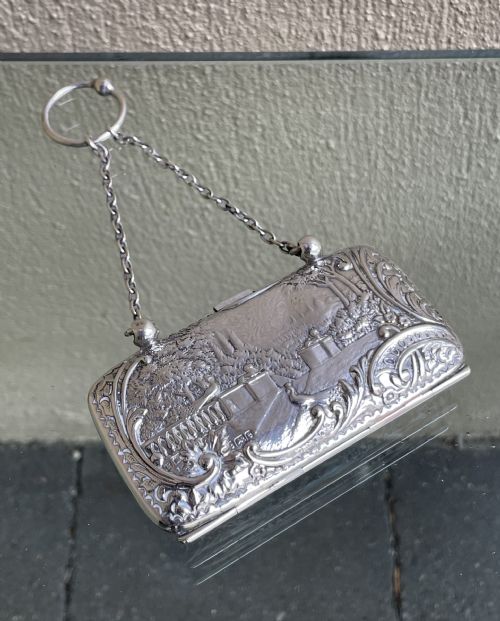


Engraved Victorian Card Case
An engraved victorian card case slips into the palm with a cool weight, holding the visiting cards that once governed polite society.
Engraved Victorian Card Case
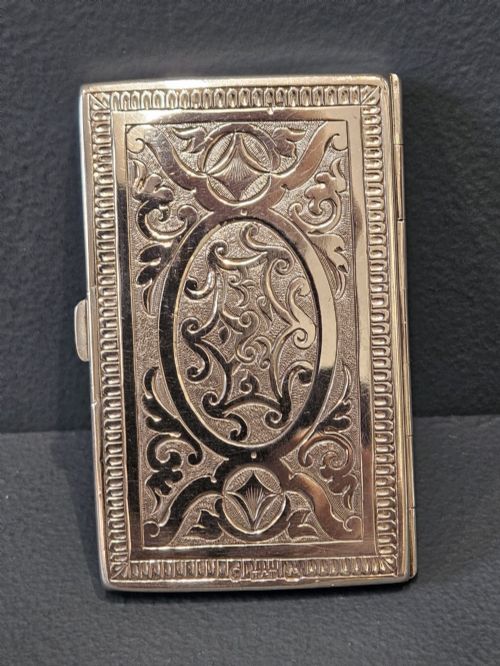
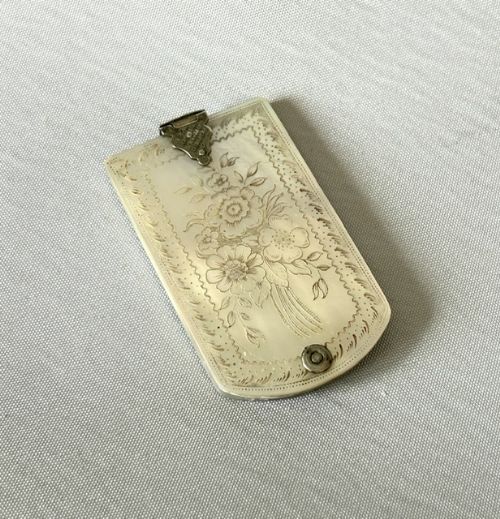
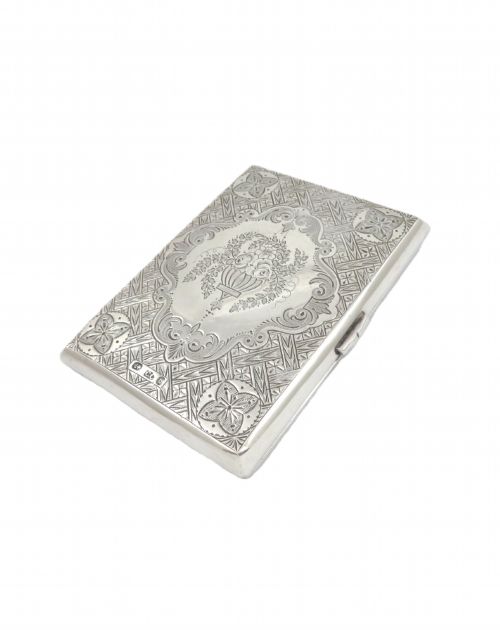
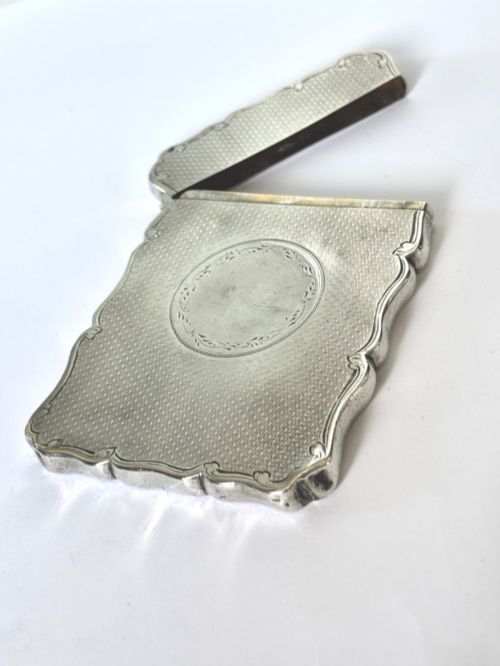
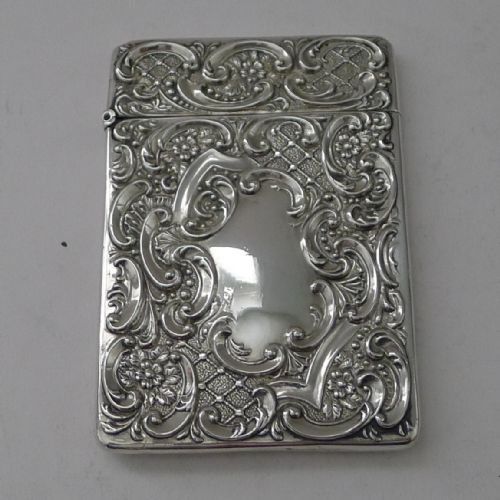
An engraved victorian card case is a pocket-sized receptacle designed to hold visiting cards during the nineteenth century. These pieces appear most frequently as sterling silver containers, alongside examples incorporating mother-of-pearl, bone, silk, and Connemara marble.
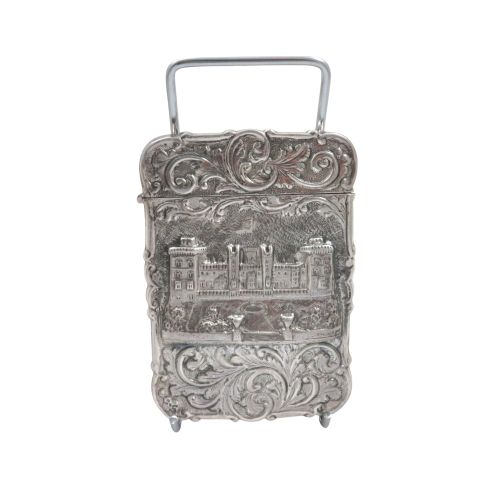
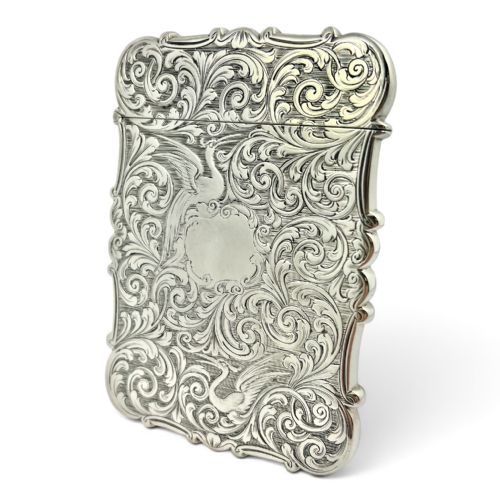
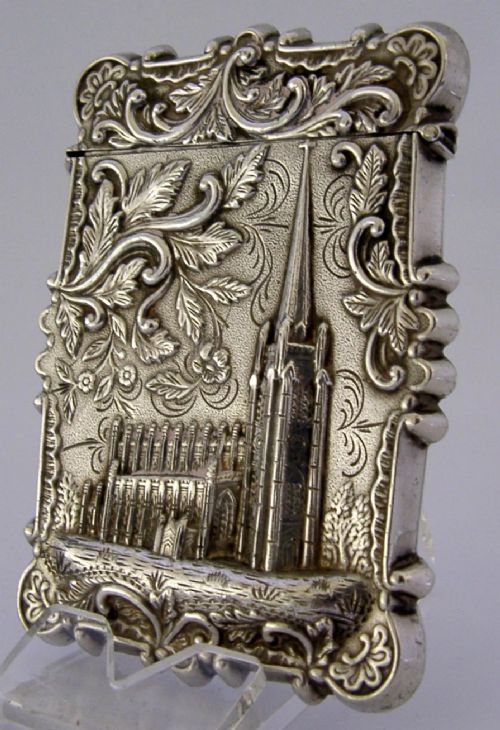
The selection ranges from simple rectangular boxes to more complex formats such as aide-memoires, card boxes, and cases featuring detachable purse sections. Many examples display detailed surface decoration, including floral motifs, scrollwork, and architectural views.
Most items date from the Victorian period, though related pieces stretch from the mid-eighteenth century into the Edwardian era. Makers utilise various mechanisms, from standard hinged lids to unusual opening configurations and concertina silk interiors.
Markers of quality
The distinction between standard production and superior craftsmanship rests on the depth and precision of the hand engraving. Architectural pieces depicting specific landmarks require advanced skill in relief work compared to repetitive floral scrolls.
Material selection alters the character of the piece, with solid sterling silver and figured mother-of-pearl commanding greater presence than simpler constructions. Integrated elements, such as functioning concertina silk pockets or smooth opening mechanisms, demonstrate higher workshop standards.
Engraved Victorian Card Case Retail Price Guide 2026
Typical asking prices for engraved victorian card case among the pieces listed under this phrase on Sellingantiques today, from the lower quarter to the upper quarter. They describe what is for sale here now, not the wider market.
Listings feature sterling silver, mother-of-pearl, bone, silk, and Connemara marble across Victorian and Edwardian periods.
Nathaniel Mills·George Unite·Wright and Davies·Foxall and Co
The Engraved Victorian Card Case Glossary
- Castle top
- A silver card case featuring a high-relief architectural depiction of a specific landmark on the cover. These architectural engravings often show notable buildings such as Windsor Castle or St Paul's Cathedral.
- Aide-memoire
- A pocket notebook or case intended for recording brief notes and memoranda. These often combine silver panels with materials like mother-of-pearl, bone, and internal silk pockets.
- Bright cut
- An engraving technique utilising faceted cuts made with a graving tool to create a reflective surface. This method produces crisp, glittering geometric and floral patterns on the silver.
- Concertina
- An expandable interior structure formed from pleated silk or fabric. This accordion-like arrangement allows the case to expand as cards or notes are inserted.
- Hallmark
- An official stamp applied to precious metals indicating purity, origin, and date. British pieces typically show a standard mark, assay office mark, and date letter.
Engraved Victorian Card Case: Frequently Asked Questions
What were card cases used for?
Victorians used card cases to carry small pasteboard calling cards when making social visits. Leaving a card signified a formal social call when the host was not at home.
These slim containers protected delicate paper cards from bending or soiling within pockets and reticules while travelling between residences.
How do I date a silver card case?
Dating relies primarily upon the hallmarks stamped into the sterling silver by the assay office. These marks include specific letters corresponding to the year of manufacture.
Stylistic evidence such as Gothic Revival motifs or architectural subjects also helps narrow the production window to specific decades of the nineteenth century.
Can I still use these for modern cards?
Most antique card cases were designed for smaller nineteenth-century visiting cards rather than modern business cards. Standard credit cards and modern visiting cards are often too wide to fit inside.
Owners generally collect and display them as decorative objects or utilise them to store lightweight paper items of appropriate dimensions.