



Engraved Sterling Silver Trophy
An engraved sterling silver trophy brings substance and sporting history to a room, offering tactile metalwork and crisp hand-cut inscriptions.
Engraved Sterling Silver Trophy
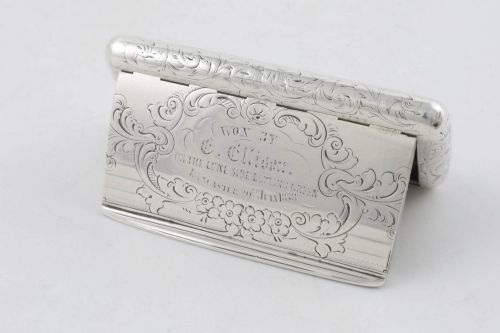
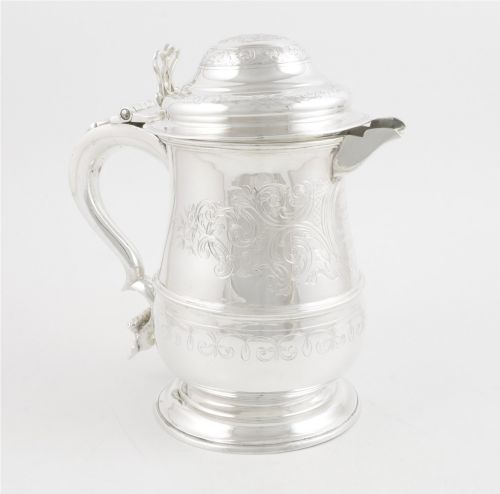
An engraved sterling silver trophy spans Georgian, Victorian, and Edwardian periods, appearing most often as deep presentation cups, goblets, and rowing or cricket awards. These pieces combine functional drinking vessels with commemorative design, often featuring hand-engraved foliage, armorials, or presentation inscriptions marking specific sporting victories and milestones.
The selection on this page ranges from Dublin-made Irish silver vessels of the eighteenth century to prolific Birmingham-assayed nineteenth-century output. Buyers regularly encounter both single presentation cups and matched pairs, alongside occasional novelty forms and sets that include related items like tie pins.
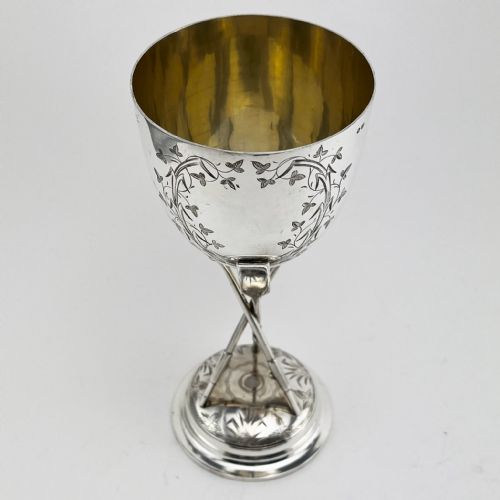
Forms vary from plain bell-shaped bowls on spreading feet to parcel-gilt interiors and elaborate fern-engraved surfaces. Each object records the aesthetic preferences of its decade, shifting from Georgian plainness to the detailed Victorian ornamentation of the later nineteenth century.
Materials and Construction
Makers shaped these vessels from heavy gauge sterling silver, frequently applying silver gilt or gold gilt to the interior surfaces to protect the metal from acidic contents. This technique of parcel-gilding creates a sharp contrast between the bright interior wash and the polished exterior silver.
Decoration relied on hand engraving, utilising sharp gravers to cut fern motifs, scrollwork, and presentation text directly into the metal wall. Silversmiths raised bodies from flat sheet silver or cast them in sections before soldering handles, stems, and heavy foot rims securely into place.
Engraved Sterling Silver Trophy Retail Price Guide 2026
Typical asking prices for engraved sterling silver trophy among the pieces listed under this phrase on Sellingantiques today, from the lower quarter to the upper quarter. They describe what is for sale here now, not the wider market.
Listings feature sterling silver, silver gilt, and gold gilt across Victorian, Georgian, Edwardian, and Chinese Export styles.
Assessing Quality and Merit
Quality rests upon the crispness of the hand engraving and the gauge of the silver used for the body and foot. Superior pieces retain deep, sharp lines in their floral or fern motifs without thinning from excessive past polishing.
Provenance and maker reputation elevate certain pieces above standard production, particularly when associated with recorded silversmiths like Thomas Sutton or Henry Tatton & Son. The balance of the form, the weight of the metal in the hand, and the clarity of the hallmarks stamped into the silver dictate the standing of each trophy.
Henry Tatton & Son·Thomas Sutton
The Engraved Sterling Silver Trophy Glossary
- Sterling silver
- A silver alloy containing 92.5 percent pure silver by mass, with the remainder consisting of copper or other metals. This standard composition guarantees durability and forms the base material for the majority of these presentation cups.
- Parcel gilt
- Silver objects that feature partial gilding, where specific areas such as the interior bowl or applied mounts are coated in a thin layer of gold. This traditional method highlights decorative details and prevents tarnishing from liquid contact.
- Assay
- The testing of precious metal purity conducted by an official office, resulting in hallmark stamps that verify the standard of the silver. These marks reveal the city of testing, the maker's mark, and the year of manufacture.
- Presentation cup
- A two-handled or handled vessel awarded as a prize or given as a gift, typically bearing engraved text that records an event, date, and recipient. They serve as historical records of nineteenth-century and earlier competitive sports.
Engraved Sterling Silver Trophy: Frequently Asked Questions
What periods do these silver trophies cover?
The pieces originate primarily from the eighteenth, nineteenth, and early twentieth centuries. Examples span Georgian Irish production, Victorian creations from the 1870s and 1880s, and Edwardian novelty items.
Each era brings distinct proportions and engraving styles, allowing collectors to trace the evolution of presentation silver across two centuries.
How were these silver cups originally used?
These vessels functioned as competitive sports prizes for rowing and cricket, as well as formal presentation pieces to mark personal milestones. Many were designed as dual-purpose presentation goblets and functional drinking vessels.
Over time, winners displayed them in homes or institutions as permanent testaments to athletic and social achievement.
How do I identify the maker and date?
Makers and dates are identified through the series of small stamped hallmarks usually found near the rim or upon the foot. These punches include maker's initials, a standard mark for sterling silver, a city assay mark, and a date letter.
Reference books match these punch marks to specific silversmith workshops and exact years of production.
How should I display sterling silver trophies?
Displaying these items involves placing them away from direct sunlight and damp environments to preserve the polished finish and prevent premature tarnishing. Stable cabinet placement protects delicate handles and engraved surfaces from accidental knocks.
Routine dusting with a soft cloth maintains the lustre without requiring frequent abrasive cleaning.