

Engraved Silver Ring
When you search for an engraved silver ring, you uncover small personal adornments and table accessories bearing hand-carved decoration from past centuries.
Engraved Silver Ring
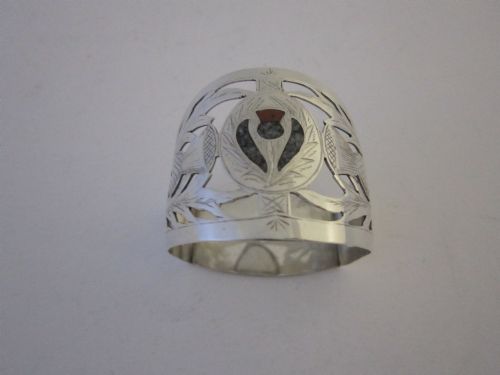
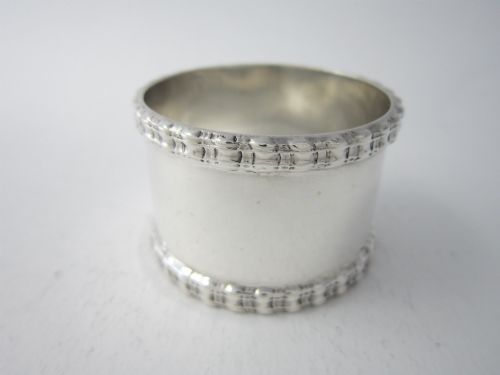
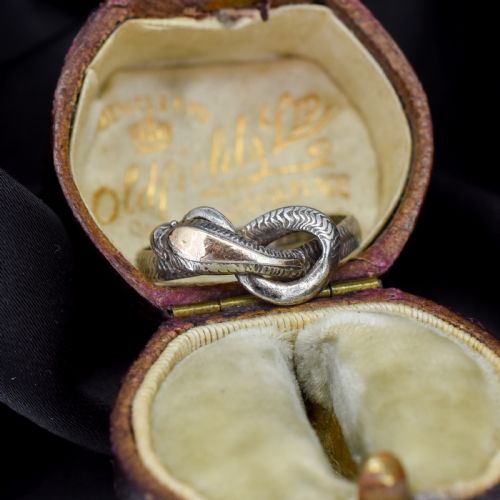
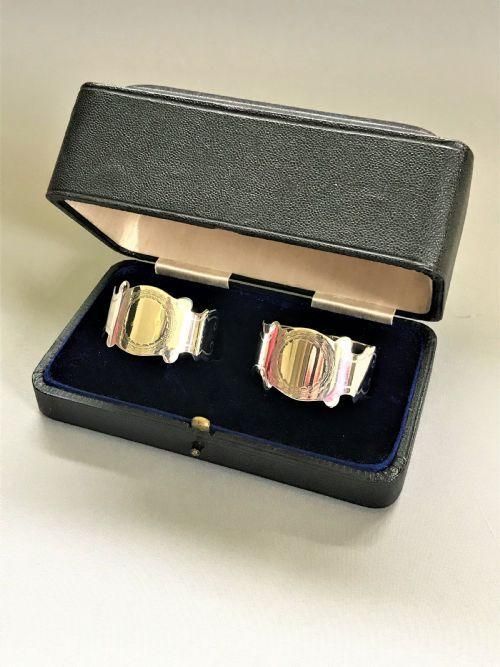
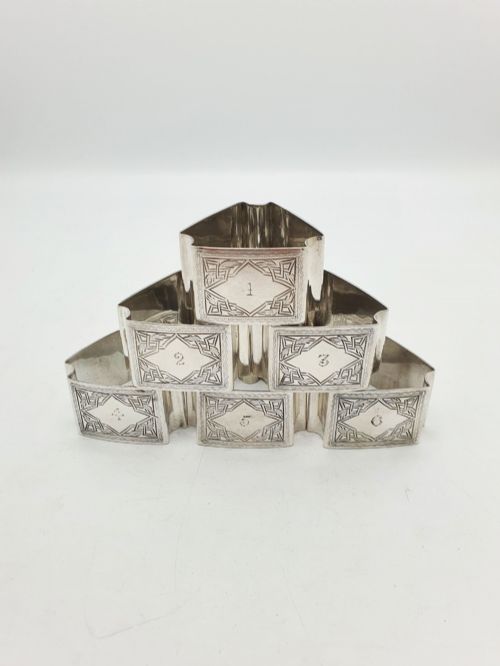
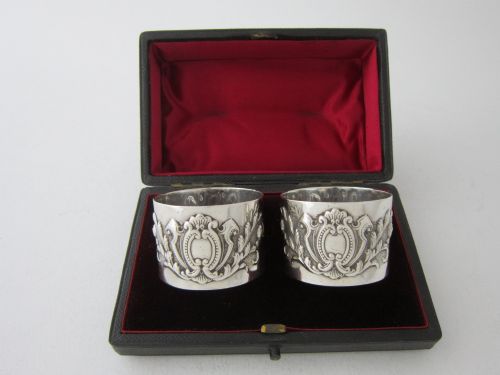
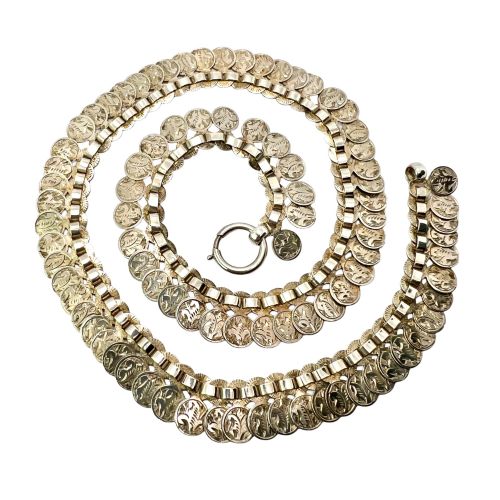
An engraved silver ring encompasses personal dress bands, wedding bands, and related annular forms recorded across Victorian, Edwardian, and Art Deco periods. While many results for this search yield napkin rings or coin jewellery rather than finger rings, actual finger rings appear in platinum and sterling silver alongside snake motifs and wedding bands.
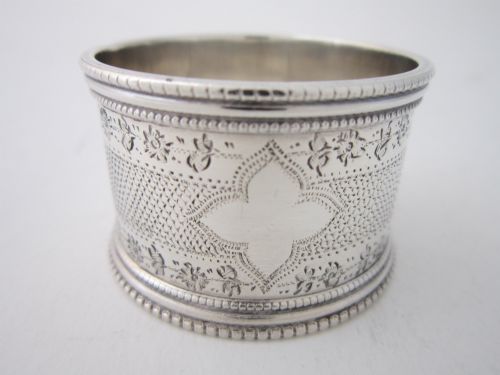
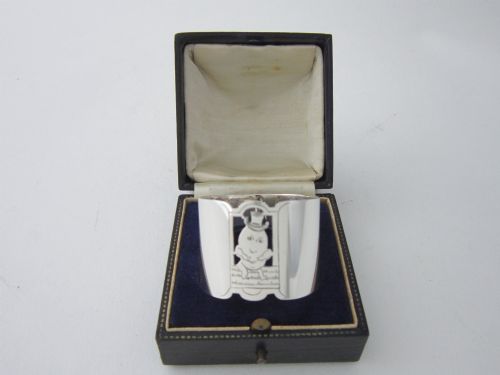
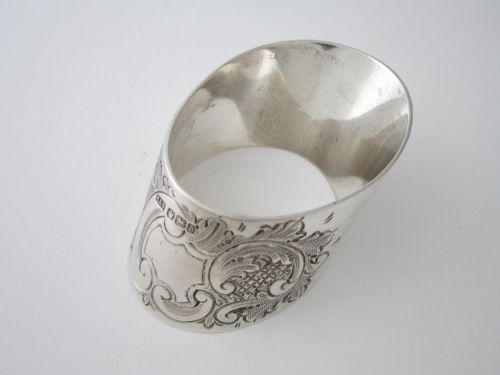
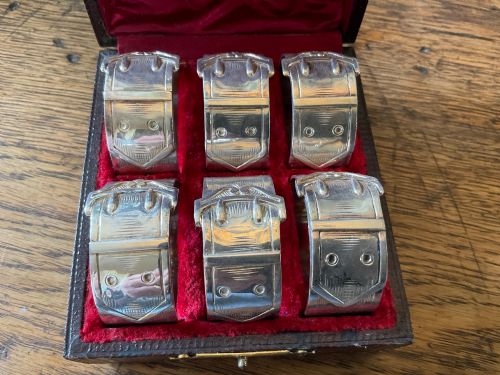
Makers and silversmiths applied surface decoration using gravers to cut foliate scrolls, ferns, and initials directly into the metal. These pieces surface individually or within fitted presentation cases lined with velvet, silk, or leatherette.
The wider inventory spans both solid sterling silver and silver plate, reflecting domestic dining customs and personal ornamentation from the late nineteenth century through the mid-twentieth century.
Materials and technique
Silversmiths utilised sterling silver and platinum as the primary metallic bases for rings, forming bands through casting, forging, or stamping. Surface patterns relied on hand engraving, where a sharp steel burin displaced metal shavings to create recessed lines of ferns, scrolls, and monograms.
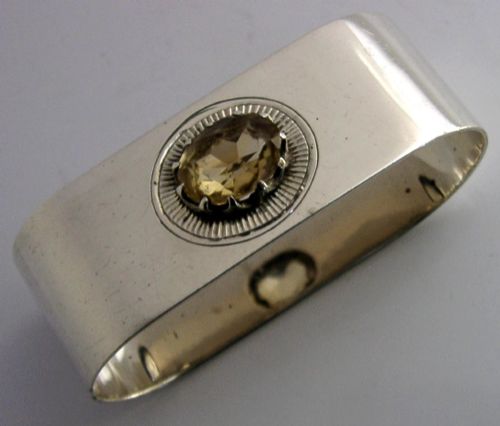
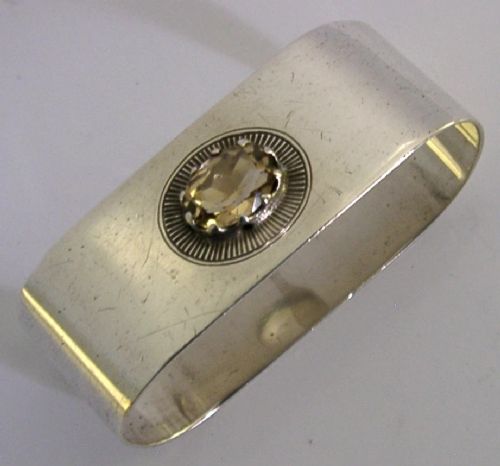
Secondary materials such as citrine stones and agate occasionally augmented the metalwork, while presentation pieces incorporated velvet, silk, and leatherette to line storage boxes.
Several Victorian items take the delightful form of miniature belt buckles, proving that nineteenth-century fingers enjoyed wearing fastened leather around them.
Assessing quality and manufacture
The depth and crispness of the hand engraving distinguish finer examples from mass-produced or worn pieces, as sharp, deep cuts retain their definition through decades of handling. The weight of the metal relative to the form dictates the structural integrity of the band.
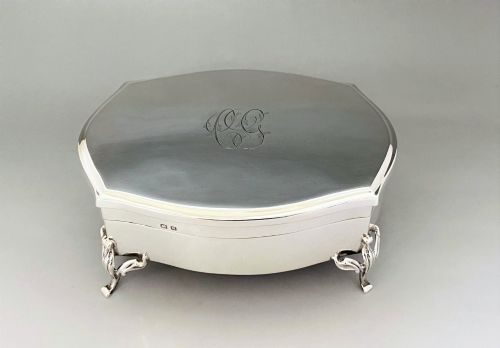
The presence of clear hallmarks indicating the assay office, maker, and date stamp elevates an item's documentary clarity. Original fitted boxes lined in silk or velvet add contextual preservation to the surviving objects.
Mappin And Webb·Henry Wilkinson·Robert Pringle·William Henry Sparrow·Rolason Brothers
The Engraved Silver Ring Glossary
- Sterling silver
- An alloy containing 92.5 percent silver by mass, with the remainder usually copper. This standard composition formed the basis for the majority of domestic silver items.
- Hallmark
- An official stamp applied by an assay office to indicate the purity of the metal, the place of testing, and the year of manufacture. These marks provide chronological certainty for dated pieces.
- Graver
- A small handheld steel cutting tool with a bevelled face used by silversmiths to carve lines into metal. It creates the recessed patterns seen on engraved surfaces.
- Citrine
- A transparent yellow variety of quartz occasionally set into silver jewellery and decorative objects. It appears in several listed items from the early twentieth century.
- Silver plate
- A thin layer of silver applied to a base metal core such as brass or copper. This technique offered an accessible alternative to solid silver table wares.
Engraved Silver Ring: Frequently Asked Questions
What periods do these pieces date from?
The available inventory spans from the Victorian era through the Edwardian period and into the Art Deco and mid-century decades. Most items cluster around the late nineteenth and early twentieth centuries.
Specific date marks on individual pieces allow collectors to pinpoint the exact year of manufacture and the assay office responsible for testing the metal.
How do I care for silver rings?
Silver benefits from gentle cleaning with a soft cloth to remove tarnish without abrading the hand-engraved surface details. Storing pieces away from moisture helps prevent rapid oxidation.
Keeping items in lined boxes or dedicated pouches protects the metal and any inset stones like citrine from unnecessary surface scratching.
Are these items solid silver?
The listings include both solid sterling silver and silver plate versions, alongside platinum examples. Hallmarks and maker stamps help verify the precise metallic composition of each object.
Heavier pieces typically indicate solid construction, while plated items rely on a base metal core covered by a thin layer of silver.
What motifs appear on the engraving?
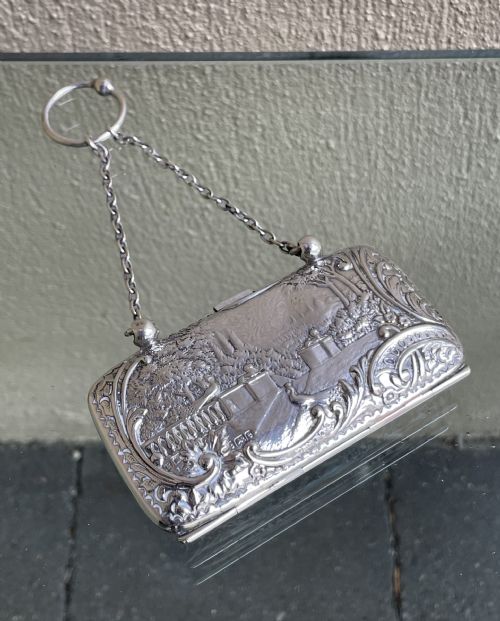
Common decorative motifs include foliate scrolls, fern fronds, geometric patterns, and personal monograms. Certain Victorian examples feature figural elements or shapes modelled as belt buckles.
Engravers used sharp tools to carve these designs directly into the metal surface, creating permanent patterns that identify the aesthetic preferences of their respective eras.