



Engraved Silver Cooler
An engraved silver cooler holds wine and champagne with presence, combining historical heft and bright metal on the dining table.
Engraved Silver Cooler
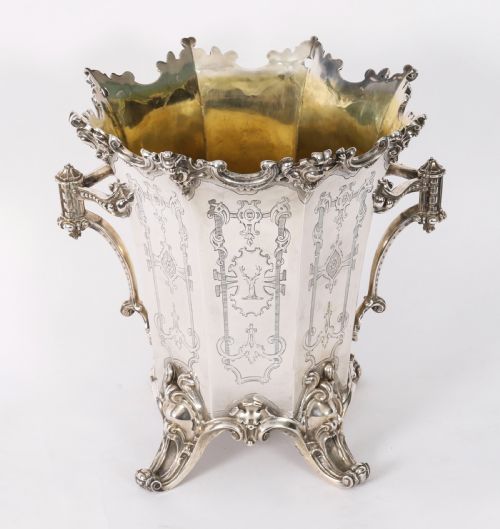
When you search for an engraved silver cooler, you find domestic and social vessels designed for chilling wine and champagne, spanning periods from the eighteenth century to the twentieth century. These pieces encompass forms such as wine coolers, champagne buckets, and ice buckets, often decorated with armorials, crests, or crest engravings.
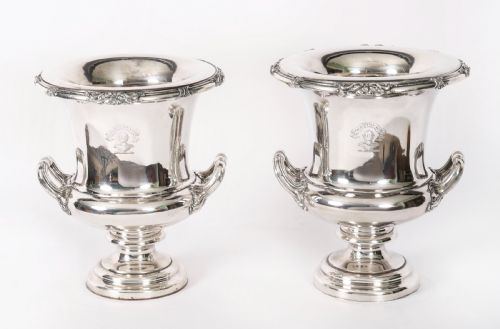
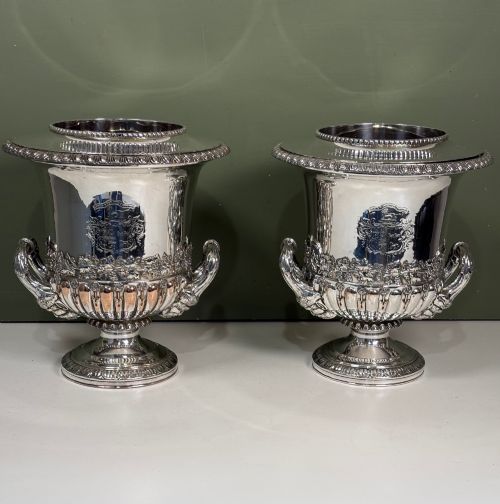
The version most commonly met on this page is the silver plated or Old Sheffield plate wine cooler from the nineteenth century, often reflecting Georgian, Regency, or Victorian styles. Alongside these traditional coolers, related tableware items such as butter dishes with glass liners occasionally appear within the broader serveware category.
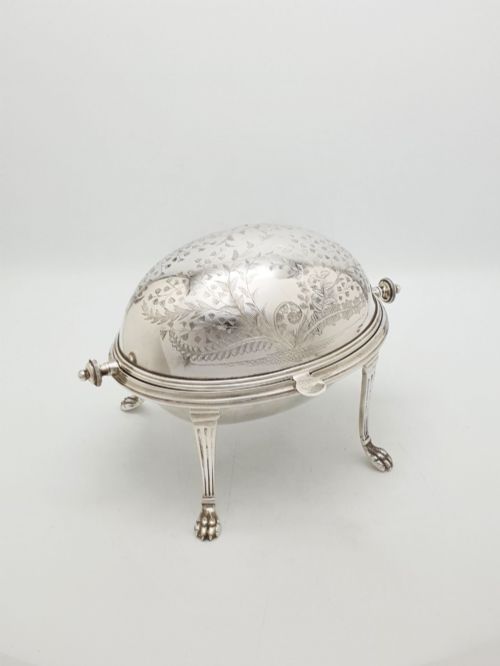
Origins trace across British workshops, major plating firms, and continental sources including Paris restaurant ware and maritime lines. The objects range from twin-handled vessels to revolving lidded pieces, uniting heavy metals with functional design for the dining room or bar.
What varies in quality
The depth and clarity of the original hand engraving separate standard production pieces from those commissioned for specific regiments, shipping lines, or aristocratic households. Crispness in cast foliate mounts, heraldic crests, and applied borders indicates superior workshop output.
The integrity of the underlying metalwork and the preservation of the silver plating or Sheffield plate layer define the longevity and visual weight of each vessel. Pieces that retain their original glass liners and structural soundness at the handle joints command greater consideration.
Engraved Silver Cooler Retail Price Guide 2026
Typical asking prices for engraved silver cooler among the pieces listed under this phrase on Sellingantiques today, from the lower quarter to the upper quarter. They describe what is for sale here now, not the wider market.
Listings span periods from the eighteenth century through the nineteenth century and into 1930, featuring silver plate, copper, pewter, and cut glass forms.
Elkington, Mason & Co·Christofle·Matthew Boulton & Co·Elkington
The Engraved Silver Cooler Glossary
- Old Sheffield Plate
- A composite material made by fusing a thin sheet of silver to a thicker copper core, popular before electroplating became widespread. This technique creates a distinctive edge where the copper base metal occasionally shows through.
- Silver Plate
- A thin layer of silver applied over a base metal such as nickel silver or copper. This process allowed makers to produce substantial dining vessels at a lower cost than solid silver.
- Coat of Arms
- A heraldic design engraved onto the surface of metalware to denote family lineage, institutional ownership, or regimental affiliation. These personalisations add historical context to individual coolers and dishes.
- Regency
- A design period spanning the early nineteenth century characterised by classical motifs, restrained lines, and bold proportions. Pieces from this era often display architectural handles and clean neoclassical forms.
- Butter Dish
- A tabletop container designed for serving butter, frequently equipped with a fitted cut glass liner and a revolving or domed lid. These items sit alongside larger wine coolers within nineteenth-century tableware.
Engraved Silver Cooler: Frequently Asked Questions
How do I clean an engraved silver cooler?
Wash the metal gently with warm soapy water and a soft cloth, avoiding abrasive pads that can wear down old plating or scratch engraved coats of arms.
Dry the vessel thoroughly immediately after washing to prevent water spots and tarnishing on the silver surface.
Are these coolers safe for modern dining use?
Most silver plated and glass-lined pieces remain functional for holding ice, champagne, or butter during contemporary meals.
Inspect the interior lining and historical plating condition before use to ensure the surfaces are clean and suitable for food contact.
How can I tell Old Sheffield plate from later electroplate?
Old Sheffield plate exhibits a sandwich effect where the copper core shows slightly along cut edges or high points due to the fusion manufacturing method.
Electroplated nickel silver usually presents a uniform silver layer over a greyish-white base metal without the characteristic copper bleed.
What is the purpose of the glass liners?
Glass liners protect the metal interior of butter dishes and coolers from direct contact with acidic foods or moisture.
They provide a removable, easily washable surface while allowing the decorative pierced or solid metal exterior to remain on display.