



Engraved Silver Barrel
An engraved silver barrel brings Victorian dining rooms and Georgian travelling cases to mind through intricate ornamentation and solid metal craft.
Engraved Silver Barrel
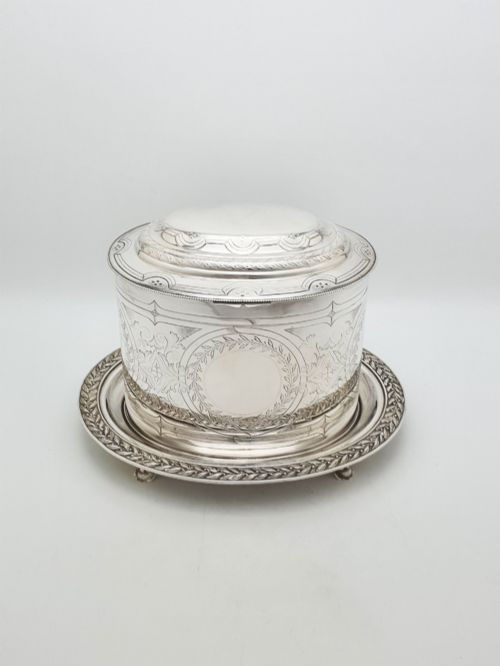
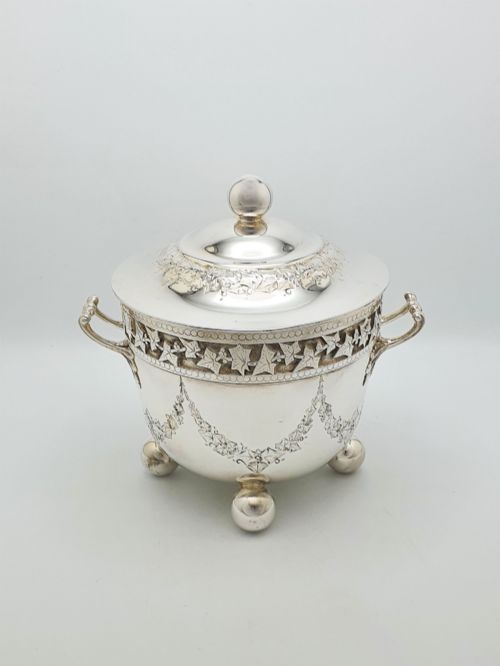
When you search for an engraved silver barrel, you encounter domestic dining containers and firearm components produced across the eighteenth and nineteenth centuries. The domestic items primarily take the form of biscuit boxes, barrels, and caddies designed for the Victorian and Edwardian table.
Alongside these dining vessels, the evidence yields antique firearms including flintlock pistols, pepper pot pistols, and pocket travelling pieces incorporating metal barrels with decorative wire inlay. The nineteenth century dominates the domestic selections, whilst the eighteenth century contributes several firearms.
Makers such as Mappin and Webb, Robert and Belk, Walker and Hall, and Elkington and Co feature among the silver-plated and solid silver serving vessels. These items combine functional storage with ornamental engraving, often featuring heraldic motifs or organic chased patterns typical of the Victorian era.
Materials and construction
The domestic containers rely upon silver plate, electroplated nickel silver, sterling silver, and solid silver, frequently paired with cut glass bodies or walnut elements. Firearms utilise steel, metal, and flint, enhanced by silver wire inlay across the grip and barrel sections.
Silversmiths employed techniques such as casting, piercing, and surface engraving to decorate the metal bodies of biscuit boxes and mugs. Gunsmiths integrated metal barrels with wooden stocks, applying precision wire work to secure and ornament the structure.
Engraved Silver Barrel Retail Price Guide 2026
Typical asking prices for engraved silver barrel among the pieces listed under this phrase on Sellingantiques today, from the lower quarter to the upper quarter. They describe what is for sale here now, not the wider market.
Listings span the eighteenth and nineteenth centuries, including Victorian, Edwardian, and Regency styles.
Assessing quality and execution
Quality separates through the crispness of the surface engraving and the substantial weight of the metal used in the barrel or body. Maker attribution to firms like Elkington or Mappin and Webb indicates higher tier production standards.
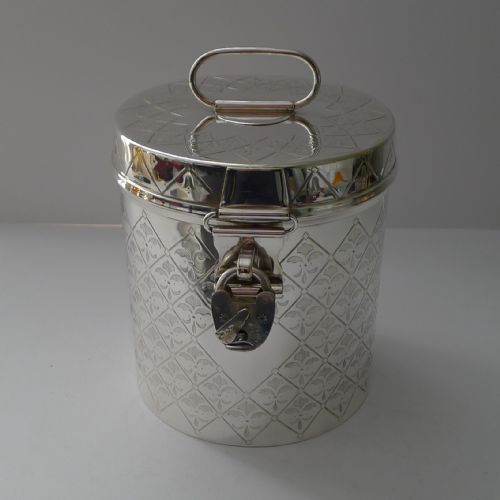
The integration of functional mechanisms, such as locking systems on biscuit boxes or precise flintlock action on pistols, demonstrates superior craftsmanship. Material choice shifts the grade from electroplated nickel silver to solid silver or fully hallmarked Dutch pieces.
Mappin and Webb·Robert and Belk·Walker and Hall·Elkington and Co
The Engraved Silver Barrel Glossary
- Biscuit Barrel
- A domestic container designed for storing dry biscuits at the dining table, frequently featuring a hinged lid and silver plated or solid silver construction.
- Flintlock
- An ignition mechanism used on firearms from the seventeenth through the nineteenth centuries, producing a spark to ignite the gunpowder charge within the barrel.
- Electroplated Nickel Silver
- A base metal alloy of copper, nickel, and zinc coated with a thin layer of pure silver through an electrical process.
- Hallmark
- An official stamp applied to precious metal items to indicate the standard of purity, place of assay, and maker identity.
Engraved Silver Barrel: Frequently Asked Questions
What is an engraved silver barrel?
An engraved silver barrel refers to decorative metal cylinders found on nineteenth century dining vessels like biscuit boxes, as well as eighteenth century firearm components. These items combine practical storage or function with detailed surface decoration.
Craftsmen applied chasing, piercing, and engraving techniques to create ornamental patterns, heraldic crests, and floral motifs across the metal surface.
How were biscuit barrels used?
Victorian households used silver plated and solid silver biscuit barrels to serve dry baked goods during formal dining and afternoon tea. The lidded containers kept biscuits fresh while presenting an ornamental display on the table.
Many examples include cut glass bodies or locking mechanisms, reflecting the importance placed on hospitality and table presentation during the period.
How do I date an antique silver barrel?
Dating relies upon official hallmarks, maker marks, and stylistic indicators such as Victorian or Edwardian design motifs. The presence of specific maker names like Elkington or Walker and Hall helps narrow the production window.
Material composition also assists, as electroplated nickel silver became prevalent in the nineteenth century, whilst earlier firearms utilise steel and flint mechanisms.
Are these pieces made of solid silver?
The materials vary between solid sterling silver, fully hallmarked silver, and silver plate over base metals like nickel silver. Each piece records its specific material composition through hallmarks or manufacturing characteristics.
Solid silver items carry full hallmarks indicating the assay office and date, whereas plated pieces utilise base metals coated in a layer of silver.