




Engraved Oval Tray
An engraved oval tray brings pattern and shine to a room, offering a functional surface shaped by Victorian, Edwardian and Georgian hands.
Engraved Oval Tray
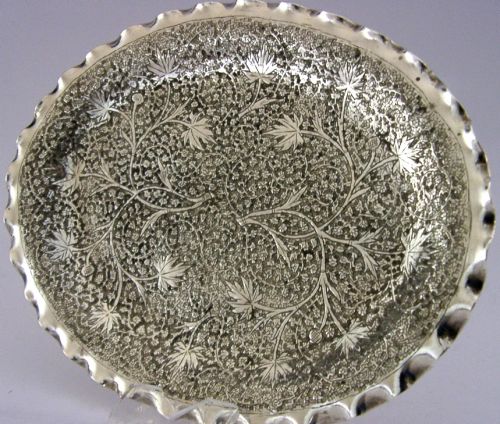
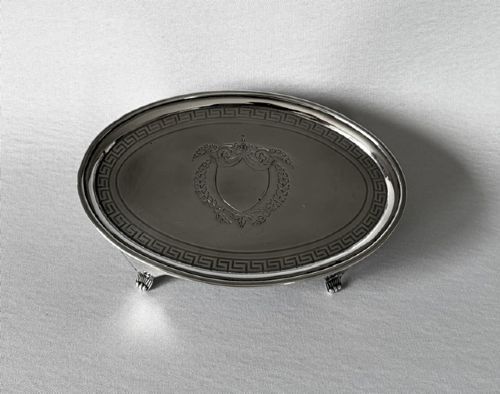
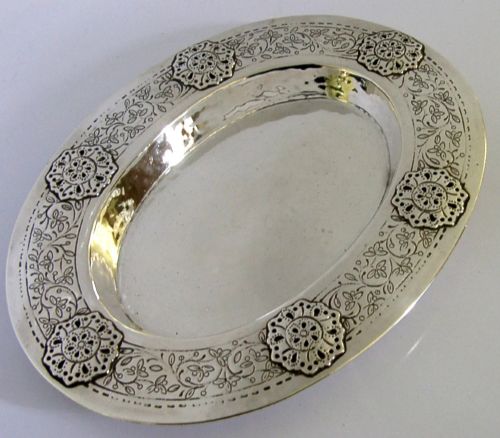
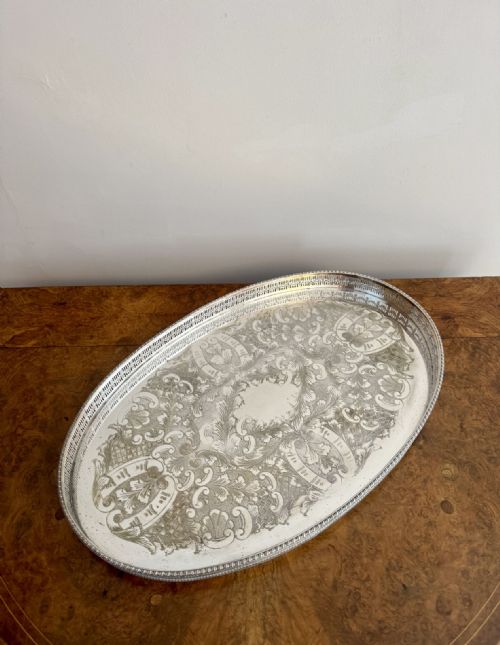
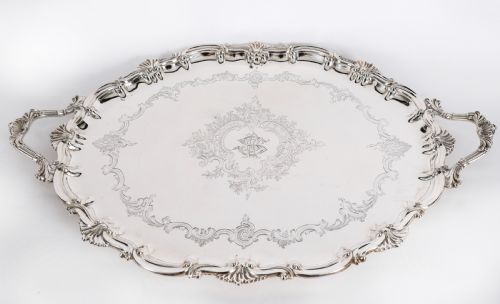
When you search for an engraved oval tray, you encounter serving pieces, tea trays and platters spanning the Victorian, Edwardian and Georgian periods. These items range from solid sterling silver examples to silver plate and copper, taking the form of tea trays, bread dishes and small decorative dishes.
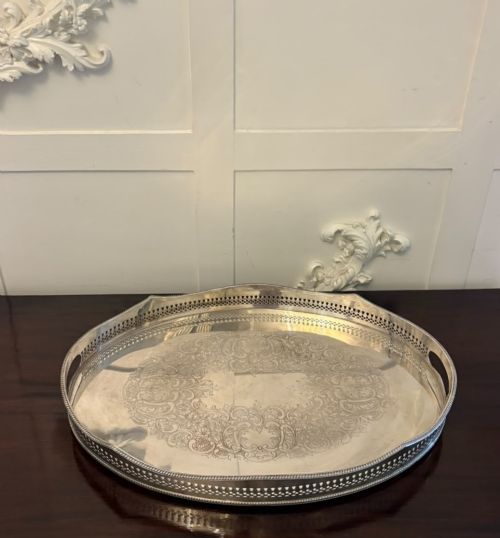
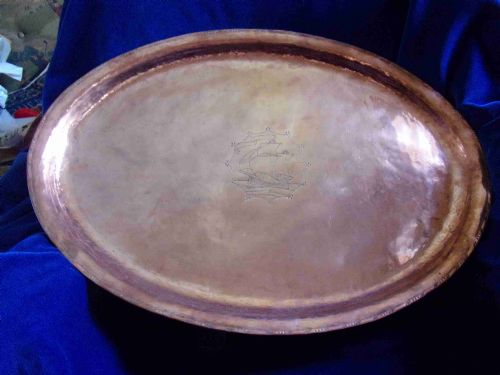
The Edwardian and Victorian silver-plated options appear most frequently on this page, often featuring detailed floral engraving or pierced galleries. Alongside these plated pieces, buyers discover substantial solid silver iterations and hammered copper creations from the Arts and Crafts movement.
Materials and construction
Makers shaped these objects using sterling silver, electroplated nickel silver, base metal and copper, applying hand-engraving and embossed scrolls to the surfaces. Workshops utilised techniques such as silver plating over a base metal foundation, while solid silver versions demonstrate the heavy gauge metal favoured by silversmiths.
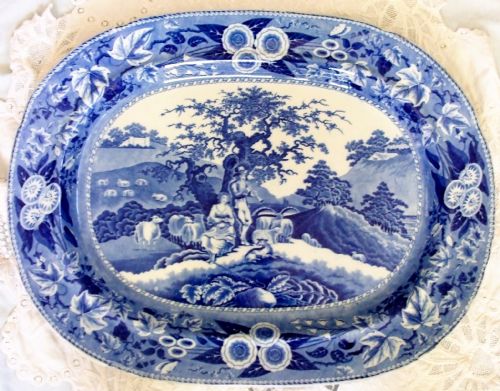
Copper trays display the hand-hammered textures typical of early twentieth-century metalwork, and pottery platters utilise blue and white transfer printing. Makers also incorporated cast handles and pierced galleries soldered directly to the main body of the tray.
One extraordinary copper tray journeyed to the Chicago World's Fair in 1893 before finding its way onto a modern marketplace shelf.
Distinctions in quality
The standard of an engraved oval tray depends on the crispness of the hand-engraving and the weight of the metal used in its construction. Superior examples maintain deep, sharp floral motifs and scrolls that show minimal wear across the surface.
Thicker gauge silver plate resists bending and retains its underlying metal finish, whereas lighter items reveal wear through to the base metal over time. Master silversmiths and notable firms achieved cleaner joints on galleries and handles, contributing to the overall durability and balance of the piece.
Mappin & Webb·Thomas Bradbury & Sons·Hugh Wallis·Walker & Hall·Harrison Bros·Christofle·Tiffany & Co
The Engraved Oval Tray Glossary
- Silver Plate
- A layer of pure silver fused or electroplated onto a base metal such as copper or nickel silver. This technique allowed makers to produce large serving items at a lower cost than solid silver.
- Sterling Silver
- An alloy consisting of pure silver and other metals, usually copper, standardised at a fineness of ninety-two point five percent. Pieces made to this standard frequently bear hallmarks indicating the maker and assay office.
- Pierced Gallery
- An openwork metal railing raised around the rim of a tray. This decorative and functional feature prevents items from sliding off the surface during service.
- EPNS
- An abbreviation for electroplated nickel silver, a common base material for nineteenth and twentieth-century tableware. It provides a durable foundation for silver plating.
- Transferware
- Earthenware decorated by applying a printed design from an engraved copper plate onto the ceramic body. This method permitted detailed pictorial scenes like the piping shepherd pattern to be reproduced consistently.
Engraved Oval Tray: Frequently Asked Questions
How do I clean an engraved oval tray?
Use a soft cloth and a gentle, non-abrasive silver polish to clear tarnish from silver and silver-plated surfaces without damaging the fine engraving lines.
Avoid harsh chemical dips that strip the dark oxidisation intended to highlight intricate scrollwork and floral details.
Can I use these trays for serving food?
Solid silver and silver-plated serving trays function reliably for presenting drinks and dry foodstuffs during gatherings.
Earthenware platters and copper dishes suit decorative display or serving items with protective barriers like doilies.
How do I date a silver tray?
Examine the piece for official hallmarks, which include maker marks, standard marks and date letters corresponding to specific assay office records.
Stylistic clues such as Arts and Crafts hammered textures or Edwardian pierced galleries also help narrow down the period of manufacture.
What is the difference between solid silver and silver plate?
Solid silver contains high-purity silver throughout its entire structure and carries full hallmarks denoting its precious metal content.
Silver plate consists of a thin coating of silver over a base metal such as copper, nickel silver or brass.