

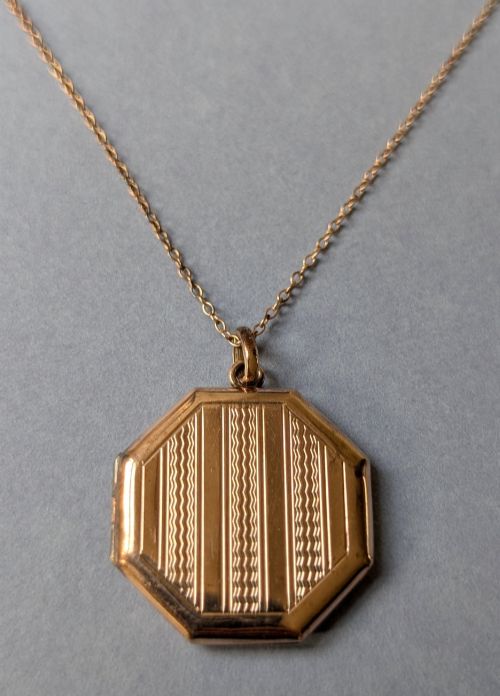
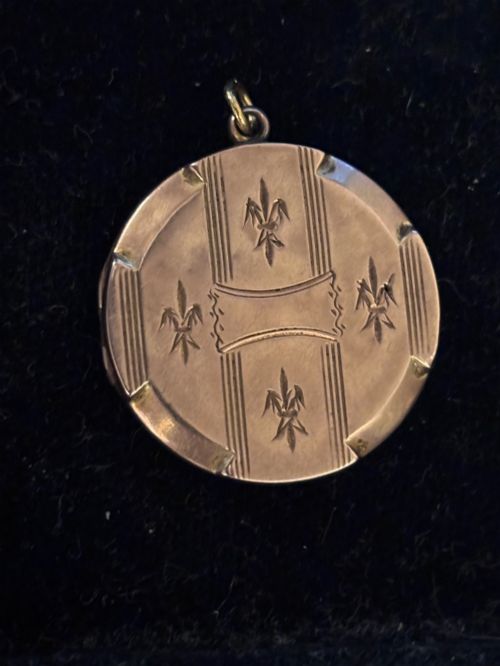


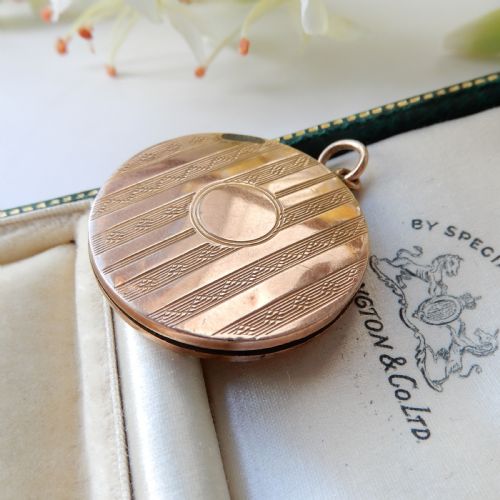


Engraved Gold Picture Pendant
An engraved gold picture pendant holds miniature portraits and keepsakes close, offering intimate craftsmanship from the Georgian, Victorian, and Edwardian eras.
Engraved Gold Picture Pendant
An engraved gold picture pendant functions primarily as a hinged locket designed to hold photographs, hair, or small paintings inside a protective metal casing. These pieces take various forms including circular frames, book shapes, and ornate flower basket motifs.
The versions most commonly met across these listings hail from the Victorian period, alongside examples spanning the Edwardian era and the mid-twentieth century. Makers utilised 9ct gold, 18ct yellow gold, and rolled gold to form these wearable keepsakes.
How they were made
Craftsmen shaped yellow gold and rolled gold into circular and book-style lockets, often incorporating glass panels to display the internal contents clearly. Surface decoration was achieved through detailed hand engraving, engine-turned detailing, and repoussé foliate patterns.
Many of these pendants integrate small gemstones such as rubies, seed pearls, emeralds, and blue enamel star motifs directly into the gold exterior to enhance the visual appeal.
Engraved Gold Picture Pendant Retail Price Guide 2026
Typical asking prices for engraved gold picture pendant among the pieces listed under this phrase on Sellingantiques today, from the lower quarter to the upper quarter. They describe what is for sale here now, not the wider market.
Listings feature items spanning the Georgian, Victorian, Edwardian, and mid-twentieth-century periods, constructed from 9ct gold, 18ct yellow gold, and rolled gold.
What varies in quality
The refinement of the hand engraving sets finer examples apart, distinguishing deep, crisp floral and sunburst motifs from simpler stamped patterns. Superior pieces also display integrated gemstones like pearls, rubies, and emeralds set securely within substantial 9ct or 18ct yellow gold construction rather than lighter rolled gold bases.
Structural integrity of the hinge and snap closure indicates the original standard of manufacture, ensuring the locket compartment remains secure during daily wear.
The Engraved Gold Picture Pendant Glossary
- Locket
- A small ornamental pendant that opens to reveal a space for a photograph or keepsake. These items are secured with a hinge and often feature engraved exteriors.
- Engine turned
- A mechanical method of ornamenting metal by cutting precise geometric patterns into the surface. This technique creates a repetitive textured background common on Georgian and Victorian pieces.
- Rolled gold
- A material formed by fusing a thin layer of gold to a base metal core. This provided the appearance and durability of solid gold at a more accessible cost during the nineteenth and twentieth centuries.
- Back and front
- A manufacturing description indicating that the exterior plates of the locket are made of gold while the internal framing components utilise base metals. This method was widely used in antique locket production.
- Seed pearl
- A very small natural or cultured pearl used in clusters or borders on antique jewellery. They frequently accent star motifs and floral designs on Victorian pendants.
Engraved Gold Picture Pendant: Frequently Asked Questions
What do you put inside a picture pendant?
These lockets were traditionally designed to hold small miniature portraits, silhouette paintings, or locks of hair from loved ones. Modern wearers often place small printed photographs cut to fit the internal frame.
Some pieces also include internal glass compartments specifically intended to keep fragile mementos visible yet protected from the elements.
How do you open an antique gold locket?
Most antique lockets utilise a small side hinge and a snap-shut mechanism operated by a fingernail notch on the edge. Care must be taken not to force stuck closures, as older metals can warp.
Checking for a tiny push-button or a release lip helps identify how the specific Victorian or Edwardian clasp was engineered to function.
Are rolled gold lockets genuine antique pieces?
Rolled gold lockets are period pieces manufactured in the nineteenth and twentieth centuries using a mechanical plating technique. They possess genuine age and historical context even though they lack the full solid gold content of higher-tier pieces.
These items offer the same decorative engraving styles and structural forms as their solid gold counterparts.
How do I date a gold picture pendant?
Dating relies on observing stylistic markers such as foliate engravings, gemstone settings, and overall object shapes like book lockets or sunbursts. Georgian pieces often feature engine-turned details, whilst Victorian examples frequently incorporate enamel and pearls.
Comparing the closure type and gold purity marks against known manufacturing periods helps narrow down the decade of origin.