




English Writing Desk Set
An English writing desk set brings order to correspondence through fitted stands, inkwells and stationery cases crafted to sit on the desktop.
English Writing Desk Set
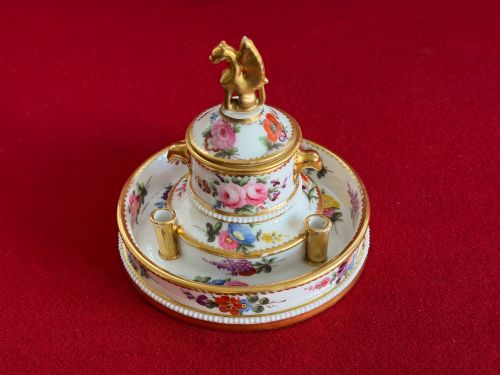
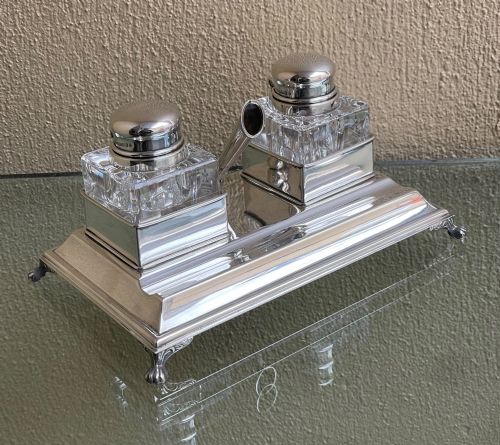
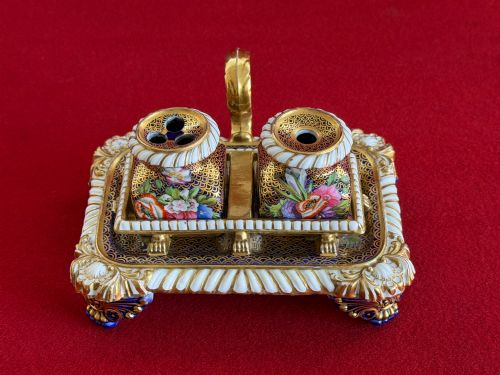
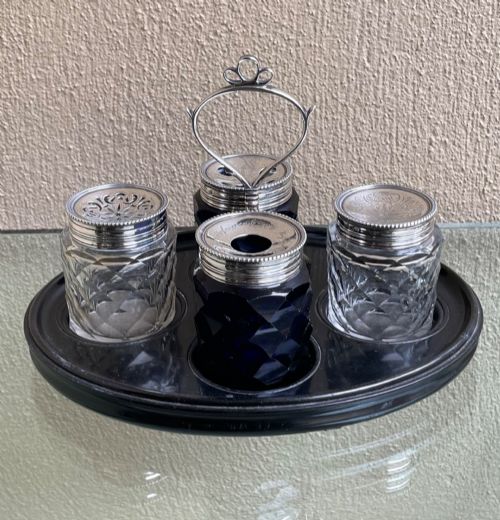
An English writing desk set encompasses portable stations, inkstands and multi-piece desktop groupings designed to hold writing materials. These pieces range from compact single inkwells to elaborate multi-piece sets containing inkstands, stationery cases and desk accessories.
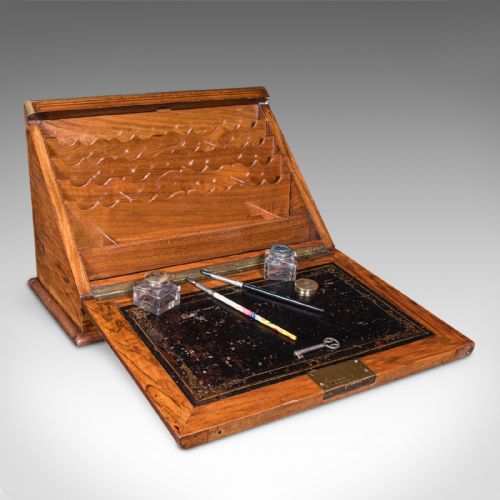
The selections span several distinct periods including Georgian, Regency, Victorian, and the mid twentieth century. Buyers encounter varied formats from walnut stationery cases and brass novelty designs to porcelain inkstands decorated with painted patterns.
Makers and manufacturers utilised traditional forms across these decades, producing functional desk equipment in materials such as sterling silver, silver plate, brass, glass, wood and porcelain. Each grouping reflects the prevailing domestic writing habits of its specific period.
Materials and construction
Makers constructed these pieces using a combination of fine timbers such as walnut, coromandel and oak, frequently embellished with brass mounts, tortoiseshell, or inlaid brass details. Metalwork components involved cast and chased brass, sterling silver, and silver plate produced by prominent firms.
Glass and porcelain elements, including cut glass inkwells and Spode or Worcester porcelain bodies, were integrated into metal and wooden frames to hold liquid ink safely. Skilled artisans combined these disparate materials to create cohesive desk stands that could withstand daily use.
English Writing Desk Set Retail Price Guide 2026
Typical asking prices for english writing desk set among the pieces listed under this phrase on Sellingantiques today, from the lower quarter to the upper quarter. They describe what is for sale here now, not the wider market.
Listings feature desk accessories spanning the Georgian, Regency, Victorian, and twentieth-century periods, utilising silver, brass, wood, glass, and porcelain.
Distinctions in quality
Quality in these sets depends on the weight and purity of the materials, such as heavy gauge sterling silver versus silver plate, and the precision of the woodwork or metal casting. Superior pieces display crisp detailing in mounts, well-fitted compartments, and high-grade porcelain bodies.
The reputation of the maker, whether a noted silversmith or a renowned porcelain factory, influences the standing of an individual set. Finer examples retain their original matched components, such as corresponding glass inkwell inserts and dedicated stationery fittings.
Spode·Walker And Hall·Flight Barr And Barr·Robert Garrard·Martin Hall
The English Writing Desk Set Glossary
- Inkstand
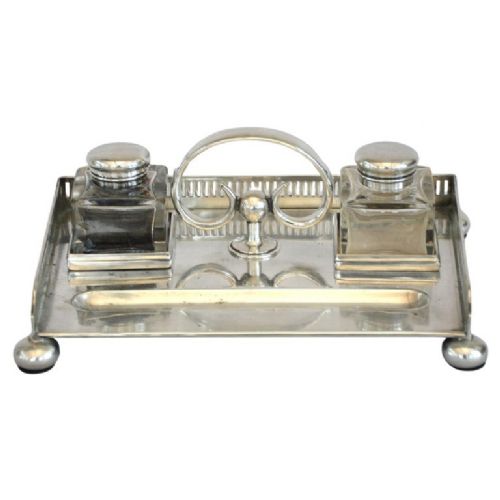
- A portable tray or stand fitted to hold one or more inkwells along with penholders and sometimes a sander or wafer box. These central desk pieces kept writing materials organised and protected surfaces from spills.
- Inkwell
- A small container designed to hold liquid ink for dipping pens. They frequently feature hinged metal lids and glass or porcelain liners.
- Stationery Case
- A desktop box or folio designed to hold writing paper and envelopes upright. They often form part of a larger multi-piece desk set.
- Novelty Inkwell
- An inkwell shaped to resemble an animal, figure, or object such as an owl or bulldog. These whimsical pieces combined humour with utility on the Victorian desktop.
- Sheffield Plate
- A composite material made by fusing a thin sheet of silver to a thicker copper base. It was widely used for desk stands before the invention of electroplating.
English Writing Desk Set: Frequently Asked Questions
What is included in a desk set?
An English writing desk set typically includes an inkstand with one or more inkwells, pen trays, and sometimes matched stationery cases or accessory pieces. These groupings were assembled to provide all necessary implements for correspondence in one coordinated desktop arrangement.
Depending on the specific period, sets might also incorporate blotters, brass taper sticks, or sanders for drying wet ink. The composition varied according to the owner's requirements and the fashion of the era.
How do I date a desk set?
Dating a desk set involves examining the materials, construction methods, and any hallmarks or factory marks present on the metal and porcelain components. Silver elements carry hallmarks that indicate the exact year of assay and the maker's mark.
Stylistic indicators also help determine the period, such as the neoclassical influence in Regency pieces or the ornate casting typical of Victorian novelty items. Comparing the woods and decorative techniques provides a reliable timeframe of manufacture.
How were these sets used?
These sets served as the primary station for writing letters, managing household accounts, and conducting business correspondence before the widespread use of fountain pens and typewriters. Inkwells held the liquid ink, while stands kept pens and blotting materials close at hand.
Placed upon a library table or writing slope, the set kept the desktop tidy and ensured writing implements were ready for daily use. Wealthy households often kept multiple sets in different rooms.
How do I care for antique desk sets?
Caring for antique desk sets requires gentle cleaning appropriate to each material, keeping wood and leather away from excessive moisture and direct heat. Silver and brass components benefit from occasional polishing with non-abrasive cleaners to maintain their finish.
Glass and porcelain inkwells should be washed carefully to remove old dried ink residue without damaging any painted decoration or gilt edges. Regular dusting preserves the surface condition of both wood and metal elements.