



English Wood Mosaic
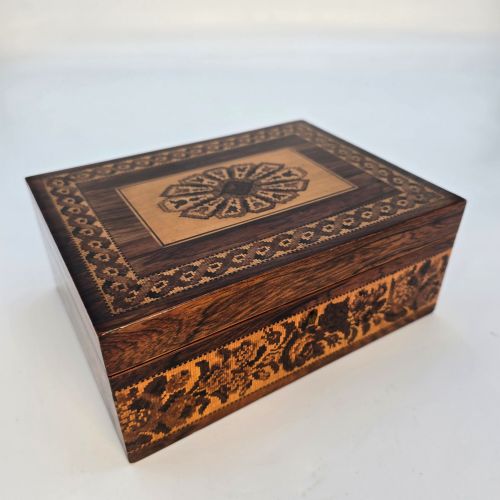
English wood mosaic brings together intricate nineteenth-century Tunbridge Ware boxes and dishes crafted from a multitude of contrasting timbers.
English Wood Mosaic
When you search for english wood mosaic, you encounter nineteenth-century Tunbridge Ware objects formed through precise woodworking. These pieces include jewellery boxes, tea caddies, trinket boxes, book-slides, glove boxes, cribbage boxes, games boxes, and decorative butterfly dishes.
The objects stem from the Victorian period, with specific dates pointing to eighteen-fifty and eighteen-seventy. They showcase miniature mosaic designs built entirely from timber.
You are most likely to meet rosewood and walnut carcases decorated with geometric or pictorial micro-mosaic panels. The forms serve both decorative and practical domestic functions in the Victorian interior.
How they were made
Maker workshops constructed these items using solid carcases of rosewood and walnut as a foundation. They applied elaborate surface decoration through meticulous wood inlay techniques.
The mosaic elements rely on a palette of natural timbers including boxwood, holly, and sycamore alongside mixed hardwoods. Craftsmen glued together thousands of tiny tinted and natural wood blocks to form complex geometric or pictorial motifs before slicing them thinly for veneer.
English Wood Mosaic Retail Price Guide 2026
Typical asking prices for english wood mosaic among the pieces listed under this phrase on Sellingantiques today, from the lower quarter to the upper quarter. They describe what is for sale here now, not the wider market.
Materials recorded across the inventory include rosewood, walnut, boxwood, holly, sycamore, and mixed hardwoods.
What varies in quality
The standard of an english wood mosaic piece rests upon the complexity of the micro-mosaic imagery and the precision of the timber blocks. Finer examples display exceptionally minute tesserae that create sharp pictorial details such as butterflies or architectural scenes.
The choice of primary timber also dictates the tier of the piece, with richly grained rosewood and walnut carcases housing the most intricate marquetry. The integrity of the surface geometry and the crispness of the individual wood species define the superior specimens.
Edmund Nye·Henry Hollamby
The English Wood Mosaic Glossary
- Tunbridge Ware
- A specialised form of nineteenth-century decorative woodwork originating from Kent, characterised by minute mosaic veneers built from multiple natural timbers. It represents the pinnacle of English wood mosaic craftsmanship.
- Marquetry
- The art of applying pieces of veneer to a structure to form decorative patterns and pictures. In these pieces, it involves countless tiny wood blocks.
- Tesserae
- The individual small blocks of coloured wood used to build up the mosaic picture. Their microscopic scale defines the skill involved.
- Carcass
- The underlying structural body of a box or caddy, usually fashioned from rosewood or walnut before the mosaic veneer is applied. It provides the rigid support for the delicate surface work.
English Wood Mosaic: Frequently Asked Questions
What are english wood mosaic boxes?
These items are nineteenth-century Victorian containers, such as tea caddies and jewellery boxes, surfaced with microscopic wood tile panels. They represent a specialised decorative tradition from Tunbridge Wells.
Craftsmen assembled thousands of tiny timber squares and triangles to produce detailed geometric and pictorial designs. The resulting pieces served as elegant desk accessories and dressing table ornaments.
How were Tunbridge Ware boxes used?
Victorian households utilised these lidded containers to store precious trinkets, correspondence, and writing equipment. Specific forms held playing cards, cribbage pegs, or delicate gloves.
Open displays like octagonal dishes held calling cards or functioned as decorative mantelpieces. Their intricate surfaces made them prized possessions for middle and upper-class drawing rooms.
How do I care for wood mosaic?
Keep these sensitive wooden objects away from direct sunlight and extreme temperature fluctuations to prevent the delicate veneers from lifting. Gentle dusting with a dry microfibre cloth protects the microscopic timber tesserae.
Avoid applying liquid polishes or moisture directly to the mosaic surface. Proper environmental humidity ensures the box carcases and their intricate inlays remain stable.
How do I identify Victorian pieces?
Nineteenth-century English wood mosaic items typically feature dense rosewood or walnut structures combined with boxwood, holly, and sycamore inlays. Stylistic markers include banded geometric borders and pictorial panels of butterflies or local landmarks.
Signature characteristics of the era appear in the dovetail construction of the carcases and the specific palette of untreated, naturally coloured woods. Documentation or attributions to makers like Edmund Nye or Henry Hollamby further confirm the period.