


English Wheel Engraved Glass
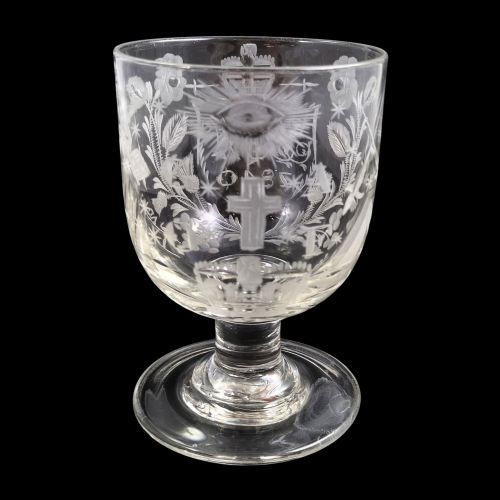
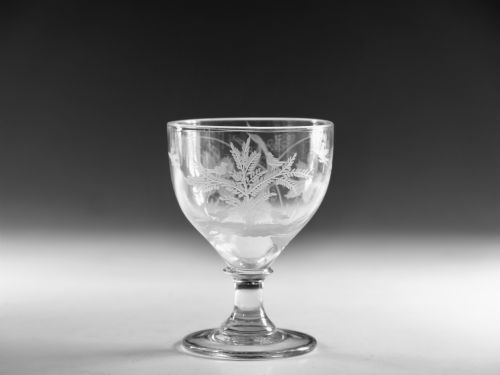
English wheel engraved glass offers a tactile surface of hops, barley, and ships, spanning Georgian rummers to Victorian vases.
English Wheel Engraved Glass
English wheel engraved glass comprises drinking vessels, jugs, and vases created across the Georgian, Victorian, and later periods. The selection on this page centres heavily on rummers, wine glasses, decanters, and jugs produced in clear glass, lead crystal, and flint glass.
Buyers seeking these pieces encounter items adorned with hops and barley, fruiting vines, birds, and neoclassical motifs. The forms range from plain stem goblets and facet stem wine glasses to large serving jugs and Stourbridge vases.
The aesthetic bridges utilitarian tavern glassware and decorative cabinet pieces. From North-East English rummers to Jacobite wine glasses, each object carries surface work executed by a rotating wheel.
Materials and execution
Makers utilised lead glass, flint glass, and clear glass as the foundation for their work. These heavy, luminous materials provided the optical clarity necessary to showcase fine surface cutting.
Engravers applied small rotating wheels of varying diameters to the glass surface. This technique required immense control to carve intaglio details, floral garlands, and narrative scenes directly into the hardened material.
Listings feature lead crystal, flint glass, and amethyst glass across Georgian, Victorian, and later periods in forms from goblets to decanters.
Distinctions in execution
The depth and crispness of the wheel work separate routine production from superior examples. Master engravers achieved subtle shading and sharp relief, whereas lesser pieces display shallow, hesitant cuts.
Proportion and metal quality also dictate standing. Heavy lead crystal with resonant clarity and balanced stem proportions commands greater appreciation than grey, bubbly metal with clumsy form.
The English Wheel Engraved Glass Glossary
- Rummer
- A large, sturdy drinking glass popular in the Georgian and Victorian eras, often used for ale, wine, or spirits. They frequently feature heavy stems and deep wheel engraving.
- Intaglio
- A technique where the design is carved into the surface of the glass rather than raised above it. This creates a sunken relief that catches the light from behind.
- Facet stem
- A stem shaped with multiple flat, polished planes that reflect light brilliantly. Found frequently on eighteenth-century wine glasses.
- Flint glass
- A heavy, highly refractive type of glass popular in England. It provided the brilliant clarity required for detailed wheel cutting.
- Stourbridge
- An English town renowned for its glass industry and skilled workforce. Local artisans produced exceptionally detailed hand wheel engraved vases and tableware.
English Wheel Engraved Glass: Frequently Asked Questions
How do I date an engraved glass?
Dating relies on combining the form of the vessel with the style of the engraving and the composition of the metal. Georgian rummers and eighteenth-century wine glasses display distinct foot shapes and stem structures compared to Victorian jugs and Stourbridge vases.
Examining the wear underneath the base and the weight of the lead glass helps confirm the period. Earlier pieces often show characteristic tool marks and variations in the metal that later production smoothed out.
What were rummer glasses used for?
Rummers served as substantial drinking vessels for ale, punch, or wine in homes and taverns. Their heavy bases and robust bowls made them practical for daily use.
Over time, larger rummer glasses transitioned into serving pieces or commemorative objects, frequently engraved with specific motifs like hops and barley or merchant ships.
Are wheel engraved pieces fragile?
These vessels consist of robust lead crystal or flint glass designed for practical handling. However, thin rims and delicate stems require careful placement during use and display.
Store them securely on stable shelving away from the edge of furniture. Lifting them by the bowl rather than the stem minimises stress on vulnerable joins.