




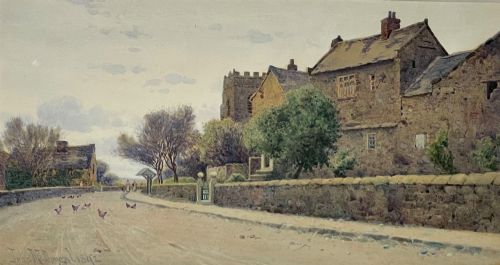
English Watercolor Landscape
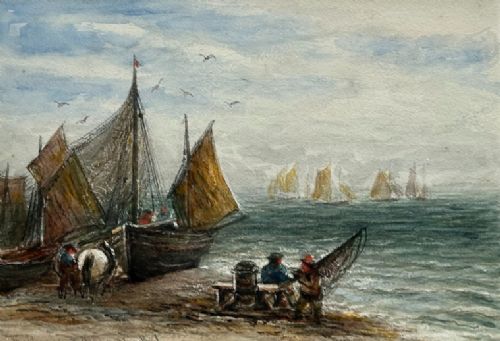
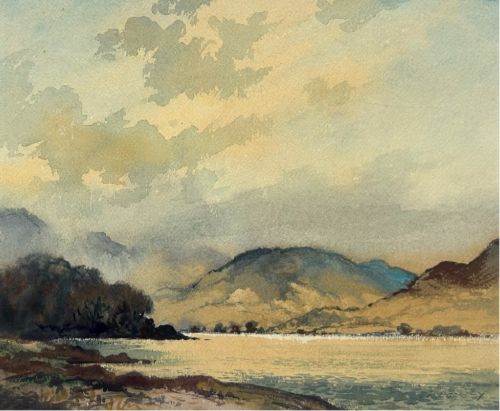
An English watercolor landscape captures rural fields, river valleys, and coastal harbours through delicate washes of pigment on paper.
English Watercolor Landscape
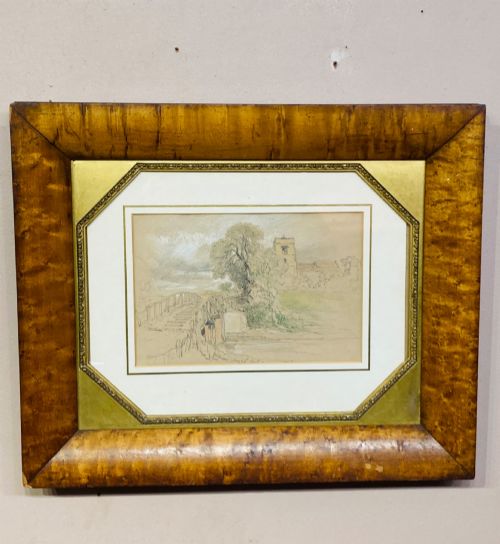
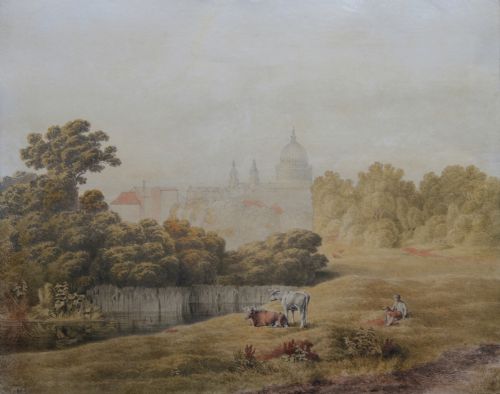
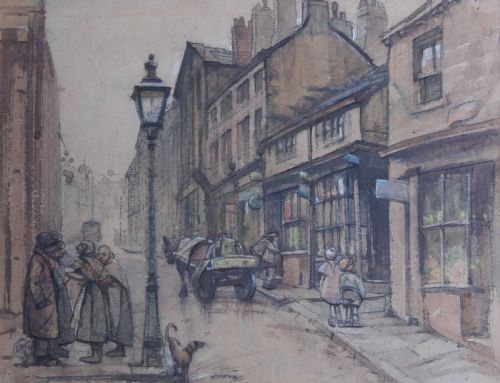
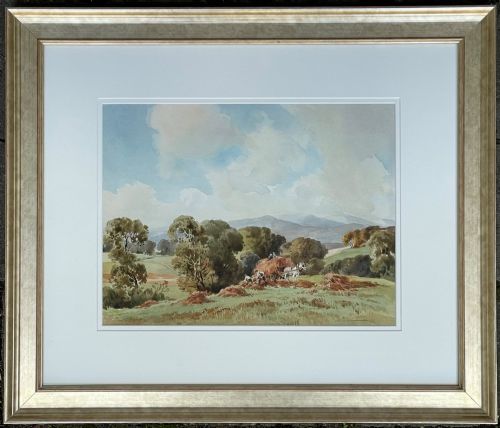
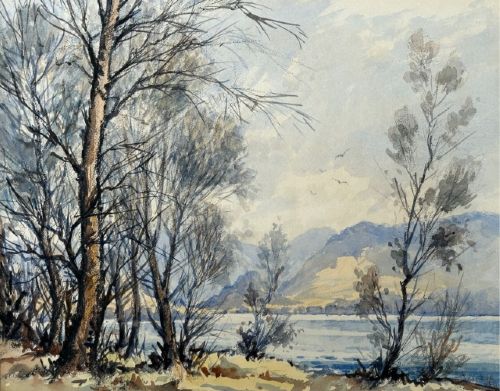
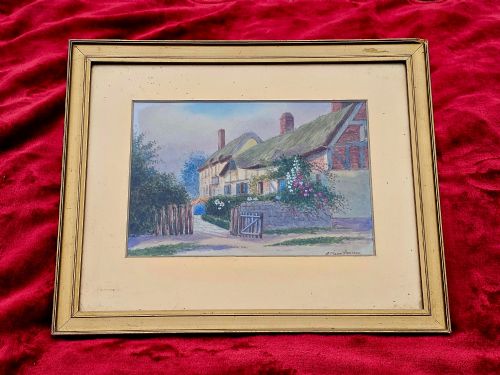
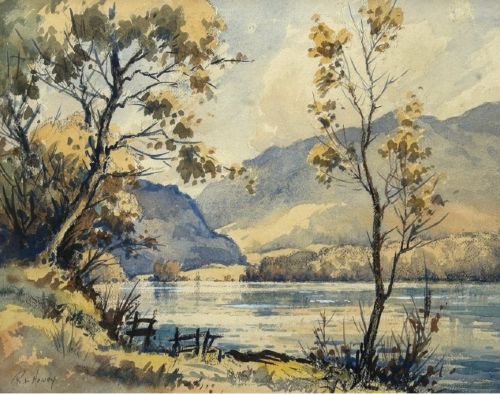
An english watercolor landscape depicts rural, urban, and coastal scenes created across the nineteenth and twentieth centuries. These original paintings range from intimate topographical sketches to finished exhibition works showing pastoral fields, river views, and village streets.
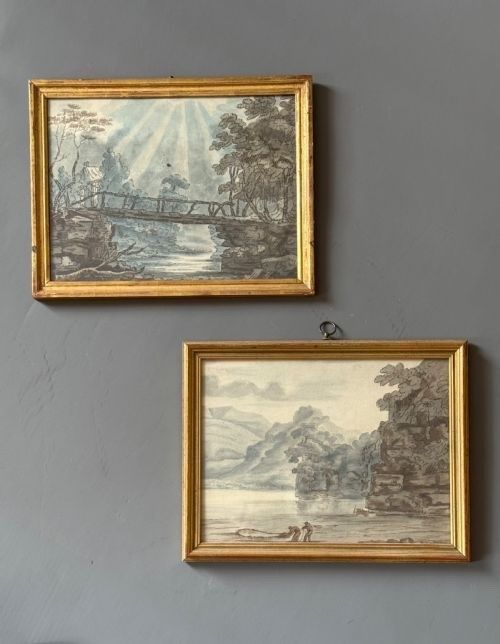
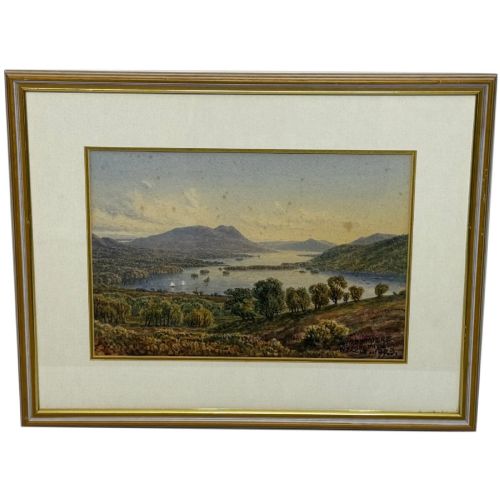
The works on this page span the Victorian and Edwardian eras into the mid twentieth century, reflecting shifting British painting styles. Artists recorded specific locations from the Cumbrian lakes to Cornish harbours and Yorkshire towns.
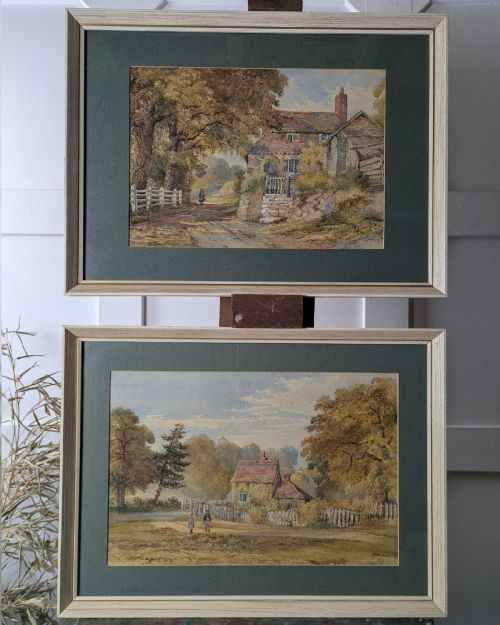
Framed watercolours typically arrive protected by glass within wood or gilt wood frames, preserving the paper and pigment. Buyers encounter individual paintings alongside paired works and small groupings recording historical British topography.
Materials and Technique
Artists painted these landscapes using water soluble pigment applied to paper sheets, frequently supported by preparatory pencil or ink drawing. Pigments wash across the surface in translucent layers to build luminous skies, water, and foliage.
Many works incorporate ink lines to define architectural elements, tree branches, or figures before watercolour washes supply colour and shadow. Framed presentation often includes gilt wood mouldings and glass to shield the paper from environmental moisture and light.
English Watercolor Landscape Retail Price Guide 2026
Typical asking prices for english watercolor landscape among the pieces listed under this phrase on Sellingantiques today, from the lower quarter to the upper quarter. They describe what is for sale here now, not the wider market.
Several Victorian artists carried portable watercolour boxes into muddy fields to capture stubborn livestock refusing to cooperate.
Assessing the Work
Quality rests upon the artist's handling of pigment transparency, tonal control, and the accuracy of architectural or natural drawing. Stronger compositions capture atmospheric light and spatial depth through deliberate brushwork rather than heavy opaque application.
The condition of the paper surface and pigment vibrancy distinguish superior examples from faded or discoloured sheets. Original framing and signed provenance further separate accomplished works from anonymous sketches.
William Taylor Longmire·Percy Lancaster·Robert Leslie Howey·Fred Lawson·George Oyston
The English Watercolor Landscape Glossary
- Watercolour
- A painting method where fine pigment particles suspend in a water-based binder and apply to paper. The resulting translucent washes allow the white of the paper to illuminate the composition.
- Topography
- The detailed mapping and artistic recording of specific geographical locations and towns. These topographical views document historical buildings and regional terrain before modern development.
- Wash
- A thin, fluid layer of diluted pigment spread across paper to create smooth skies or water. Multiple transparent washes build depth and shadow.
- Gilt Wood
- Wood moulding treated with a thin layer of gold leaf or metallic gilt paint. Such frames surround and protect antique watercolours.
English Watercolor Landscape: Frequently Asked Questions
How should I hang antique watercolours?
Display watercolours away from direct sunlight to prevent the pigments and paper from fading over time. Indirect natural light in a dry room preserves the delicate washes.
Ensure the frame utilises glass and proper backing to protect the paper from humidity and atmospheric pollutants. Professional framing maintenance safeguards the longevity of antique works.
Are these works original paintings?
Every piece listed is an original hand-painted work on paper rather than a modern mechanical reproduction. Artists applied pigment directly by hand, making each landscape unique.
Close inspection reveals brushstrokes, paper texture, and underlying pencil or ink lines unique to individual creation.
How do I identify the period of a watercolour?
Stylistic clues, framing materials, and artist signatures help date a painting alongside paper watermarks and inscriptions on the reverse. Victorian and Edwardian works often exhibit specific tonal palettes and framing styles.
Reference records and artist biography dates establish the likely window of creation for signed or attributed landscapes.
What subjects appear in these landscapes?
Common subjects include pastoral fields, river valleys, architectural townscapes, and coastal harbours across Britain. Artists recorded recognizable local landmarks, rural cottages, and working industrial scenes.
These views offer visual records of the British countryside and towns as they appeared during the nineteenth and twentieth centuries.