
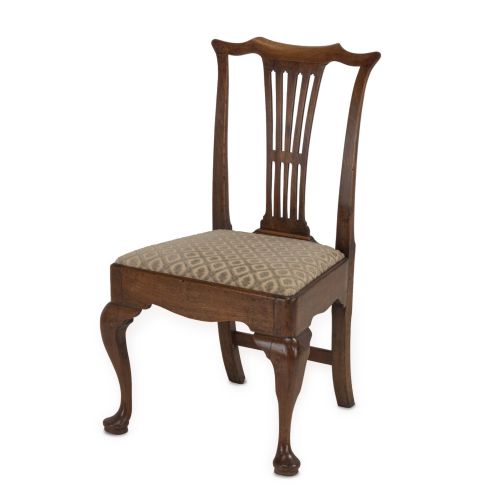
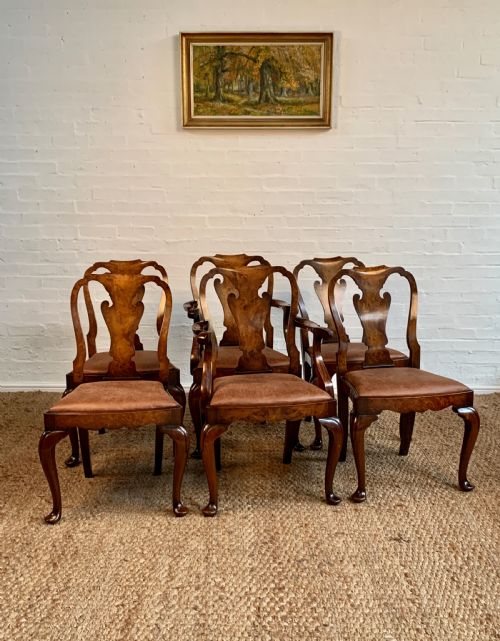


English Walnut Side Chair
An English walnut side chair brings tactile warmth and historic timber figure into a room.
English Walnut Side Chair
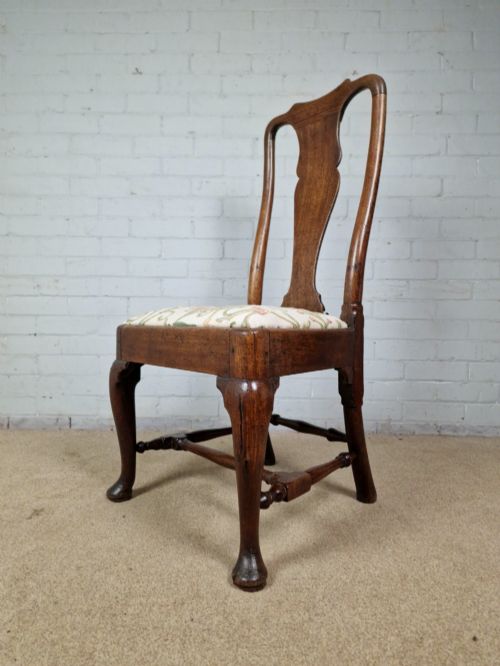
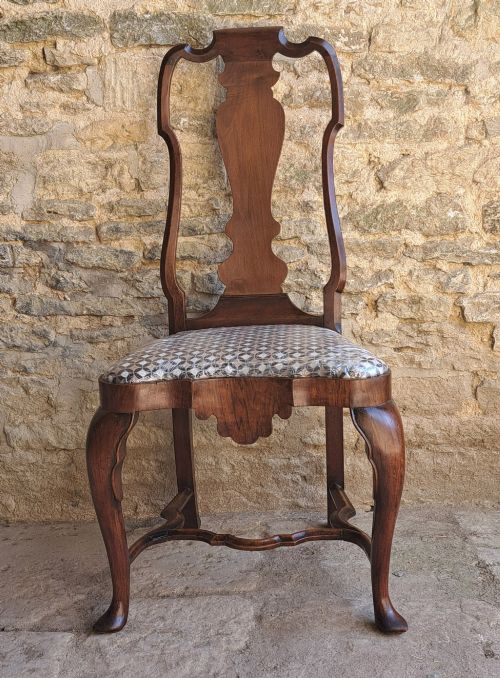
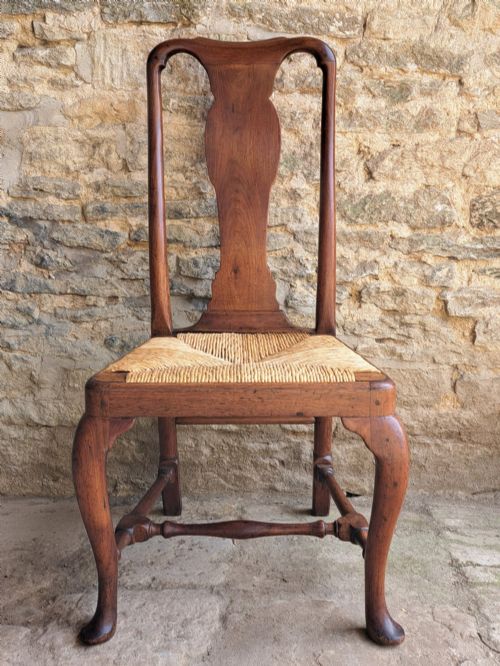
An english walnut side chair spans multiple centuries of cabinet making, appearing in forms from early eighteenth century Queen Anne designs to Victorian salon and dining seating. Buyers search for these pieces to acquire compact, movable seating defined by figured timber and traditional joinery.
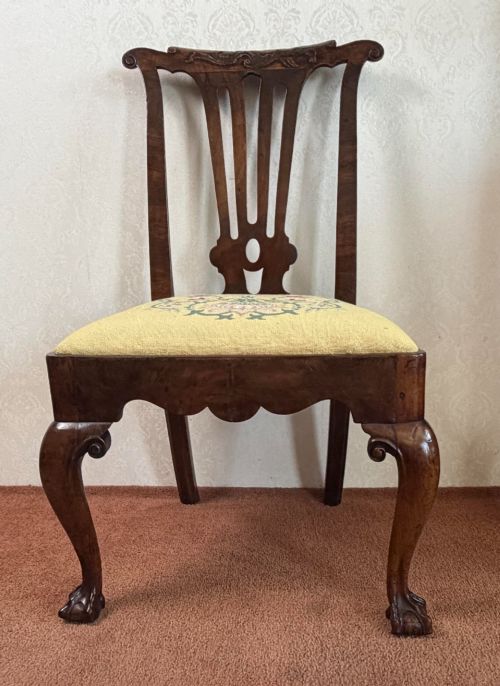
The selections available here range from early pieces with pierced splat backs and drop in seats to later nineteenth century balloon back and spoon seat variations. Queen Anne, George I, and George II iterations appear alongside Victorian and Edwardian interpretations.
Most examples function effectively as desk chairs, hall seats, or dining additions. Their varied origins trace through successive eras of British craftsmanship, maintaining the utility of a domestic side chair while displaying rich wood grain.
Materials and construction
Makers built these pieces primarily from solid walnut and burr walnut veneer, frequently pairing the timber with brass hardware and structural reinforcements. Upholstery materials include traditional fabric, needlepoint, tapestry, leather, and velvet.
Joinery methods rely on sturdy frame construction designed to support upright seating without heavy arms. Carved details, pierced splats, and shaped backs require skilled hand woodworking rather than machine replication.
Some chairs spent centuries serving as silent witnesses to parlour gossip before arriving on our floor.
Assessing craftsmanship
The distinction between ordinary and exceptional examples rests in the depth of timber figure and the crispness of carved elements. Fine specimens exhibit carefully selected burr walnut grain and well proportioned splats that demonstrate disciplined workshop execution.
Upholstery execution and the retention of original drop in seat structures heavily influence the integrity of a piece. Superior examples maintain structural firmness and harmonious proportions without clumsy repairs or replaced primary elements.
Charles Tozer·Shoolbred
The English Walnut Side Chair Glossary
- Drop in seat
- A removable frame upholstered separately and dropped into the seat rail rebate. This construction method allows straightforward reupholstery without disturbing the structural frame.
- Pierced splat
- A vertical central wooden strip within the backrest cut through with decorative negative space. This technique lightened the visual weight of eighteenth century chairs.
- Needlepoint
- Hand stitched yarn embroidery worked over a canvas mesh ground. It provides a durable and decorative textured surface for period chair seats.
- Balloon back
- An oval or rounded upholstered backrest popular during the nineteenth century. The curved timber frame resembles the outline of a floating balloon.
- Burr walnut
- Wood grain harvested from tree growths containing intricate swirled patterns. Cabinet makers prized this figured veneer for primary display surfaces.
English Walnut Side Chair: Frequently Asked Questions
What is an English walnut side chair?
An English walnut side chair is a small, armless seat made primarily from walnut timber, designed for dining, desks, or occasional hall use. These pieces span periods from the early eighteenth century through the Victorian era and beyond.
Buyers select them for their compact footprint, expressive wood grain, and historical presence. They serve as functional seating that doubles as decorative furniture.
How do I date an English walnut chair?
Dating relies on observing structural forms, such as the curved cabriole legs of Queen Anne pieces versus the turned supports of Victorian designs. Back shapes, splat styles, and joinery methods also indicate specific historical periods.
Matching the wood finish and upholstery style to documented eras helps narrow the timeline. Examining secondary timbers beneath the seat provides further clues to origin.
Where should I place a side chair?
These chairs fit well against hallway walls, beside desks, or as supplementary seating in a drawing room or bedroom. Their modest scale allows them to occupy tight corners without crowding a space.
They also function around a dining table when mixed with matching or complementary antique seating. Position them away from direct sunlight to protect the walnut finish and upholstered textiles.
How do I care for antique walnut furniture?
Maintain the wood by dusting with a soft, dry cloth and applying periodic applications of quality beeswax. Avoid silicone polishes that can degrade the historic finish over time.
Keep the chair away from radiators and extreme humidity fluctuations to prevent wood splitting or veneer lifting. Protect upholstered needlepoint or fabric surfaces from heavy friction and direct light.