


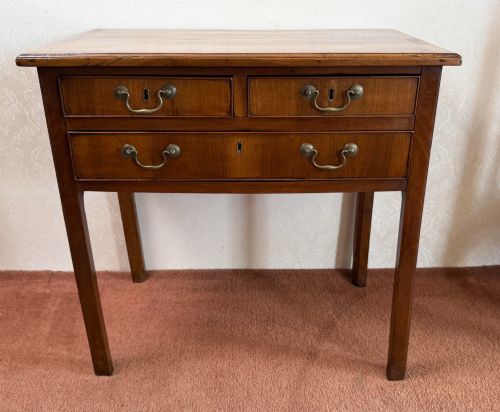
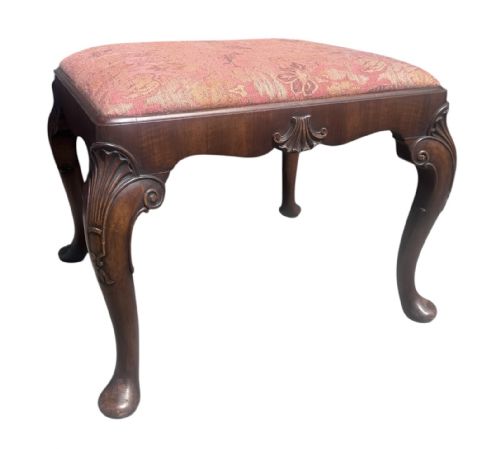


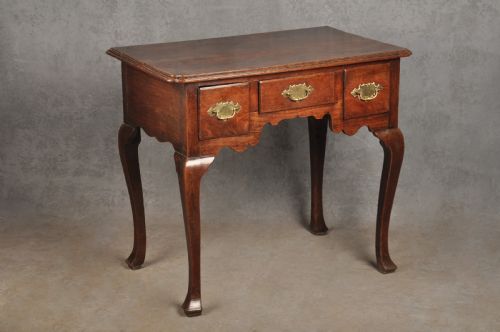

English Walnut Dressing Table
An English walnut dressing table brings warmth and rich grain to a bedroom, combining practical surface space with understated period elegance.
English Walnut Dressing Table
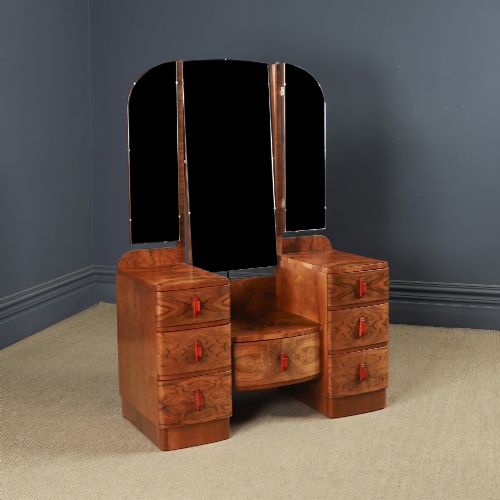
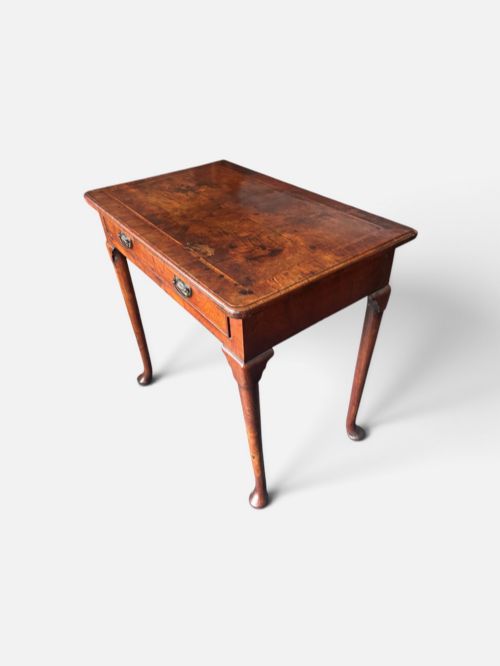
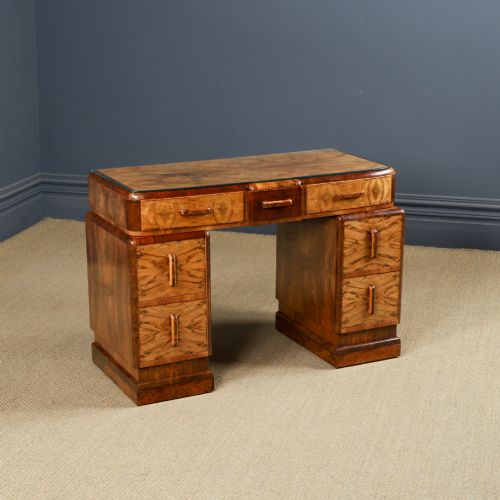
When you search for an english walnut dressing table, you encounter a refined group of antique and vintage furniture spanning from the seventeenth century through to the art deco period of nineteen thirty. The listings on this page encompass lowboys, kneehole desks, vanity tables, and matching stools that share a common heritage in English walnut craftsmanship.
You are most likely to meet eighteenth century lowboys and kneehole desks alongside nineteen thirties art deco pedestal dressing tables. These forms vary from compact three drawer side tables to substantial multi drawer writing desks and mirrored vanities.
The materials and styles cross multiple eras, including Georgian, Queen Anne, and Edwardian revivals. Makers utilised native and decorative woods to produce pieces that functioned for correspondence, grooming, and personal administration.
What varies in quality
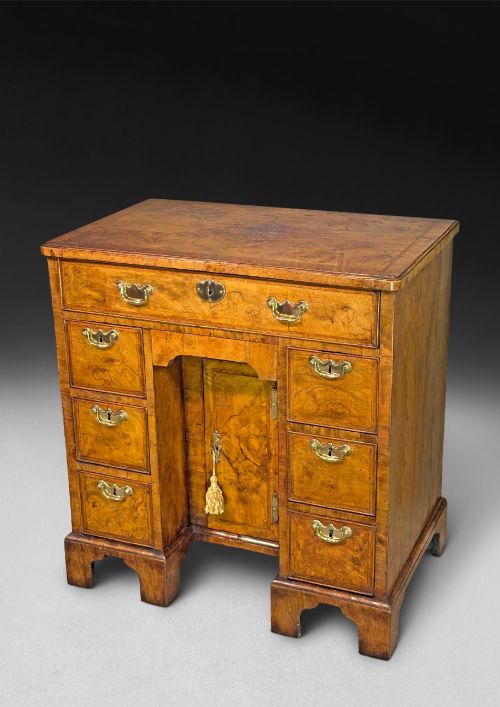
The distinction between standard examples and the finest pieces rests in the selection of the walnut veneer and the subtlety of its figuring. Burr walnut with rich grain patterns and precise herringbone stringing elevates a lowboy or kneehole desk above plain domestic alternatives.
Construction methods and timber selection for secondary woods also define the standard of the piece. Well executed dovetail joints in the drawers and intact original brass hardware indicate higher workshop standards.
Several dressing table stools come equipped with hidden storage beneath upholstered cream leather seats.
The English Walnut Dressing Table Glossary
- Lowboy
- A small table with drawers, typically standing on four legs, used historically for writing or dressing. Eighteenth century examples in walnut frequently double as side tables.
- Kneehole desk
- A compact desk featuring a central recessed space for the legs, flanked by pedestals of small drawers. Georgian versions in figured walnut represent the form.
- Burr walnut
- Timber taken from a tree growth or burl, yielding intricate, swirling grain patterns highly prized for veneer work. Cabinet makers utilised it on drawer fronts and top panels.
- Herringbone inlay
- A decorative band of contrasting wood veneers laid in a V-shaped zig-zag pattern. It frames the edges of drawers and tabletops on eighteenth century furniture.
- Queen Anne style
- A graceful furniture style characterised by cabriole legs and restrained curves. Revivals of this aesthetic appear across various decades.
English Walnut Dressing Table: Frequently Asked Questions
What is an english walnut dressing table?
It is a piece of antique or vintage furniture designed for personal grooming or writing, constructed using walnut or burr walnut timber.
These items range from eighteenth century lowboys and kneehole desks to nineteen thirties art deco pedestal vanities with mirrors.
How were lowboys used historically?
Lowboys served versatile roles in domestic interiors as dressing tables, side tables, or writing desks.
Their compact proportions allowed placement in bedrooms or reception rooms for holding personal items and correspondence.
How do I identify a georgian piece?
Georgian furniture displays classical proportions, figured walnut veneers, and often incorporates herringbone inlay or brass hardware.
Cabinet makers of this era focused on clean lines and timber grain rather than excessive ornamentation.
How do I clean walnut furniture?
Maintain walnut surfaces by dusting with a soft, dry cloth and applying appropriate wax polish sparingly.
Avoid placing wooden furniture in direct sunlight or near heat sources to protect the delicate veneers.