

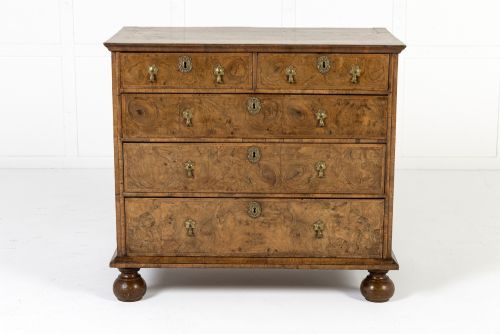
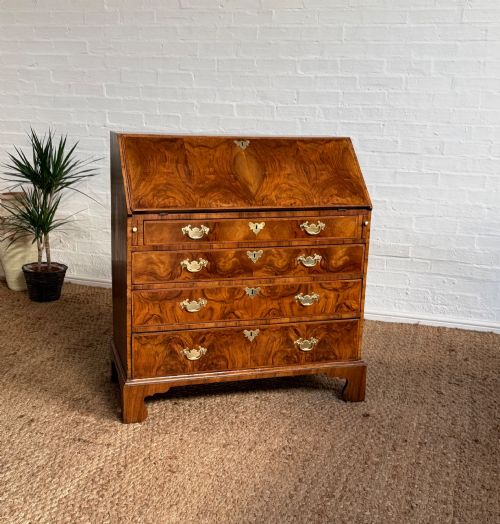
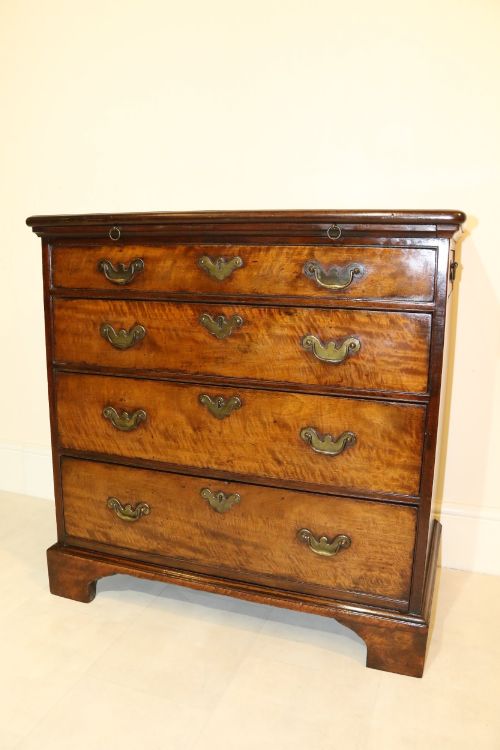
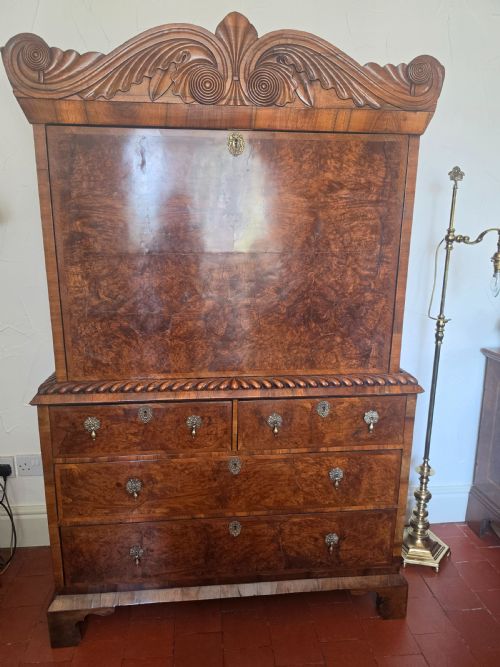




English Walnut Bureau Chest
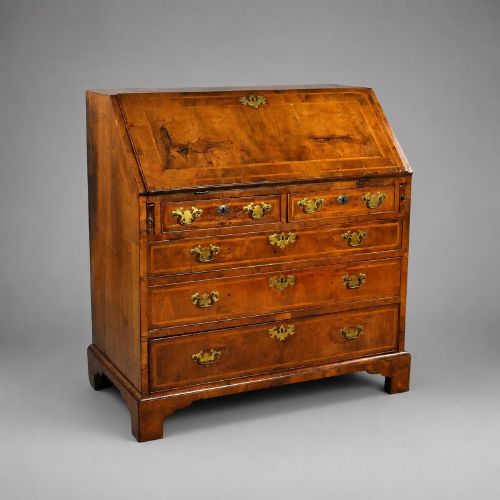
An English walnut bureau chest brings together fitted writing compartments and practical drawer storage in richly grained timber.
English Walnut Bureau Chest
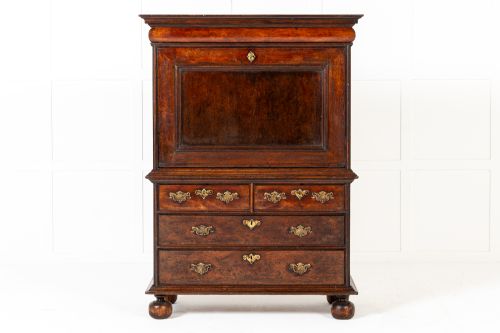
An English walnut bureau chest combines a fall-front writing compartment or secretaire with multiple drawers, creating a versatile dual-purpose piece for the home. When you search for an english walnut bureau chest, you encounter forms ranging from compact fall-front desks to tall escritoires and bachelor chests originating primarily from the seventeenth and eighteenth centuries.
The pieces on this page span several distinct stylistic periods, including William and Mary, Queen Anne, and Georgian eras. Master cabinetmakers of these periods utilised richly figured timbers to construct writing cabinets and chests of drawers that served both domestic and administrative needs.
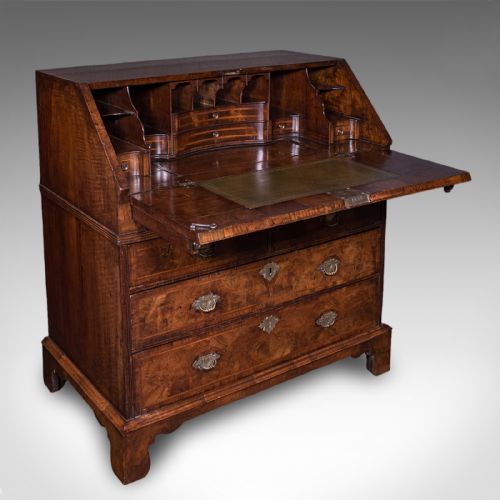
Most examples you meet here feature sloping fall-fronts that open to reveal internal pigeonholes and small drawers, positioned above graduated drawer configurations. Oak and brass frequently support the primary walnut structures, whilst specialised variations incorporate red leather writing surfaces or baize linings.
How they were made
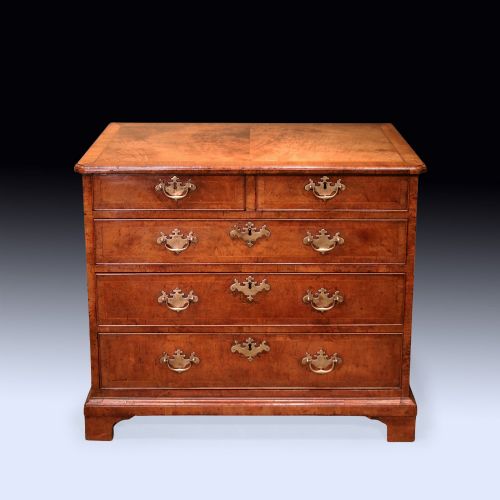
Cabinetmakers constructed these pieces using solid timber frameworks overlaid with burr walnut veneer to create striking figured patterns across the exterior surfaces. Feather-banded borders frequently outline the drawer fronts, demonstrating meticulous attention to decorative detail during the cutting and laying of veneers.
Internal partitions, drawer linings, and secondary structures rely on oak, providing a robust structural skeleton behind the decorative walnut exterior. Brass drop handles, escutcheons, and hinges secure the drawers and fall-fronts, functioning both as structural fastenings and visual accents.
Fall-front mechanisms utilise internal supports or lopers to bear the weight of the writing surface when opened. Specialised writing compartments incorporate leather or baize inserts to provide a smooth, durable surface for correspondence.
English Walnut Bureau Chest Retail Price Guide 2026
Typical asking prices for english walnut bureau chest among the pieces listed under this phrase on Sellingantiques today, from the lower quarter to the upper quarter. They describe what is for sale here now, not the wider market.
Gentlemen of the early eighteenth century hid their secret love letters behind tiny walnut pigeonholes deep within the bureau.
What varies in quality
The visual impact of an English walnut bureau chest depends heavily on the choice and matching of veneers across the primary surfaces. Burr walnut veneer selected with symmetrical grain patterns and rich figuring marks the difference between standard domestic furniture and exceptional cabinet work.
Construction methods and timber selection for secondary woods reveal the original maker's standards. Pieces utilising substantial oak for drawer linings and internal dividers maintain structural integrity far better than those employing lighter, lesser woods.
The preservation of original brass hardware, working locks, and integrated feather-banding significantly influences the overall integrity of the piece. Subtle details, such as the precise execution of dovetail joints on the drawers, separate ordinary workshop production from master craftsmanship.
The English Walnut Bureau Chest Glossary
- Burr walnut
- A specialised timber veneer harvested from the warted growths of walnut trees, prized for its swirling, highly figured grain patterns. Cabinetmakers used burr walnut to create dramatic decorative surfaces on high-status furniture.
- Fall-front bureau
- A writing cabinet featuring a hinged sloping front that folds down to serve as a desk. Opening the flap exposes internal compartments, small drawers, and pigeonholes.
- Escritoire
- A tall writing cabinet or desk, often fitted with doors enclosing a central writing compartment and multiple internal drawers. This form frequently dates from the late seventeenth or early eighteenth centuries.
- Feather-banding
- A decorative inlay technique using narrow strips of veneer cut diagonally and arranged in a herringbone pattern to frame drawer fronts and borders. This detail enhances the geometric visual appeal of walnut furniture.
- Bachelor chest
- A compact chest of drawers incorporating a fold-over top or a brushing slide to provide a convenient writing surface. These versatile pieces were designed for smaller dressing rooms or private chambers.
English Walnut Bureau Chest: Frequently Asked Questions
How do I use an antique bureau chest?
You can use the drop-down fall-front or writing slide as a functional desk surface for writing letters or placing a laptop. The internal compartments and small drawers provide organised storage for stationery and small items.
The lower drawers offer ample space for general household storage while keeping the room looking tidy.
Where should I place a bureau chest?
A bureau chest fits well in a study, living room, or hallway where you need both surface space and concealed storage. Because the fall-front folds down, ensure you leave adequate clearance space in front of the piece.
Keep the timber away from direct sunlight and heat sources to protect the walnut veneer and polished finish.
How can I tell the period of a walnut bureau?
You can determine the period by examining construction traits, hardware styles, and the specific character of the walnut veneers. William and Mary and Queen Anne pieces often display distinct leg designs and cross-banded veneers, whilst later Georgian examples feature cleaner architectural lines.
Looking at the secondary woods, such as oak drawer linings, also helps confirm the manufacturing era.