

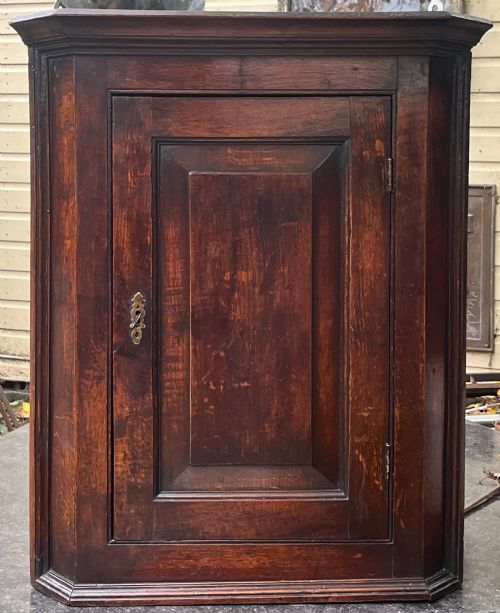
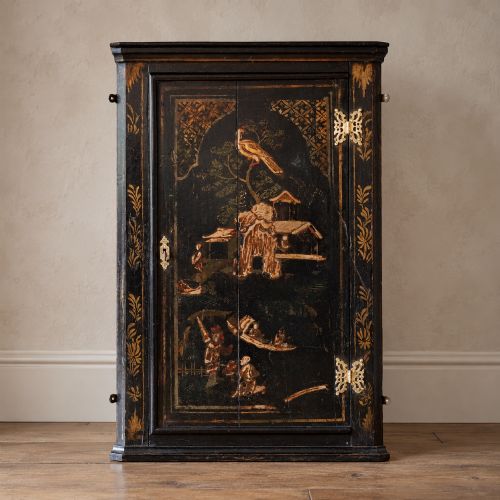
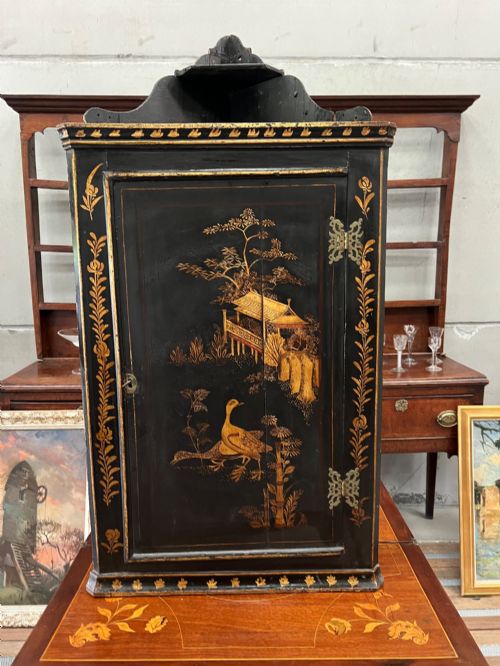

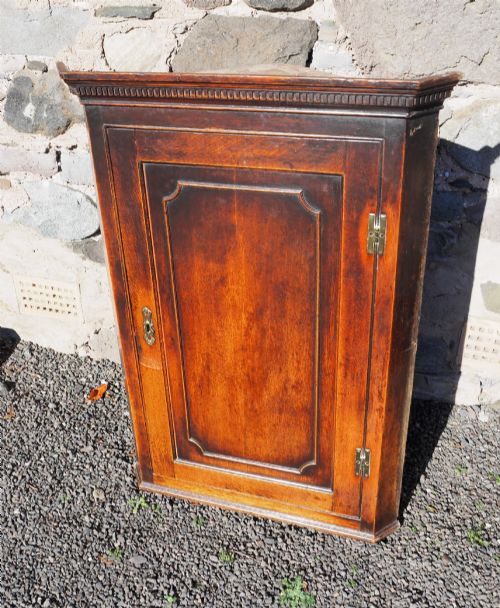




English Wall Cupboard
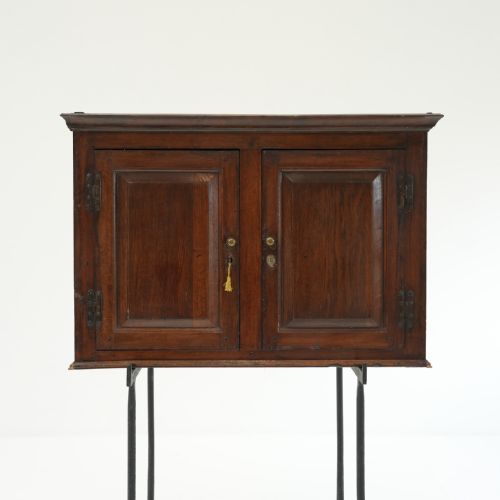
An english wall cupboard brings architectural timberwork and compact storage to domestic interiors, offering practical wall-hanging display space shaped by centuries of regional joinery.
English Wall Cupboard
An english wall cupboard encompasses a practical group of hanging storage pieces, spanning compact spice boxes, reception hall cabinets, and tall corner units designed to utilise neglected room angles. The selections on this page concentrate heavily on Georgian and 18th century examples alongside Edwardian and Victorian revivals.
Corner cabinets dominate the available forms, appearing with flat or bow fronts, glazed display doors, and internal shelving configured for household china and provisions. Hanging cupboards and small wall cabinets provide accessible storage without occupying floor space, reflecting the domestic needs of period English households.
Craftsmanship and Proportion
Quality rests in the selection of timber, seen in the rich figuring of flame mahogany and the tight grain of early quarter-sawn oak. Superior pieces display crisp crossbanding, balanced proportions, and fine inlay work that integrates harmoniously into the architectural lines of the cabinet.
Construction integrity distinguishes workshop output, evidenced by the thickness of backboards, hand-cut dovetails, and original brass hardware. The refinement of mouldings and the precision of glazed door frames separate standard utility furniture from sophisticated provincial or metropolitan commissions.
English Wall Cupboard Retail Price Guide 2026
Typical asking prices for english wall cupboard among the pieces listed under this phrase on Sellingantiques today, from the lower quarter to the upper quarter. They describe what is for sale here now, not the wider market.
Two small oak cabinets listed here were formed from the timbers of the royal yacht HMY Osborne.
Town and Emanuel
The English Wall Cupboard Glossary
- Crossbanding
- A decorative border of veneer laid perpendicular to the grain of the primary surface. It frames the central panel on Georgian doors and drawer fronts.
- Bow front
- A convex curved cabinet facade that projects forward from the wall corners. This shape softens room angles and maximises internal storage depth.
- Livery cupboard
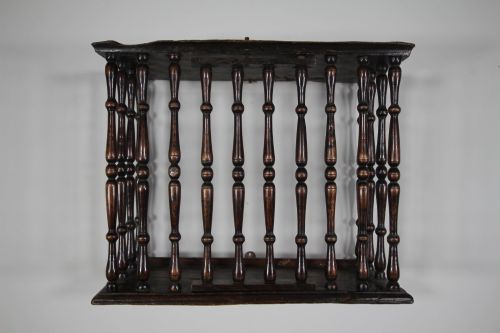
- An early storage form traditionally used for food and provisions, featuring ventilated doors pierced with turned spindles or carved openings.
- Spice cupboard
- A small hanging cabinet fitted with multiple internal drawers for storing valuable culinary ingredients and medicinal herbs.
English Wall Cupboard: Frequently Asked Questions
How do I hang an antique wall cupboard safely?
These cupboards require secure fixing to solid wall studs or masonry using appropriate brackets that transfer weight safely.
Historic hanging brackets or internal screw points should be reinforced to support the combined weight of dense timbers and contents.
What rooms suit an english wall cupboard best?
Corner units integrate smoothly into dining rooms and kitchens to display ceramics and glassware without obstructing floor plans.
Hallways and studies benefit from flat-walled hanging cabinets that provide compact storage for everyday items.
How do I tell Georgian from Edwardian examples?
Georgian pieces display hand-cut timber joints, pegged construction, and patinated native oak or dense mahogany surfaces developed through long use.
Edwardian versions often incorporate machine-cut precision, lighter secondary woods, and revival stylistic details inspired by earlier centuries.
Why do so many wall cupboards have curved fronts?
Bow-fronted corner cupboards were designed to fit neatly into room angles while offering wider central storage capacity than flat-fronted alternatives.
This geometry softened the harsh junction of two walls and presented a more decorative facade to the interior.