


English Village Painting
An English village painting captures rural life, quiet lanes, and historic country settlements through the eyes of artists past.
English Village Painting
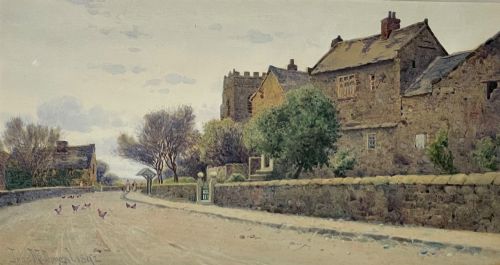
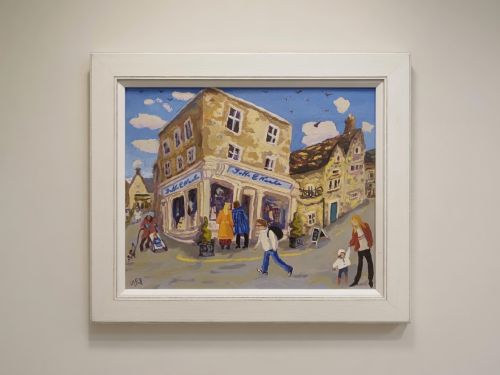
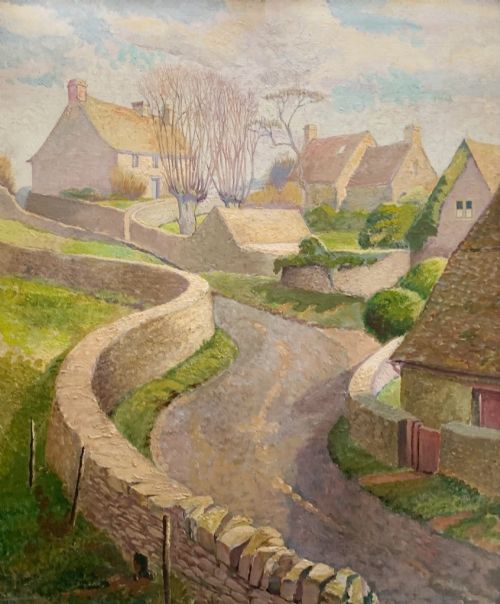
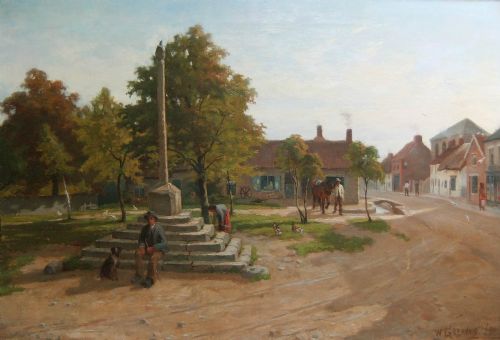
An English village painting depicts rural settlements, country lanes, and agricultural communities across various regions from the nineteenth and twentieth centuries. These works document local topography, village churches, and daily rural life before modern industrial expansion altered the landscape. Collectors encounter topographical watercolours and framed oil paintings signed by regional artists working within traditional British landscape genres.
The material ranges from small paper studies executed on location to large oil canvases finished in studio settings. Many pieces identify specific locations such as Yorkshire dales, Sussex streets, or Cotswold cottages, often inscribed with titles by the original hand. The selection balances detailed topographical views with broader impressionistic interpretations of English weather and seasonal rural changes.
How They Were Made
Artists relied primarily on watercolour pigment applied to paper or oil paint laid upon stretched canvas or wooden board. Watercolour allowed painters to capture transient effects of light and weather quickly outdoors, often building translucent washes over pencil sketches. Oil paintings on canvas provided richer textures and deeper colour palettes suitable for layered studio compositions depicting heavier skies and shaded lanes.
Support materials varied from fine linen canvas mounted on wooden stretchers to heavy watermarked paper stock and solid wood panels. Framing typically involved gilt wood mouldings or simple moulded frames chosen to complement the domestic scale of the rural subject matter. Pigments shifted over decades from earth-heavy natural tones in earlier nineteenth-century works toward brighter synthetic hues in later twentieth-century examples.
Listings feature paper, canvas, wood, watercolour, and oil mediums spanning the nineteenth century through the mid-twentieth century.
What Varies in Quality
Technical proficiency in handling perspective, spatial depth, and atmospheric light distinguishes accomplished works from basic topographical records. Superior examples demonstrate confident brushwork and a coherent treatment of natural illumination rather than rigid adherence to architectural detail. The skill with which an artist renders human figures, livestock, or moving water adds narrative interest and structural balance to the composition.
The specificity of provenance and documentation influences how clearly a work connects to a defined location and period. Signed works with contemporary inscriptions on the reverse provide reliable historical context, whereas unsigned student pieces offer general atmosphere with less specific geographical grounding. Preservation of the original paper or canvas surface, free from heavy fading or past restoration damage, preserves the visual integrity of the scene.
John McDougal·Lucy Pratt·William Greaves·Fred Lawson·Arthur Tucker·Charles Vickers·Joseph Thors
The English Village Painting Glossary
- Topographical painting
- A work that accurately records specific geographical locations and identifiable buildings rather than invented scenery. These pieces serve as visual historical records of village layouts.
- Watercolour pigment
- Finely ground colour suspended in a water-soluble binder, applied in thin translucent layers on paper. It requires rapid execution to capture fleeting weather conditions.
- Oil on canvas
- A mixture of pigment and drying oil applied to a woven fabric surface stretched across a wooden frame. This medium allows for rich texture blending and deep colour saturation.
- British Impressionism
- A painting style influenced by French techniques that focuses on natural light, loose brushwork, and everyday subjects. Practitioners applied these methods to rural English landscapes.
- Genre scene
- An artwork depicting aspects of everyday life, including figures working, children playing, or villagers gathered near an inn. These details provide social context to the landscape setting.
English Village Painting: Frequently Asked Questions
How do I identify the location in an old painting?
Many artists inscribed the specific village name, county, or landmark directly onto the front margin, the reverse of the canvas, or the stretcher frame.
Local historical societies, parish records, and antique county maps often help match surviving buildings and church towers to the painted scene.
What is the difference between watercolour and oil village paintings?
Watercolour works on paper were typically created outdoors to capture immediate light and weather conditions with translucent washes of pigment.
Oil paintings on canvas offered heavier textures and richer colours, allowing artists to build up complex compositions over longer periods in a studio.
How should I frame and display a historic rural painting?
Traditional gilt wood frames or simple wooden mouldings suit the period aesthetic of these nineteenth and twentieth-century landscapes.
Keep paintings away from direct sunlight and damp conditions to prevent the paper from foxing or the canvas from warping over time.
Why do some village paintings include figures while others are empty?
Artists often added figures such as farm workers, children, or travellers to establish a sense of scale and daily activity within the rural setting.
Empty village scenes focused purely on architectural forms, quiet streets, and natural atmospheric effects without narrative distraction.