

English Victorian Sofa
An English Victorian sofa brings deep comfort and formal presence to a room, rooted in nineteenth-century joinery and traditional upholstery.
English Victorian Sofa
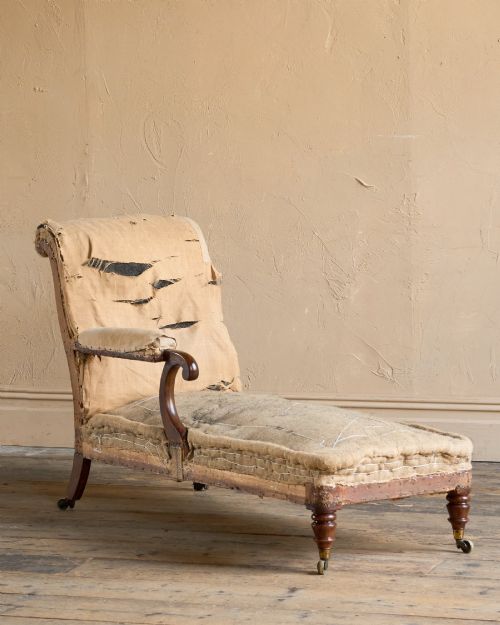
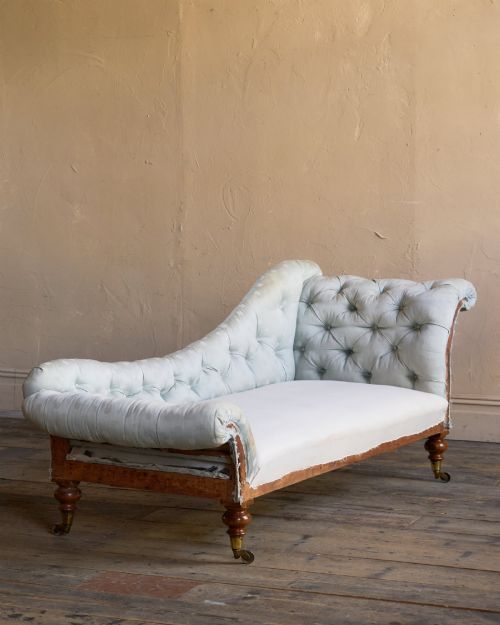
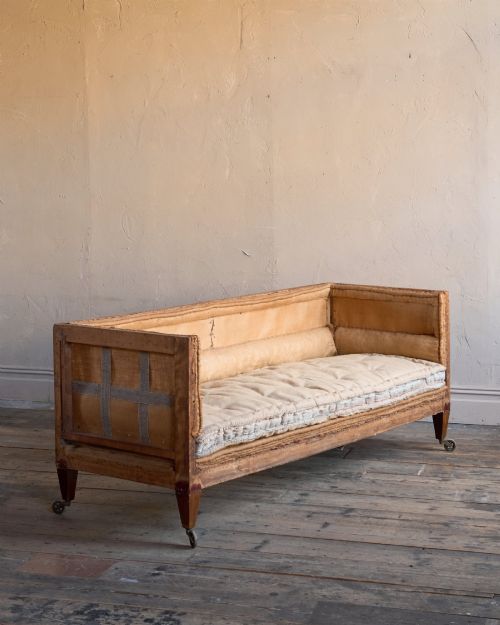
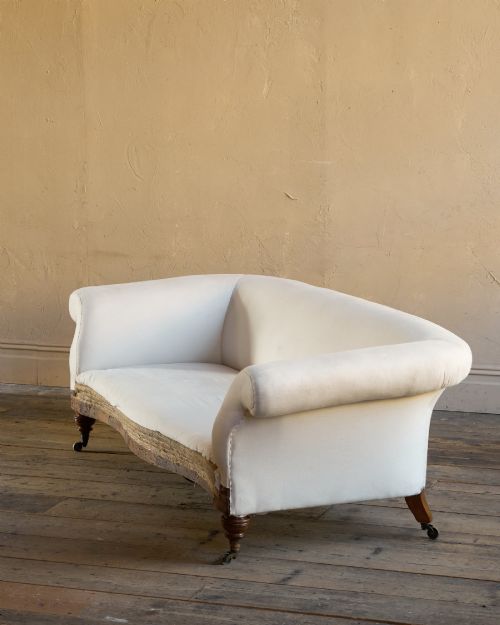
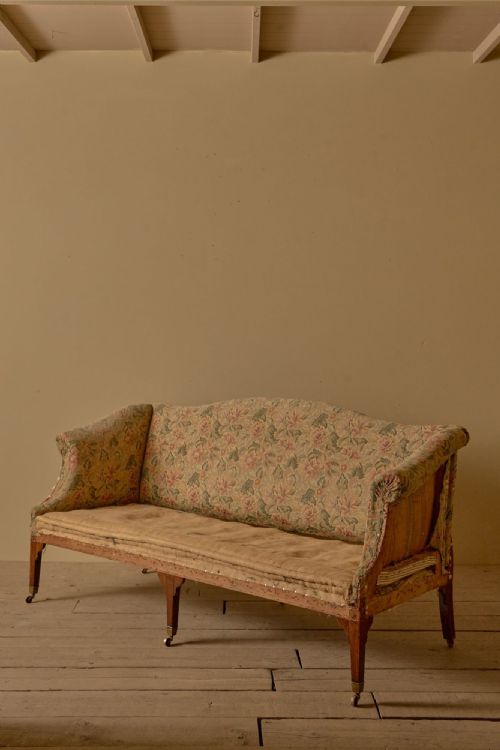
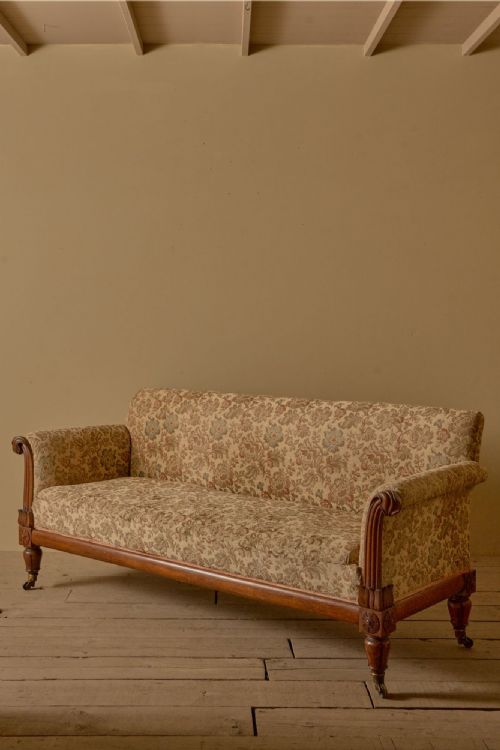
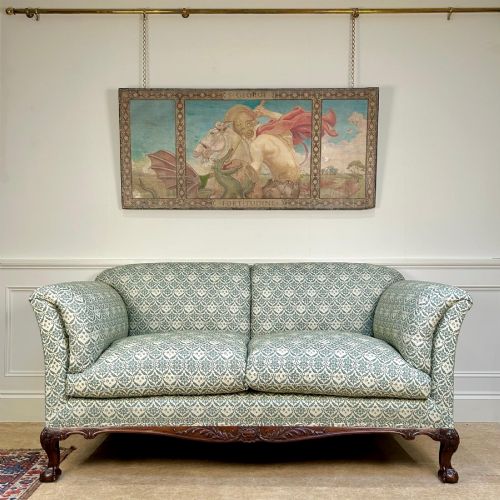
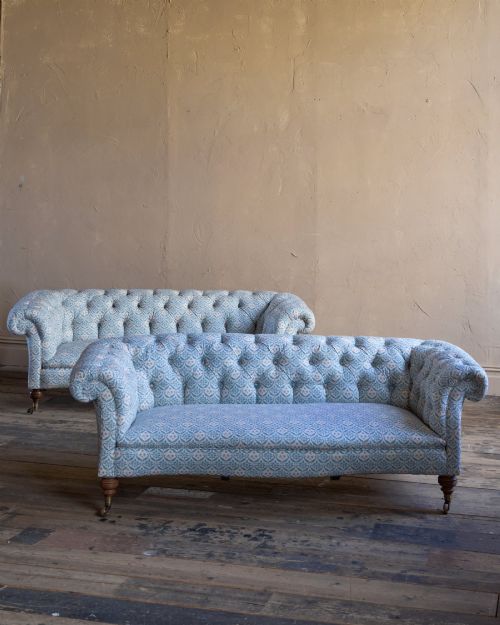
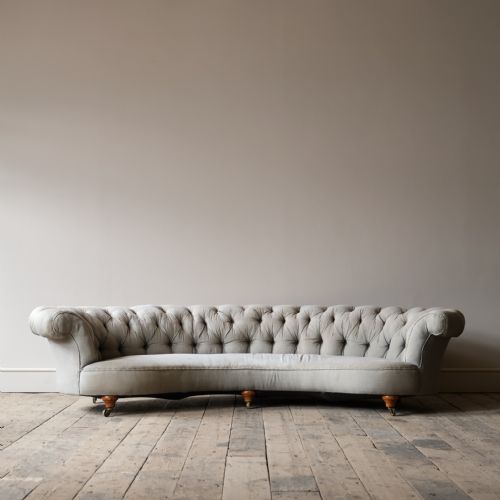
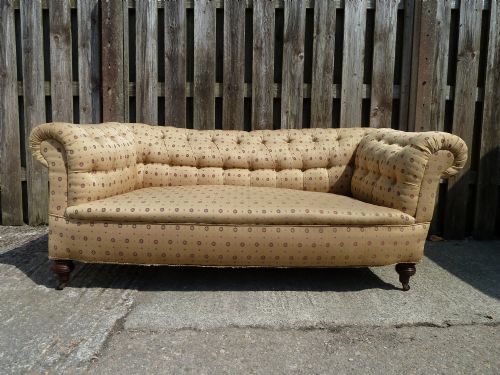
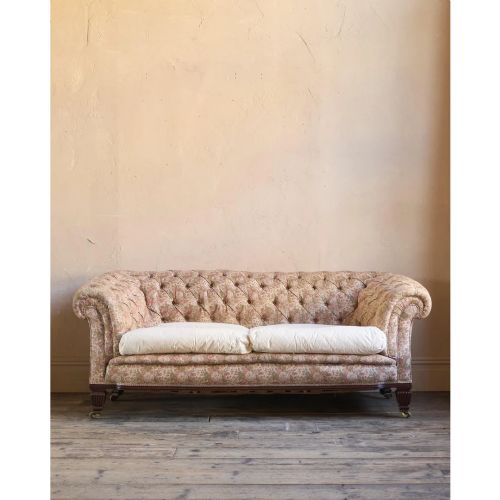
An English Victorian sofa encompasses heavy deep-buttoned chesterfields, drop-arm two-seaters, and scrolling chaise longues built during the nineteenth century. These seating forms emerge from traditional English cabinet-making workshops and country house interiors, often carrying stylistic echoes of earlier Regency and Chippendale designs.
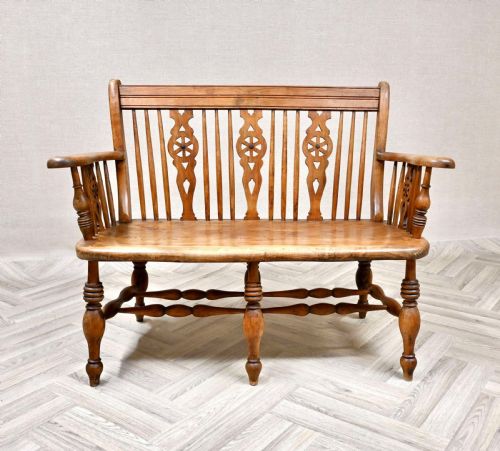
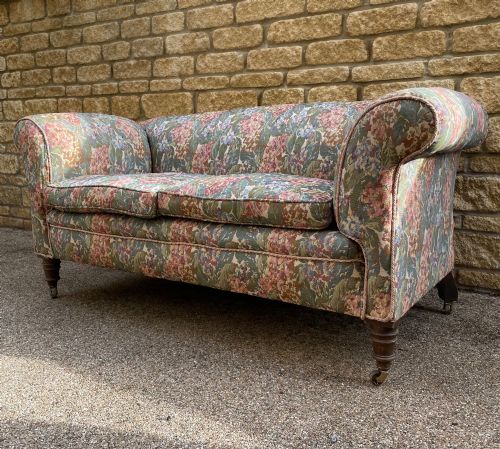
The versions most commonly found here include low-backed upholstered settees and day beds resting on turned wooden legs with brass castors. Makers paired sturdy timber frames with sprung seats to create substantial furniture intended for formal drawing rooms and private libraries.
Distinction in Construction
The integrity of the internal wooden frame and the resilience of the traditional hand-tied springing system distinguish finer examples from standard production. Master workshops ensured tight joinery at every stress point, preventing structural sway over decades of daily sitting.
Surface execution reveals workshop standard through the crispness of turned wooden components, the precise alignment of buttoning, and the quality of secondary timbers hidden beneath the upholstery.
English Victorian Sofa Retail Price Guide 2026
Typical asking prices for english victorian sofa among the pieces listed under this phrase on Sellingantiques today, from the lower quarter to the upper quarter. They describe what is for sale here now, not the wider market.
The inventory records pieces dated across the Victorian period alongside earlier Regency examples and Edwardian variations.
Howard and Sons·Hampton and Sons·Holland and Sons·Jackson and Graham·Jas Shoolbred·Gillows·James Winter and Sons
The English Victorian Sofa Glossary
- Chesterfield
- A deeply upholstered sofa characterised by rolled arms and a back of the same height. This form relies on complex button-tufting and traditional interior coil springing.
- Chaise Longue
- An elongated upholstered seat designed for reclining, combining elements of an armchair and a day bed. These pieces often feature a single raised headrest and an open side.
- Drop Arm
- A movable sofa arm mechanism that can be lowered to convert the seating area into a resting surface. This clever hardware allows a standard two-seater to function as a temporary day bed.
- Castor
- A small wheel fitted to the base of furniture legs to ease movement. Nineteenth-century versions typically combined brass mountings with ceramic or wooden wheels.
English Victorian Sofa: Frequently Asked Questions
How do I care for antique upholstery?
Protect antique textiles from direct sunlight to prevent fading and brittle fibres. Gentle vacuuming using a low-suction attachment removes dust without disturbing internal stuffings.
Professional textile conservators should handle deep cleaning or structural repairs to delicate fabrics like velvet and antique calico. Avoid placing heavy pieces near direct heat sources which dry out historic wooden frames.
Are these sofas comfortable for daily use?
Nineteenth-century seating was engineered for substantial everyday comfort, utilising deep coil springs and layered animal hair stuffing. The generous proportions offer ample depth for relaxed lounging.
Original internal webbing and springs maintain supportive resilience when properly maintained by traditional methods. Many buyers enjoy these pieces as primary living room seating.
How do I identify a nineteenth-century piece?
Examine the secondary timbers underneath and inside the frame for tool marks and wood oxidation consistent with the Victorian era. Hand-turned legs fitted with brass castors and traditional hand-tied upholstery foundations indicate period manufacture.
Maker stamps on wooden frames or brass castor housings often confirm attribution to prominent London workshops. Stylistic clues such as button-backed upholstery and serpentine profiles align closely with 1850 to 1900 production.
Will a chaise longue fit a modern room?
A nineteenth-century chaise longue provides an elongated profile that works well positioned opposite a fireplace or floating in a spacious drawing room. The open side maintains visual lightness despite the substantial length.
Measuring the exact clearance required for the raised headrest ensures the piece integrates comfortably into existing floor layouts. These items add distinct character to both traditional and eclectic modern interiors.