




English Smokers Bow
An English smokers bow is a sturdy vernacular armchair built for comfort, and you want one for its generous proportions and honest rural character.
English Smokers Bow
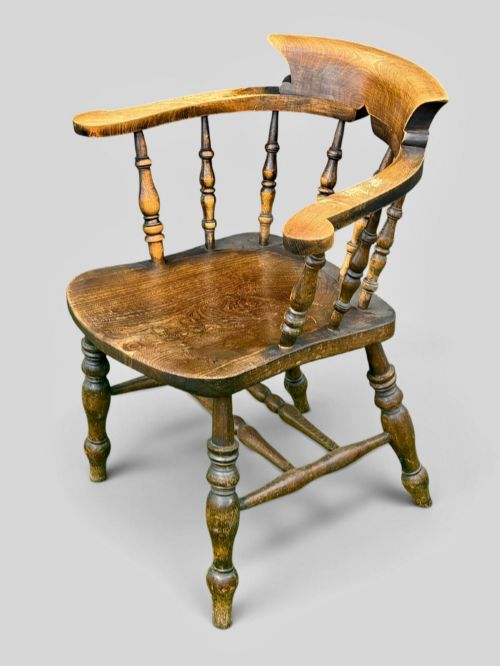
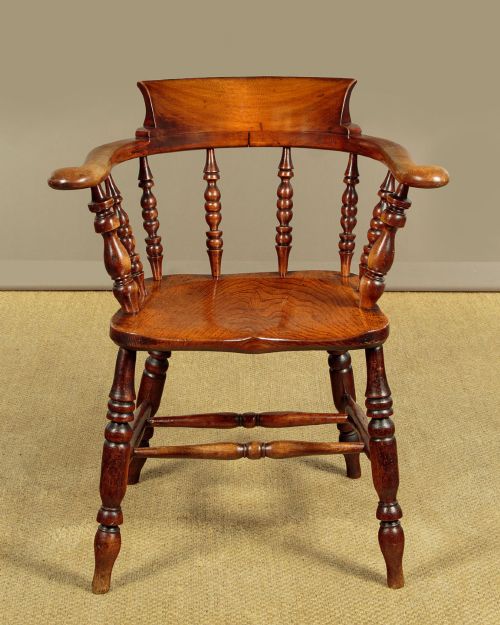
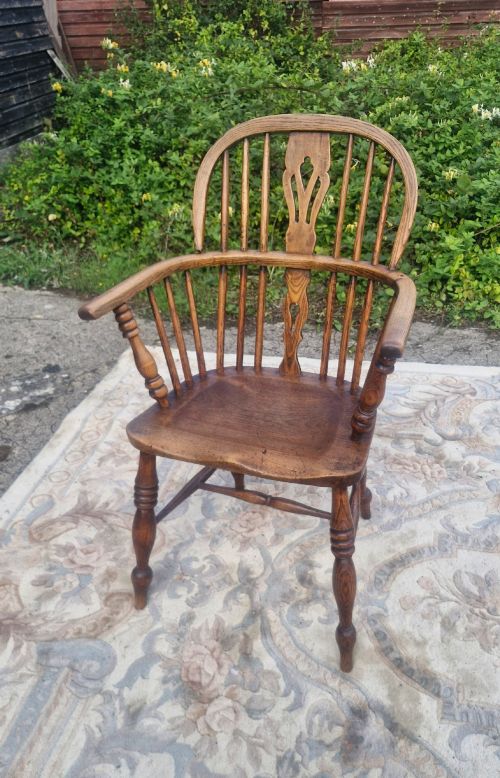
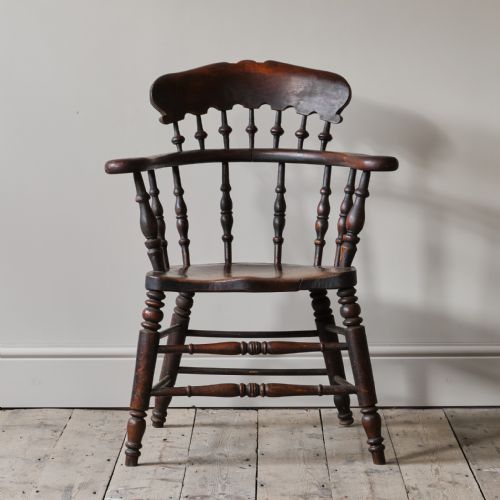
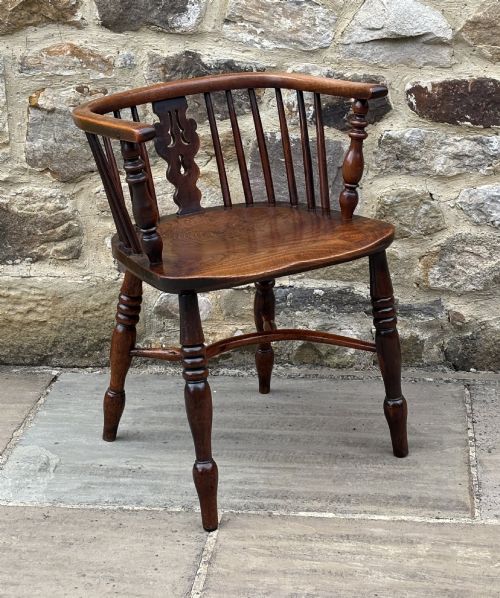
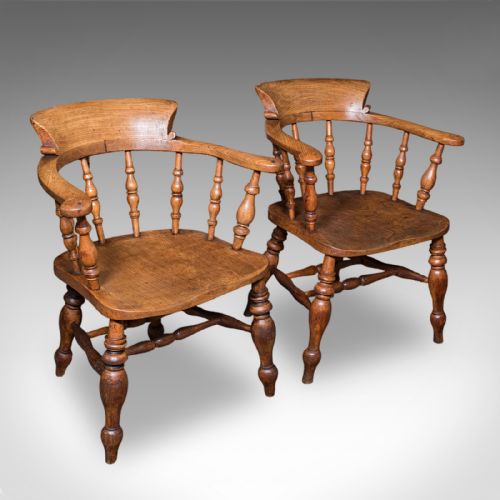
The English smokers bow is a distinct form of low-back Windsor armchair, also known regionally as a captain's chair or elbow seat. These chairs appeared in provincial contexts during the nineteenth century, bridging the gap between utilitarian seating and parlor comfort. You meet them most frequently in Victorian and Edwardian iterations spanning the 1850s to the early 1900s.
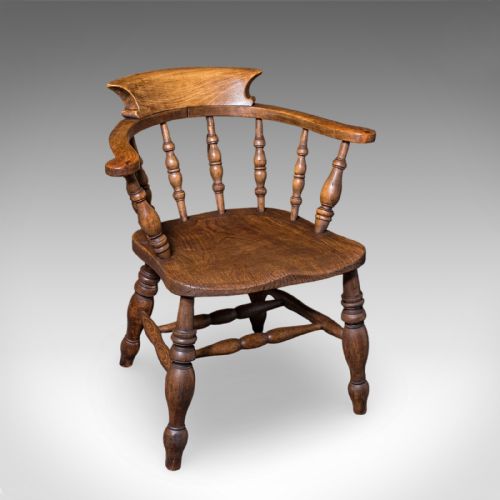
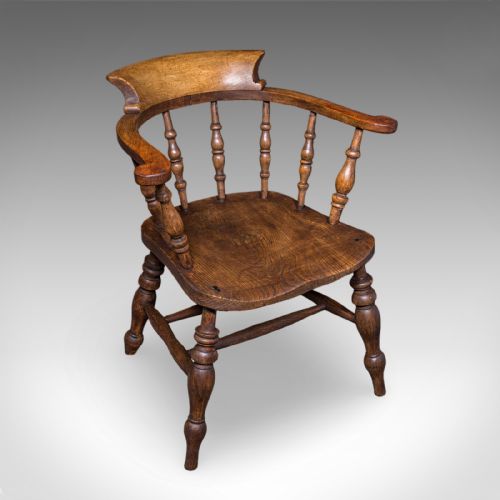
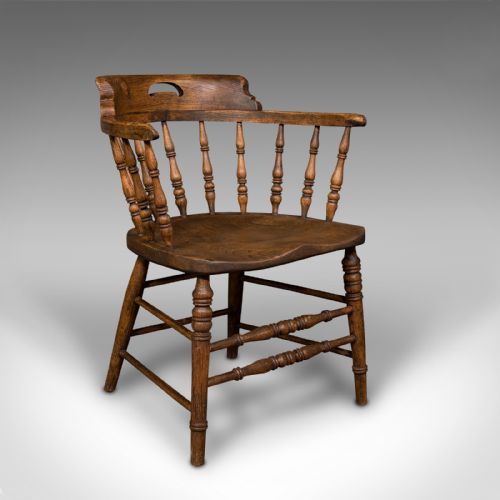
Makers in English provincial workshops constructed these armchairs with continuous hoop backs that curve around to form the armrests. The form prioritises a lower backrest than the traditional tall Windsor, allowing the sitter to rest an arm along the bow while reading or smoking. Listings on this page demonstrate that these pieces emerged from English country houses and provincial workshops during the Victorian and Edwardian eras.
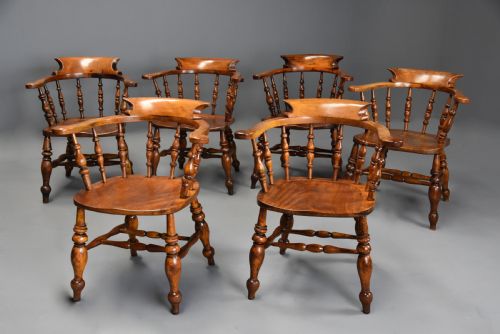
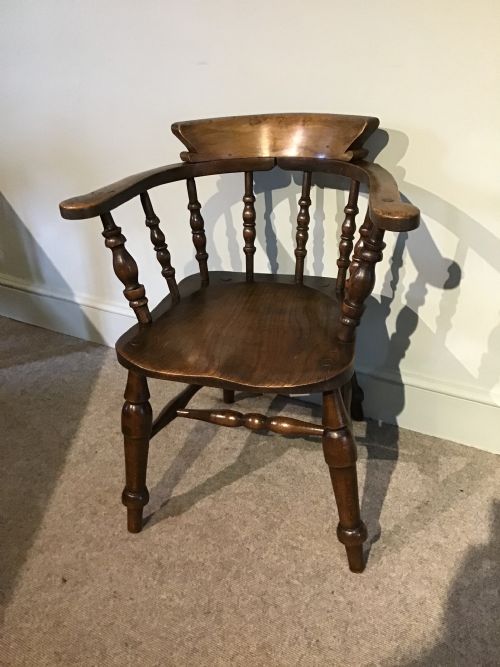
The prevalent form on this page combines a low bow back with a solid timber saddle seat. Provincial makers designed these armchairs for sustained daily use in domestic and institutional settings, resulting in robust proportions. They survive today in single pieces, pairs, and occasionally larger sets of four or six mid-nineteenth century chairs.
Materials and construction methods
Makers relied on native British hardwoods, combining multiple timber species within a single chair to utilise the specific mechanical properties of each wood. Elm provided the thick, dished saddle seats because its interlocking grain resisted splitting under heavy downward pressure. Ash and beech supplied the turned legs, spindles, and steam-bent arm bows, offering the necessary tensile strength and flexibility for complex curves.
Selected examples utilise yew wood, prized for its dense grain and warm reddish-brown hue. The construction follows traditional Windsor techniques, where legs and back spindles fit directly into bored holes in the solid wooden seat, secured with wedges. Steam-bending allowed the thick peripheral rail to form a smooth, continuous elbow bow without compromising structural integrity.
English Smokers Bow Retail Price Guide 2026
Typical asking prices for english smokers bow among the pieces listed under this phrase on Sellingantiques today, from the lower quarter to the upper quarter. They describe what is for sale here now, not the wider market.
Many nineteenth-century sitters preferred these low bows because bulky tailcoats and voluminous skirts could finally cascade freely over the edges without catching on high wooden wings.
Distinctions in quality and execution
Quality in a smokers bow rests upon the harmony of proportions and the depth of the seat's sculptural shaping. Superior examples display a deeply adzed saddle seat that provides genuine ergonomic comfort, alongside a well-balanced steam-bent bow with clean turning on the arm supports and undercarriage legs.
The choice of timber elevates certain pieces above standard utility grade, particularly those rendered in figured yew or rich combinations of ash and elm with strong grain contrast. The crispness of the spindle turnings and the tightness of the joinery distinguish master provincial work from more rudimentary local carpentry.
The English Smokers Bow Glossary
- Smoker's bow
- A low-back Windsor armchair with a continuous curved arm rail, popular in nineteenth-century English domestic and public spaces. This form is frequently termed a captain's chair or elbow seat.
- Windsor chair
- A chair built with a solid wooden seat into which the legs and back uprights are wedged directly. This construction method defines the structural core of provincial English seating.
- Saddle seat
- A wooden seat base carved and scooped into a concave shape to fit the human form. Provincial makers shaped these from thick slabs of elm to ensure comfort during long periods of sitting.
- Steam bending
- A woodworking process that exposes timber to moisture and heat, making it pliable enough to form continuous curved components like the arm bow. This technique imparts strength to the structural frame.
- Spindle
- A slender, lathe-turned wooden rod forming the vertical infill of the chair back. Turners shaped these components to add rigidity while keeping the upper frame lightweight.
English Smokers Bow: Frequently Asked Questions
What is a smokers bow chair?
A smokers bow is a nineteenth-century English low-back Windsor armchair characterised by a continuous curved arm rail and a solid wood saddle seat. Provincial makers designed them for domestic parlours, smoking rooms, and country houses.
These armchairs combine the structural strength of traditional Windsor seating with a lower back profile that allows greater freedom of movement for the arms.
How do I date a smokers bow?
Dating relies on examining construction markers, timber choices, and tool marks visible beneath the seat. Victorian examples from the mid-nineteenth century often display robust ash and elm turnings, while Edwardian pieces may show slightly lighter proportions.
Secondary indicators include the wear patterns on the seat and the method used to secure the leg tenons through the seat board.
Where were these chairs used?
These armchairs served in diverse settings ranging from farmhouse kitchens and country house libraries to provincial inns and gentlemen's clubs. Their durable construction suited environments requiring dependable everyday seating.
The low back profile made them practical for spaces where sitters wished to converse, read, or smoke comfortably without the restrictions of a high-backed chair.
How should I care for a wooden armchair?
Maintain antique timber by keeping it away from direct heat sources and rapid humidity fluctuations that can cause wood to split. Regular dusting with a dry cloth prevents abrasive particle accumulation.
Apply traditional beeswax periodically to nourish the surface and preserve the natural patina built up over generations of use.