

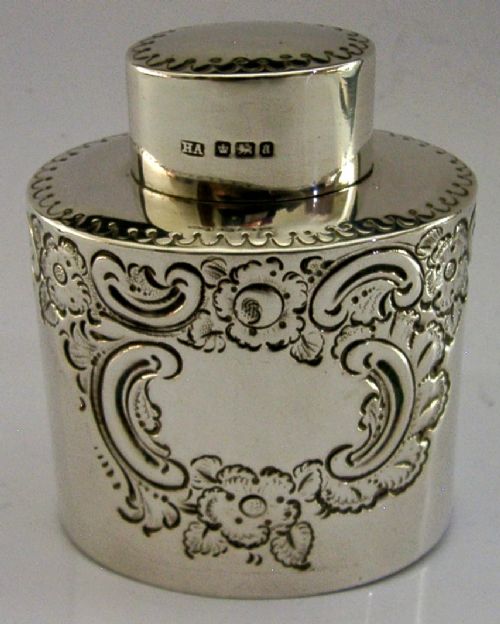
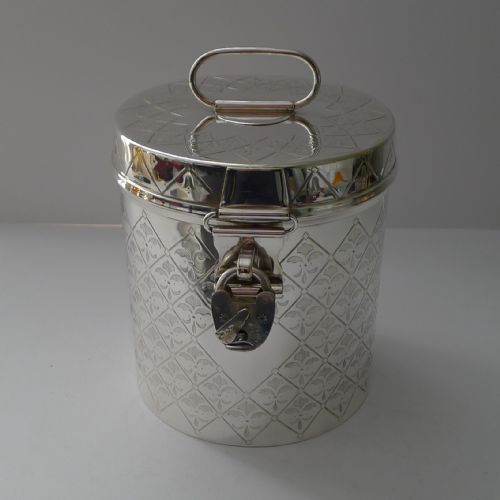


English Silver Jar
An English silver jar brings weight and gleam to a room, holding everything from dry tea leaves to heavy cut glass dressing table scents.
English Silver Jar
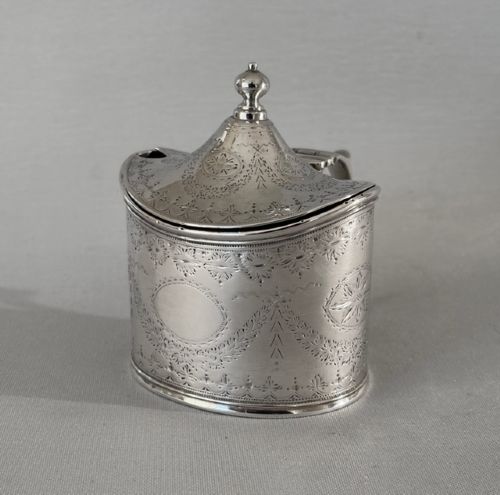
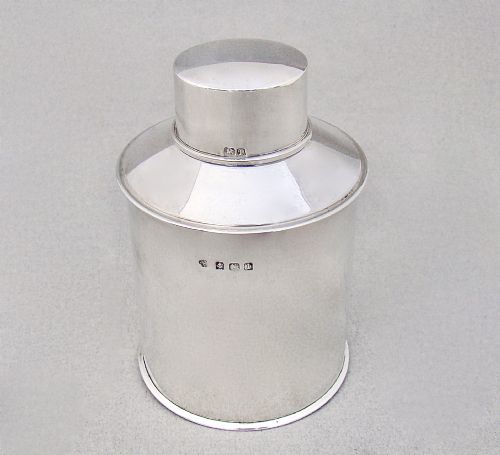
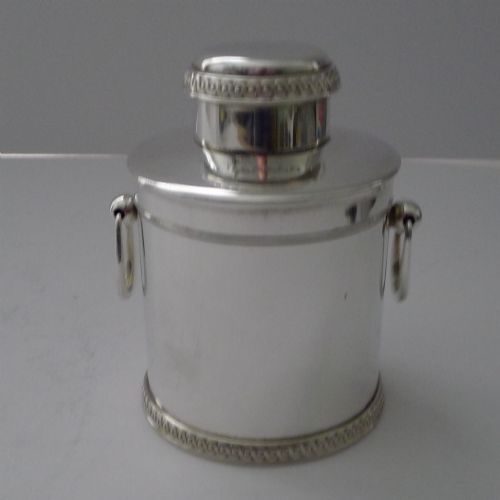
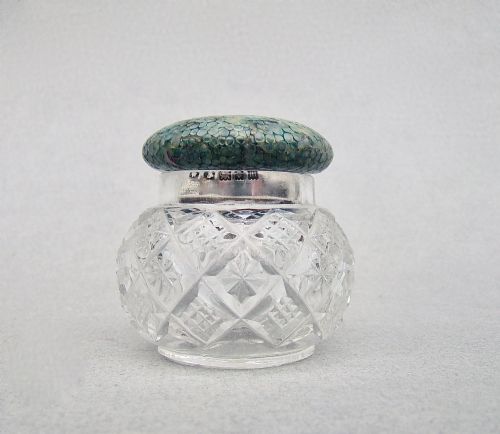
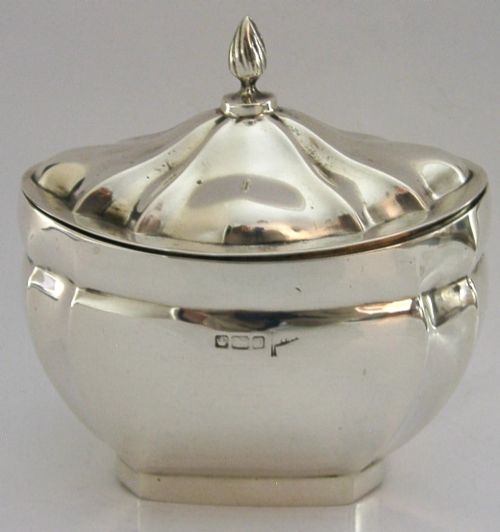
An English silver jar encompasses functional containers designed for the table and dressing room, spanning tea caddies, biscuit barrels, scent bottles, and trinket boxes. These pieces emerge predominantly from Victorian, Edwardian, and Art Deco periods, carrying the hallmarks of Birmingham, Sheffield, and London assay offices.
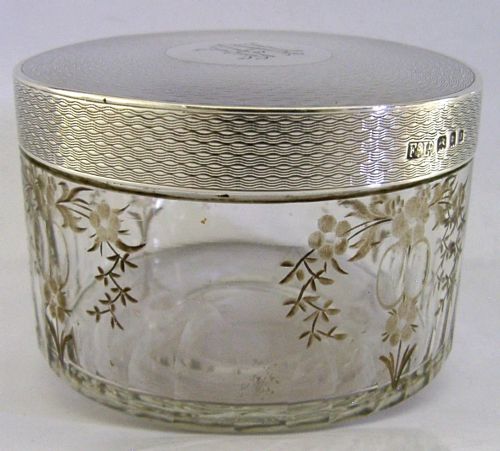
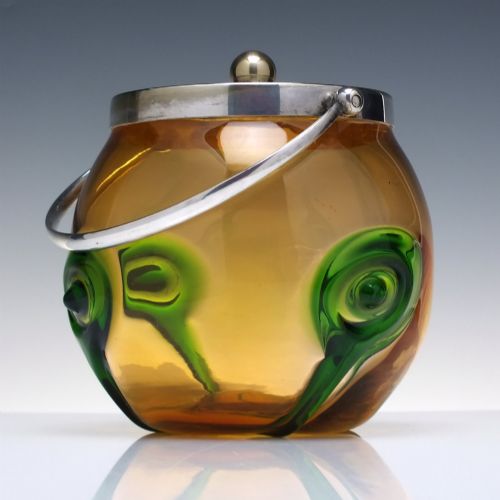
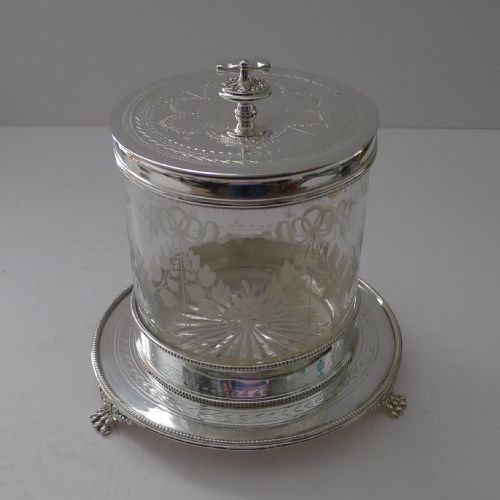
Tea caddies and biscuit boxes dominate the larger forms, often combining sterling silver or silver plate with cut glass, ceramic bodies, or oak barrels. Smaller vessels include glass scent bottles, enamel lidded jars, and dressing table boxes suited for daily personal use.
Materials and construction
Makers combine sterling silver and silver plate with heavy cut glass, crystal, ceramic, and oak to form the body of each jar. Mounts, lids, and hinged collars are secured to glass and wooden bodies using traditional silversmithing techniques, often incorporating interior ceramic liners for biscuit barrels.
Surface decoration relies on crisp engine-turning, hand-cut facets in crystal, and applied enamel work. Hallmarks stamped directly into the metal record the assay town, date letter, and maker's mark, anchoring each vessel to its exact year of production.
English Silver Jar Retail Price Guide 2026
Typical asking prices for english silver jar among the pieces listed under this phrase on Sellingantiques today, from the lower quarter to the upper quarter. They describe what is for sale here now, not the wider market.
Some biscuit barrels weigh nearly thirty pounds, turning a simple tea time snack into a test of strength.
Distinctions in quality
The distinction between standard utility wares and exceptional pieces rests upon the weight of the metal and the precision of the glass-cutting. Heavy gauge sterling silver maintains crisp hinge action and secure locking mechanisms over decades of use.
Renowned makers apply superior finishing to mounts and interior gilt work, elevating simple storage vessels into sculptural objects. The integration of materials, such as oak with fitted silver bands, demonstrates the maker's structural mastery.
Mappin & Webb·Henry Perkins·Ernest Druiff & Co·Goldsmiths and Silversmiths Co·Barnsley & Co·Asprey & Co·Adie Brothers Ltd·Atkin Brothers·John Grinsell & Sons·James Dixon and Sons
The English Silver Jar Glossary
- Hallmark
- A series of official marks stamped on precious metals indicating the maker, purity, assay office, and year of assay. These tiny stamps provide the definitive history of the silver jar.
- Tea caddy
- A small container designed to store loose tea leaves securely. Early examples often feature internal locking lids to protect expensive imported leaves.
- Biscuit barrel
- A lidded vessel intended for serving dry biscuits at the table. These large jars frequently pair silver plated mounts with cut glass or oak bodies.
- Sterling silver
- An alloy consisting of ninety-two point five percent silver by mass, with the remainder being copper. This standard composition guarantees the durability required for domestic vessels.
- Cut glass
- Glass decorated by grinding facets and patterns into the surface using wheels. Deeply cut crystal catches the light and adds substantial weight to jars and scent bottles.
English Silver Jar: Frequently Asked Questions
What is an English silver jar used for?
These vessels serve diverse domestic purposes, functioning as caddies for loose tea, barrels for biscuits, or containers for perfumes and trinkets.
Historically, they kept perishable goods sealed and dry while displaying wealth on dining tables and dressing stations.
How do I date an English silver jar?
Dating relies upon reading the hallmarks stamped into the silver mounts, which include a specific letter corresponding to the assay year.
Stylistic cues such as Edwardian neoclassical motifs or geometric Art Deco lines further narrow the period of manufacture.
Are these jars made of solid silver?
Materials vary between solid sterling silver and silver plate over a base metal, alongside combinations featuring glass, ceramic, or oak.
Assay marks on the metal components clarify whether the piece is sterling or plated.
How do I clean an antique silver jar?
Maintenance requires a soft cloth and a gentle silver polish formulated to remove tarnish without abrading the softer metal.
Care must be taken to avoid harsh chemicals near fitted glass inserts, enamel panels, or wooden oak staves.