





English Silver Cellar
An English silver cellar holds the salt at the dining table, offering a small form crafted in sterling silver or silver plate that collectors prize for its historic design.
English Silver Cellar
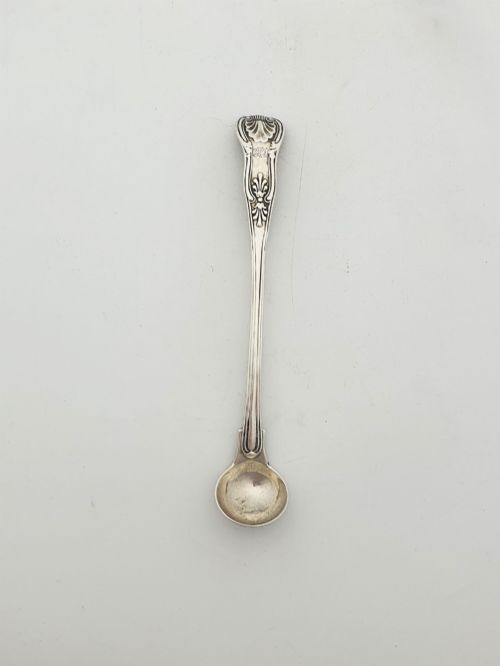
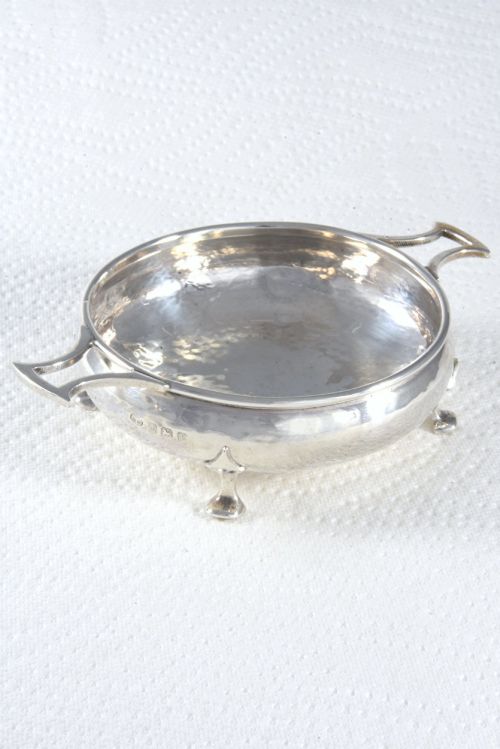
An English silver cellar is a small open vessel or covered container designed to hold salt and other seasonings for the dining table. The pieces found here span several distinct historical eras, including the Georgian, Victorian, Edwardian, and later twentieth-century periods.
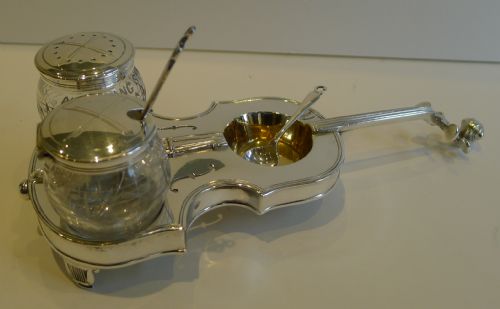
The forms range from naturalistic flower designs and figural novelties to traditional open salts paired with spoons, cruet sets, and condiment stands. Materials extend beyond sterling silver to encompass silver plate, glass, cut glass, silk, velvet, and gold vermeil.
Makers represented across the period range include William Bateman, Paul Storr, Bricks & Sons, Wilmot Manufacturing Co., and William Hutton & Sons. These items reflect the shifting domestic habits and table manners of nineteenth- and twentieth-century Britain.
Materials and construction
Silversmiths formed these pieces using solid sterling silver or applied silver plate over base metals, often incorporating cast elements such as floral motifs or figural novelties. Interior components frequently feature fitted glass or cut glass liners to protect the metal from corrosive salts.
Surface decoration relies on traditional techniques of chasing, embossing, and hallmark stamping to denote standard and origin. Linings of silk or velvet appear in fitted presentation boxes alongside matching spoons.
English Silver Cellar Retail Price Guide 2026
Typical asking prices for english silver cellar among the pieces listed under this phrase on Sellingantiques today, from the lower quarter to the upper quarter. They describe what is for sale here now, not the wider market.
Judging quality and craftsmanship
Quality rests upon the crispness of the cast or chased ornament, whether in naturalistic flower patterns or complex figural novelty shapes. The weight of the silver and the precision of the maker's mark add distinct weight to the piece.
Condition involves the integrity of any glass liner and the survival of original gilding like gold vermeil. Complete sets with matching spoons and original fitted presentation boxes demonstrate higher preservation.
William Bateman·Paul Storr·Bricks and Sons·Wilmot Manufacturing Company·William Hutton and Sons
The English Silver Cellar Glossary
- Sterling silver
- A silver alloy containing 92.5 percent pure silver by mass, forming the primary metal standard for traditional British tableware.
- Vermeil
- Sterling silver coated with a layer of gold, providing a rich interior finish for salt cellars to prevent corrosion from the contents.
- Cruet set
- A matched collection of bottles, casters, or open salt cellars mounted together in a stand for table service.
- Open salt
- A small open vessel designed to hold loose salt, typically used alongside a miniature salt spoon before the invention of the spring-loaded shaker.
- Hallmark
- An official stamp applied by an assay office to indicate the metal purity, maker, and year of manufacture for British silver.
English Silver Cellar: Frequently Asked Questions
How do I date an antique silver cellar?
Dating relies heavily upon the official hallmarks stamped into the metal by British assay offices, which indicate the exact year of manufacture. Stylistic clues such as Regency curves, Victorian naturalism, or Art Deco geometry also point to the correct period.
Makers' marks further narrow down the production era by identifying the specific workshop or silversmith active at that time.
Were these always used for salt?
While primarily known as salt cellars, these small vessels held various dry condiments and spices depending on the configuration of the table service. Some double as trinket dishes or form part of larger cruet stands containing mustard and vinegar.
In domestic settings, smaller individual cellars sat beside each guest while master salts occupied the centre of the table.
How should I clean silver cellars?
Cleaning requires a soft cloth and a specialised silver polish formulated to remove tarnish without abrading the chased or embossed details. Care must be taken around glass liners, silk, and velvet linings to avoid moisture damage.
Regular, gentle wiping preserves the original patina and protects the hallmarks and any gold vermeil interior finishes.