



English Shoe Pulls
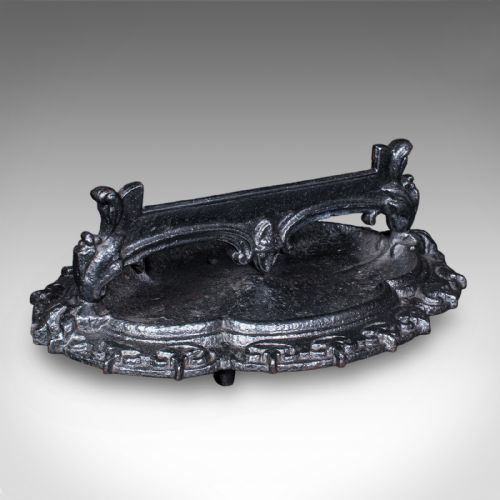
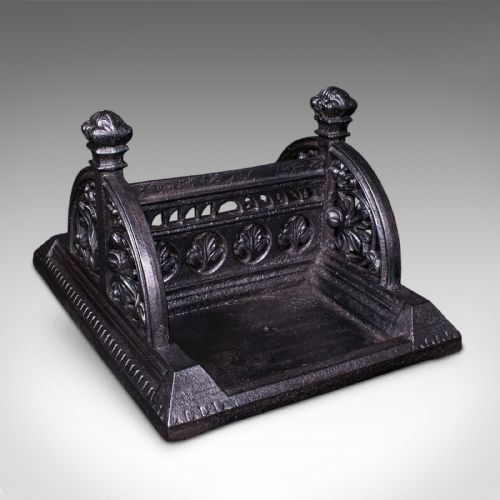
English shoe pulls are sturdy iron and timber implements designed to remove mud and heavy footwear efficiently, bringing practical utility to any entranceway.
English Shoe Pulls
When you search for English shoe pulls, you encounter heavy cast iron boot scrapers alongside timber boot jacks designed for domestic entryways and country houses.
The selections span Victorian and Georgian periods, incorporating utilitarian forms meant for daily mud removal at townhouse and estate doors.
Most pieces combine scraping blades with integrated pull handles or folding board mechanisms to assist with tight boots and footwear.
Materials and construction
Foundries cast heavy iron into sturdy scrapers and structural frames designed to withstand constant exterior use on stone steps and masonry porches.
Cabinet makers utilised dense hardwoods such as oak and walnut, mounting brass hardware to create folding boards and portable field equipment.
The inventory spans Victorian and Georgian periods, featuring cast iron, oak, walnut, and brass materials configured as boot scrapers and jacks.
Judging quality and workmanship
Superior examples display crisp foundry casting marks and substantial iron thickness that resist the structural stress of heavy daily leverage.
Finely made timber versions feature secure brass mountings and robust hinges that maintain smooth folding action across decades of domestic service.
The English Shoe Pulls Glossary
- Boot scraper
- A heavy metal blade fixed near a doorway to scrape mud from footwear soles before entry.
- Boot jack
- A V-shaped wooden device held down with one foot to pull off a boot without bending over.
- Cast iron
- An iron-carbon alloy poured into moulds to create rigid, heavy objects with high durability.
- Campaign shoe
- Portable equipment designed for military officers on the move, often featuring folding or compact designs.
English Shoe Pulls: Frequently Asked Questions
What is a shoe pull used for?
These implements serve to scrape stubborn mud off soles and provide leverage to pull tight footwear off without straining.
Households placed them by exterior doors to keep muddy footwear outside living spaces.
Where were English shoe pulls placed?
Townhouse scrapers sat directly beside front doorways or embedded in stone steps for immediate access upon arrival.
Folding wooden versions functioned inside entrance halls or accompanied officers on military campaigns.
How do I date a Victorian piece?
Victorian examples often display heavier cast iron forms and specific Gothic Revival or Great Exhibition design motifs.
Examine the material thickness and fastening methods to understand the manufacturing period.
Are oak and walnut boot jacks different?
Oak examples tend to provide rugged utility for country houses, while walnut versions often feature polished finishes for interior halls.
Both timbers offer the structural rigidity required for leverage during boot removal.