





English Sewing Table
An english sewing table combines domestic utility with refined cabinet-making, offering clever compartments for needlework and elegant proportions for the principal rooms of the house.
English Sewing Table
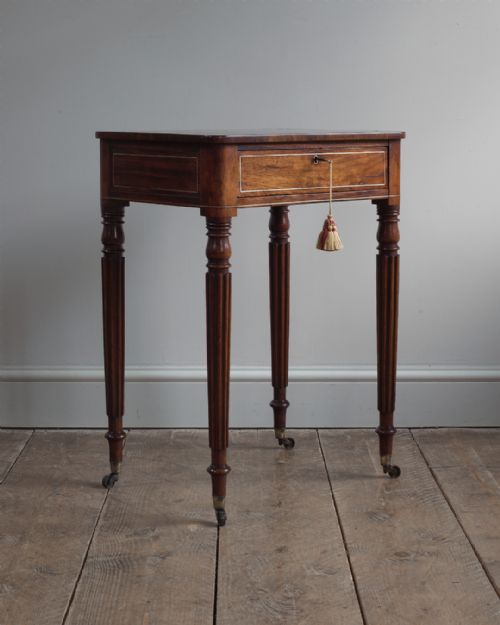
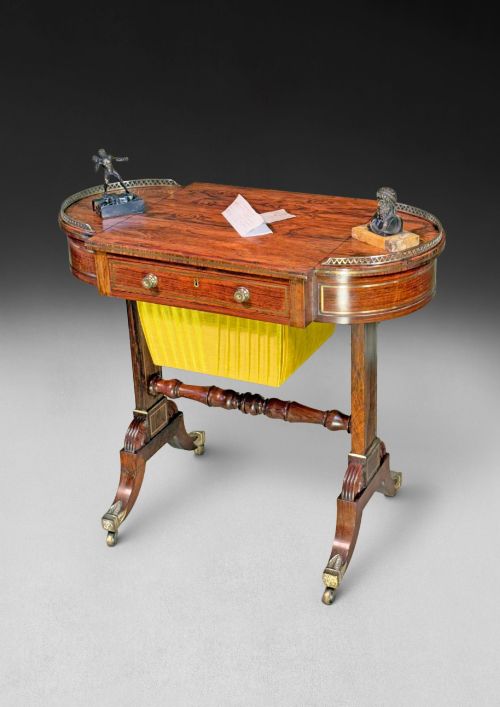
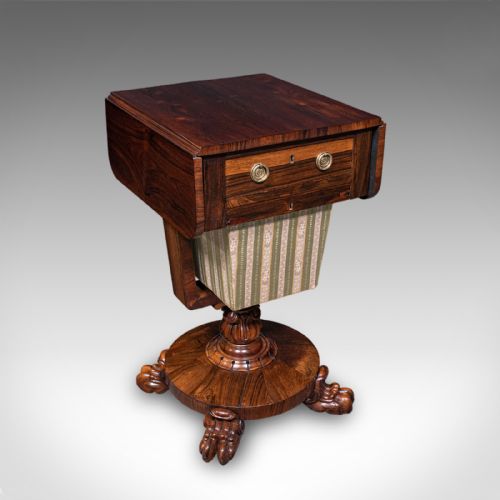
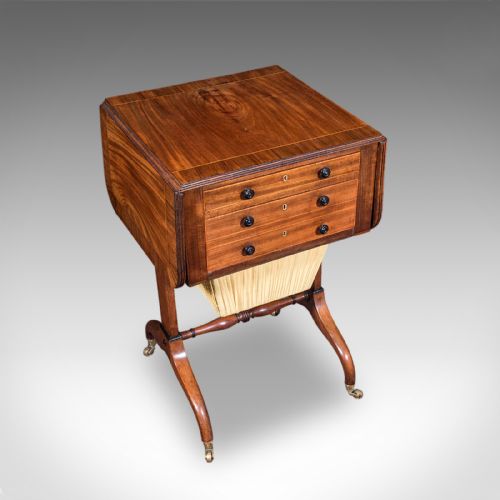
An english sewing table serves as a multifaceted piece of furniture designed for needlework, writing, and light recreation within the nineteenth-century interior. The form encompasses drop-leaf work tables, compact compendiums, and fitted teapoys that double as storage boxes for crafting materials.
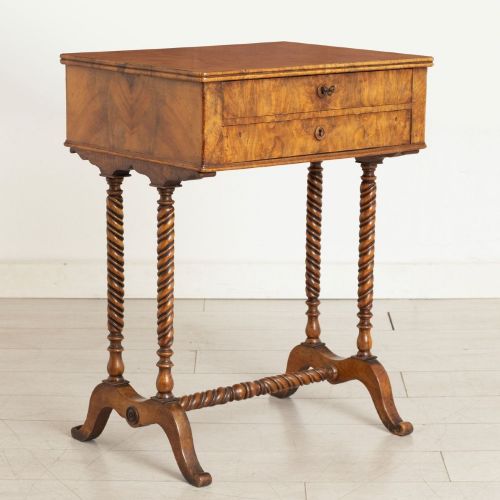
The versions most frequently encountered on this page belong to the Regency, William IV, and Victorian periods, constructed primarily from timbers such as rosewood, mahogany, and walnut. These examples often incorporate suspended fabric bags, internal partitions for cottons, and occasional pull-out slides for writing or games.
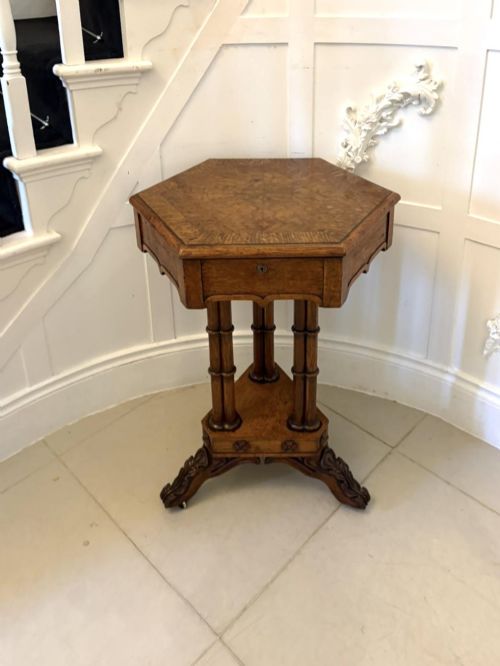
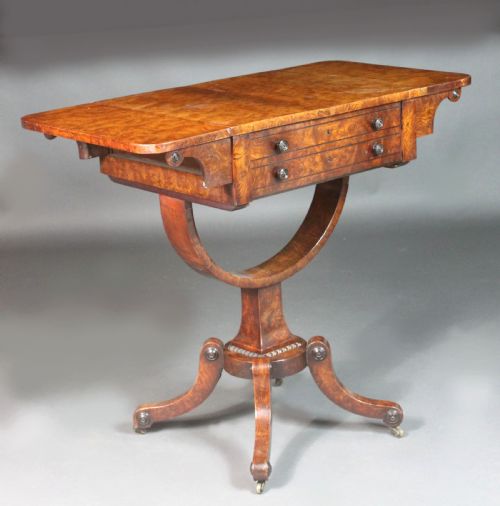
Makers adapted these pieces for the sitting room or parlour, ensuring the furniture remained both decorative and practical for ladies managing household correspondence and fine textiles. The object types range from simple side tables with lift-top lids to elaborate pedestal stands with carved bases and brass inlay.
Materials and construction methods
Cabinet-makers relied on dense tropical hardwoods like mahogany and rosewood, frequently applying burr walnut and pollard oak veneers to create striking surface patterns. Solid timber frames support hinged drop leaves, lidded compartments, and tapering columns fixed to platform bases or carved feet.
Interior fittings require intricate joinery to form small wooden boxes, sliding trays, and partitioned wells designed to organise sewing implements and threads. Silk and needlepoint tapestry panels appear as fitted fabric elements within the work bags and internal storage compartments.
English Sewing Table Retail Price Guide 2026
Typical asking prices for english sewing table among the pieces listed under this phrase on Sellingantiques today, from the lower quarter to the upper quarter. They describe what is for sale here now, not the wider market.
Distinctions in craftsmanship
Quality rests upon the selection of timber veneers, where symmetrical grain matching and rich figuring elevate a standard utility piece into a polished drawing-room ornament. Fine brass stringing, precise inlay work, and robust internal framing distinguish superior workshops from ordinary production.
The mechanical execution of drop-leaf hinges, sliding trays, and lockable lids reveals the maker's skill. Well-constructed examples retain smooth movement in their drawers and secure attachments for suspended fabric work bags without sagging.
Waring & Gillow
The English Sewing Table Glossary
- Drop leaf
- A table featuring hinged side flaps that fold down to save space or lift up to extend the surface area.
- Teapoy
- A small stand or box originally intended for storing tea, frequently adapted as a work table or sewing chest.
- Work table
- A nineteenth-century term for a small occasional table fitted with drawers and compartments for needlework.
- Compendium
- A multi-purpose box or cabinet designed to hold writing materials, games equipment, or sewing tools in one unit.
- Pollard oak
- Oak timber derived from a tree that has been cut back to encourage branch growth, producing a dense and highly textured grain.
English Sewing Table: Frequently Asked Questions
How were sewing tables used historically?
Historically, ladies used these tables to organise embroidery, mending, and lace-making materials close at hand. Many designs included writing surfaces or fold-over tops for card games, making them adaptable for daily leisure.
The clever internal compartments kept small implements secure while the exterior remained decorative enough for formal reception rooms.
How do I date a sewing table?
Dating relies on identifying the prevailing style, such as the classical influence of Regency design or the heavier proportions of William IV and Victorian pieces. Details like brass inlay, pedestal column shapes, and veneer types offer clear chronological indicators.
Timber choice also aids dating, with rosewood and mahogany dominating earlier Regency examples and walnut becoming prominent later in the century.
Can I use a sewing table today?
These tables function well as side tables, lamp stands, or bedside cabinets in modern interiors. The internal compartments provide convenient storage for small modern items like stationery, chargers, or craft supplies.
Their compact footprints allow them to fit easily beside sofas or chairs while adding period character to a room.