




English Salt Glaze Pottery
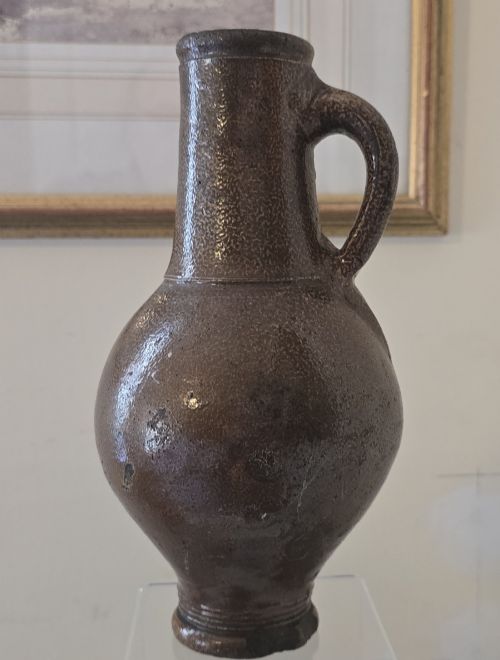
English salt glaze pottery comprises resilient stoneware vessels defined by their distinctive pitted surfaces, prized by collectors for their historical weight and tactile depth.
English Salt Glaze Pottery
English salt glaze pottery covers practical and decorative vessels produced across several centuries, ranging from early London stoneware bottles to later Victorian jugs and puzzle jugs. The versions most commonly encountered on this page date from the nineteenth century, particularly pieces originating from London potteries like Doulton Lambeth during the Victorian era.
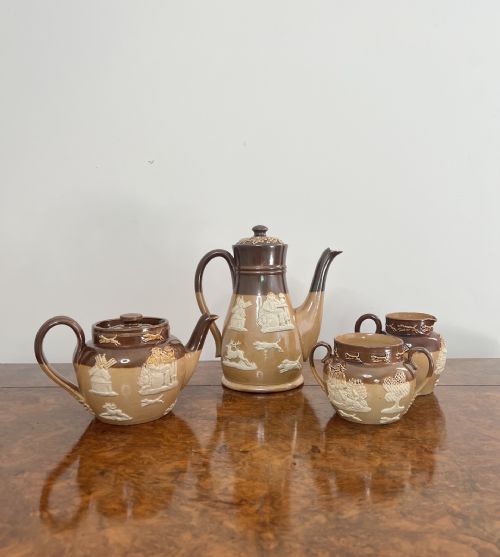
The objects span varied domestic and tavern forms, including harvest jugs, ale pitchers, tea sets, salt cellars, and soup jars. Alongside robust utilitarian vessels, one finds highly ornate Victorian decorative wares, featuring silver rims, applied reliefs, or Art Nouveau motifs.
Chronologically, the selections stretch from seventeenth-century Fulham productions through eighteenth-century forms into the twentieth century with Moorcroft vases. These pieces reflect shifts in British ceramic output from simple tavern storage to intricate parlour display.
How they were made
The primary material underpinning these items is dense stoneware clay, thrown or moulded into robust bodies capable of holding liquids securely without traditional interior glazing. Earthenware and salt-glazed stoneware also appear, providing the hard, impermeable fabric characteristic of the tradition.
During the high-heat firing process, common salt was thrown into the kiln, reacting with the silica in the clay body to form a thin, glossy glaze with a signature orange-peel texture. Selected pieces incorporated additional decorative elements such as sterling silver mounts or silver-plated lids to finish the rims and handles.
English Salt Glaze Pottery Retail Price Guide 2026
Typical asking prices for english salt glaze pottery among the pieces listed under this phrase on Sellingantiques today, from the lower quarter to the upper quarter. They describe what is for sale here now, not the wider market.
Materials recorded across the inventory include stoneware, salt-glazed stoneware, earthenware, ceramic, and sterling silver mounts.
What varies in quality
Quality in these ceramics rests on the crispness of the moulded relief work and the evenness of the characteristic salt-glazed texture across the body. Superior examples display sharp detailing in applied motifs and harmonious proportions, whereas lesser items show blurred surface textures or clumsy construction.
The presence of hallmarked silver mounts or named maker attributions elevates certain examples above standard utilitarian vessels. The prestige of specific London potteries and recognised decorators directly influences the distinction between everyday tavern ware and high-end exhibition pieces.
John Dwight Fulham Pottery·Doulton Lambeth·Emma Shute·Royal Doulton·Moorcroft
The English Salt Glaze Pottery Glossary
- Salt-glazed stoneware
- Pottery fired at high temperatures where salt introduced into the kiln creates a pitted, orange-peel texture on the vitrified clay body.
- Tyg
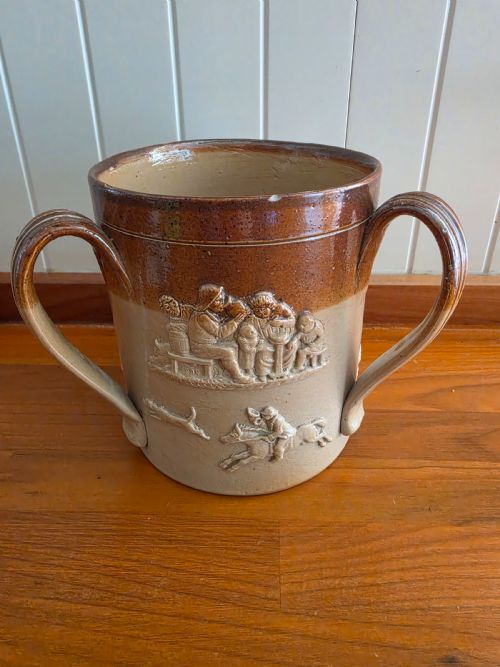
- A multi-handled drinking vessel designed for communal passing around a table, commonly featuring three or more handles.
- Puzzle jug
- A drinking vessel with a perforated neck that forces the drinker to solve a riddle of hidden channels to imbibe the liquid without spilling.
- Harvest jug
- A large, bulbous pitcher traditionally used to hold ale during agricultural harvest celebrations, often decorated with hunting or rural motifs.
- Fulham pottery
- An early London manufactory established in the seventeenth century renowned for pioneering high-quality stoneware production in England.
English Salt Glaze Pottery: Frequently Asked Questions
What is salt glaze pottery?
Salt glaze pottery is stoneware created when salt is thrown into the kiln during firing, reacting with the clay to form a dense, glossy surface with a texture resembling an orange peel.
This method produced exceptionally durable vessels that were watertight and resistant to acids, making them ideal for domestic storage and tavern use.
How do I identify a Victorian salt glaze jug?
Victorian examples frequently display grey and brown salt-glazed bodies decorated with applied sprigged reliefs, often featuring hunting scenes, tavern figures, or royal commemorations.
Many pieces from this period carry factory stamps from London potteries, and better examples are fitted with sterling silver rims or hinged lids.
Were these pieces used daily?
Many items served practical daily functions in homes and taverns, acting as storage jars, water jugs, ale pitchers, and salt cellars.
Over time, production shifted toward decorative parlour items, commemorative jubilee jugs, and tea sets meant for display rather than heavy kitchen work.
How should I display salt glaze pottery?
These robust stoneware vessels suit open shelving or cabinet display where their tactile surfaces and earthy colour tones can catch natural light.
Keep them away from direct moisture, and clean the textured salt-glazed exteriors gently with a dry or slightly damp soft cloth.