


English Rural Scene Painting
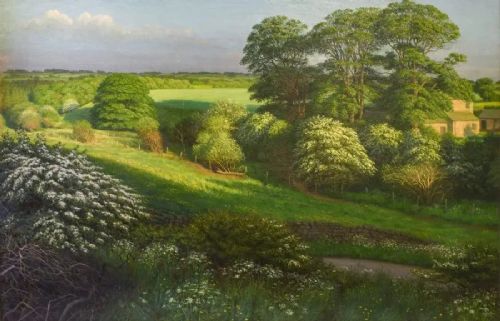
An English rural scene painting captures the quiet rhythm of nineteenth and early twentieth-century country life, bringing cows, cottages, and labourers directly to your wall.
English Rural Scene Painting
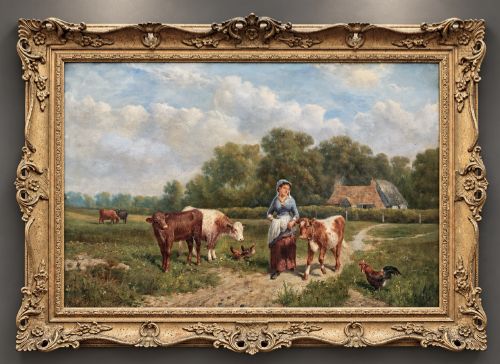
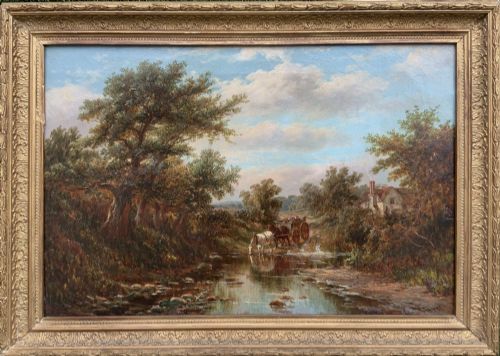
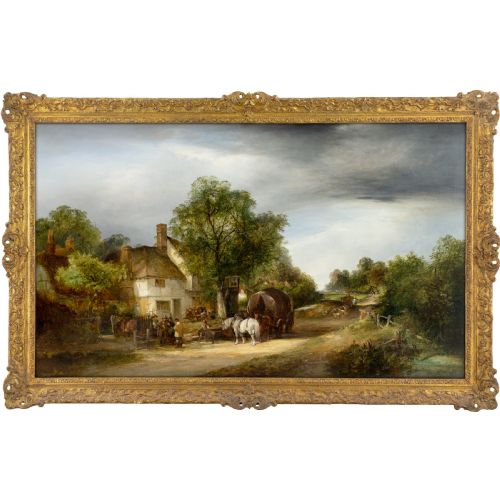
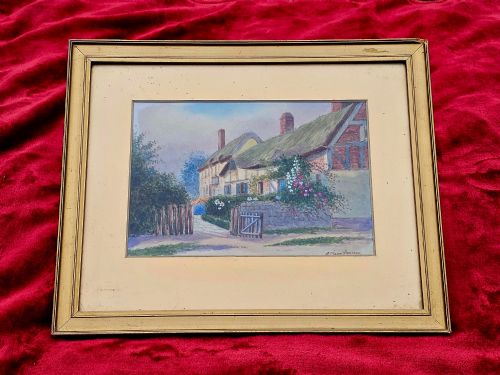
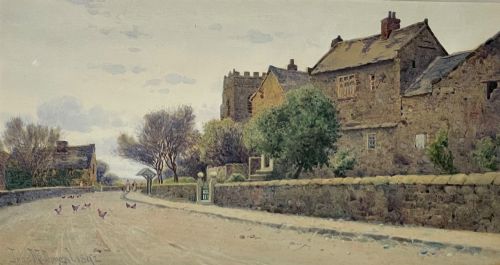
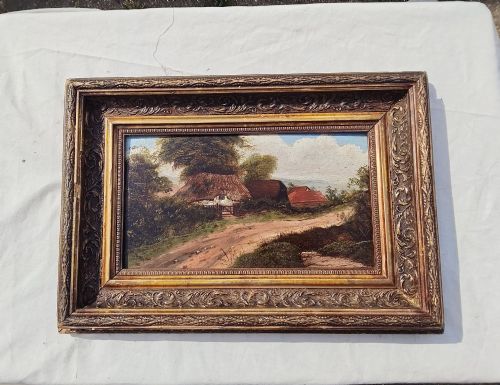
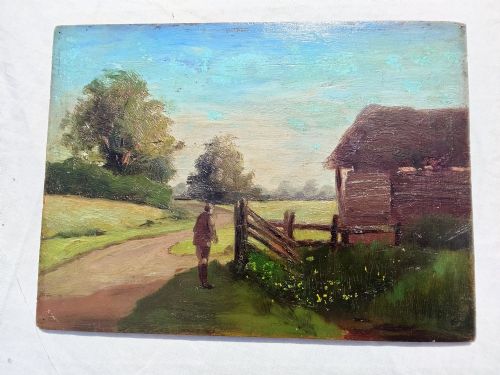
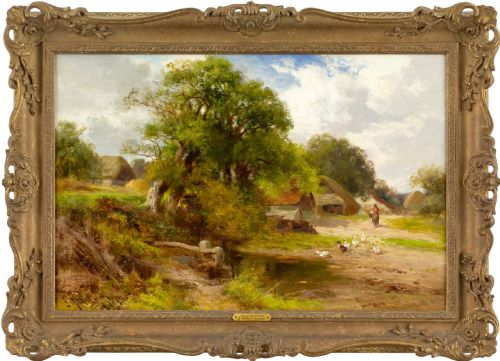
When you search for english rural scene painting, you find works depicting nineteenth and early twentieth-century agrarian life, capturing farmyards, thatched cottages, rivers, and labourers at work. These pieces span the Victorian and Edwardian periods, reflecting a deep interest in traditional British countryside aesthetics.
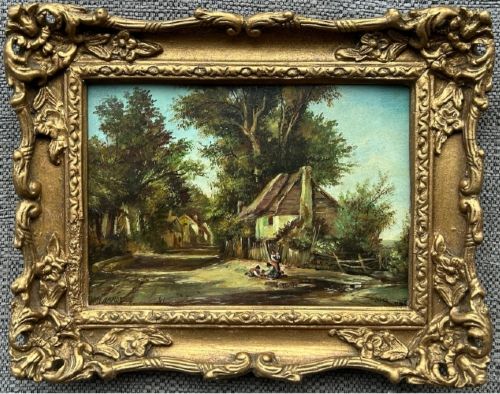
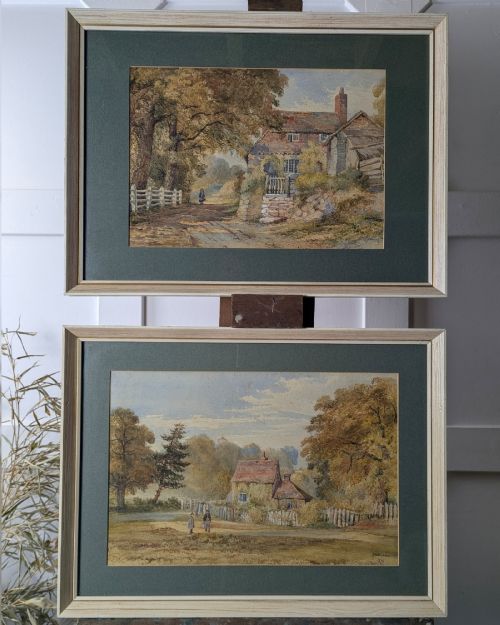
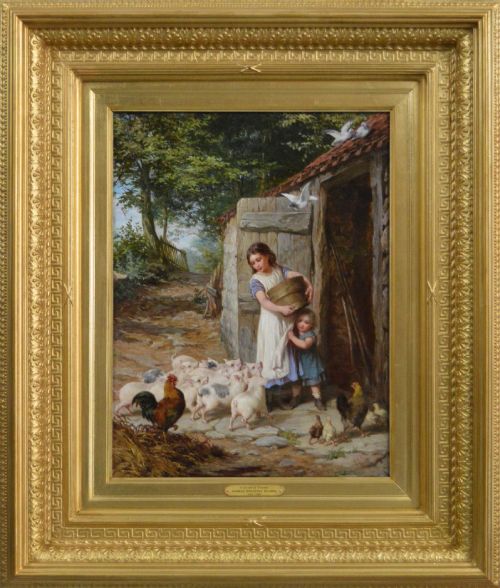
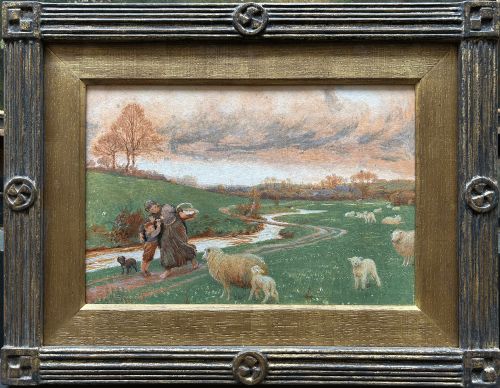
The most common formats on this page are oil paintings and watercolours, often framed in gilt wood, showing scenes from Sussex, Yorkshire, and Essex. You encounter depictions of daily rural tasks, such as feeding livestock, haymaking, and herding cattle along country lanes.
Many works are signed by named British artists working within schools of realism and pastoral painting, whilst others remain attributed to the broader English School. These depictions serve as historical windows into rural communities before mechanisation transformed the landscape.
How they were made
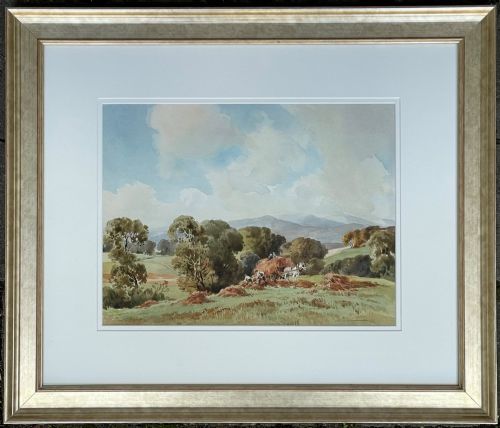
Artists painted primarily in oil or watercolour, applying pigment to canvas, panel, board, card, or heavy paper supports. Oil colours provided rich, layered depths for landscapes, whereas watercolours allowed for lighter, translucent washes suited to river views and skies.
Works frequently utilised gesso frames finished in gold leaf to complement the warm tones of the pastoral compositions. Painters worked both en plein air and within studios, translating sketches of fields, villages, and farmyards into finished framed artwork.
Several cottages depicted across these canvases likely housed more pigs than people.
What varies in quality
Quality rests in the handling of light, atmosphere, and the convincing anatomy of figures and livestock rather than the mere subject matter. Finer works display confident brushwork and tonal balance that convey the warmth of afternoon sun or the chill of a country stream.
The strength of composition dictates distinction, separating standard topographical sketches from masterly genre scenes where narrative and environment merge cohesively. Original signatures and documented artist provenance further elevate the standing of individual pieces within the market.
George Graham·Percy Lancaster·William Howard Hardy·A. Marie Parsons·John McDougal·Robert A. Nottingham·David Bates·John Horace Hooper·George Augustus Holmes·Raymond Booth·Frederick Walker·George Oyston·William Greaves·Miles Birkett Foster·Herman S Melville·Charles Edward Wilson·Sydney Yates Johnson·Herbert Royle·Ernest Higgins Rigg·James William Booth·Henry John Yeend King·Samuel Joseph Clark·M. C. Hider·James Hardy Junior·Robert John Hammond
The English Rural Scene Painting Glossary
- Watercolour painting
- A work created using water-soluble pigments on paper, known for its luminous quality. These pieces often capture delicate atmospheric effects in rural landscapes.
- English School
- A classification for works produced by British artists sharing stylistic traits rather than a formal academy. This label frequently applies to unsigned nineteenth-century country scenes.
- Gesso
- A plaster-like mixture applied to wooden frames before gilding. It provides a smooth base for intricate decorative mouldings.
- Genre painting
- Art that depicts aspects of everyday life by portraying ordinary people engaged in common activities. In rural scenes, this includes farming chores and village gatherings.
English Rural Scene Painting: Frequently Asked Questions
What subjects appear in these paintings?
These works typically depict farmyards, thatched cottages, livestock, and agricultural labourers going about daily tasks in the countryside.
You see scenes of haymaking, herding cattle, fishing, and quiet village life across various British counties.
How do I date a rural painting?
Dating relies on stylistic clues, artist signatures, framing methods, and the materials used such as canvas boards or heavy papers.
Victorian and Edwardian works often carry inscriptions, exhibition labels, or distinct clothing styles that pinpoint the era.
Are watercolours as durable as oils?
Watercolours require protection behind glass to prevent moisture damage and fading from direct sunlight over the decades.
Oils on canvas or panel prove more robust against environmental factors but still benefit from stable indoor humidity.
What framing is appropriate for these?
Period gilt frames with gesso moulding complement the traditional aesthetic of nineteenth-century pastoral art.
Matching the frame era to the painting ensures historical harmony when displaying the artwork on your wall.