



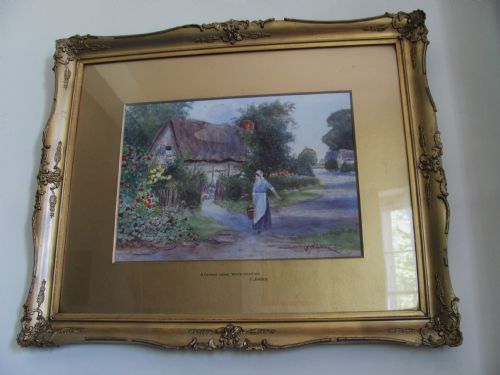


English Rural Print
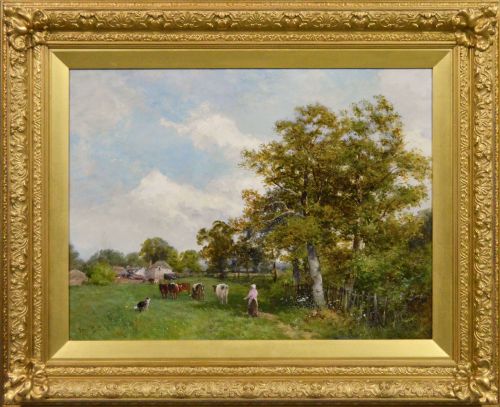
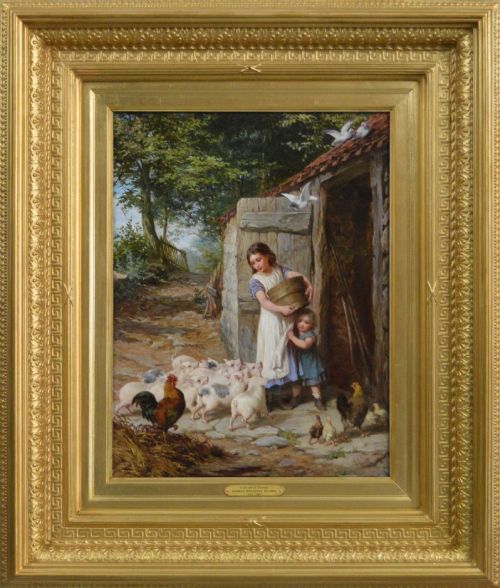
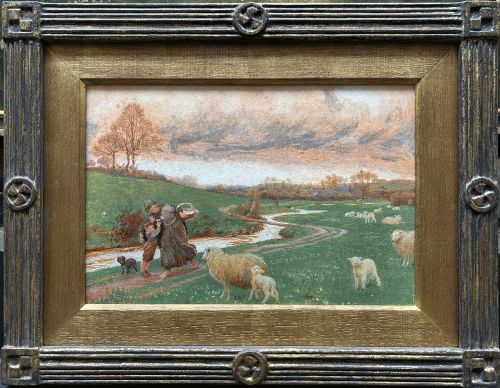
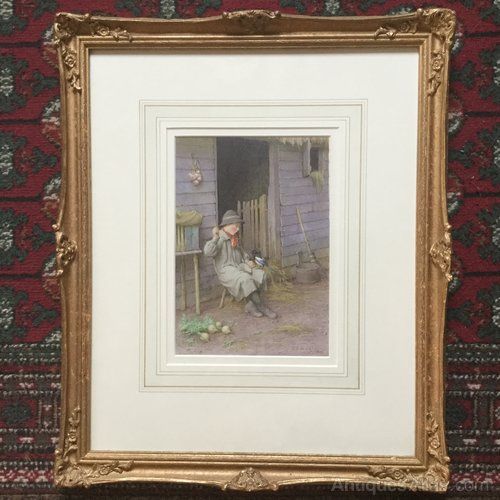
These english rural print and painting selections capture pastoral cottage life and field labour across the nineteenth and early twentieth centuries.
English Rural Print
An english rural print or painting portrays nineteenth and early twentieth-century country life, farm labour, and cottage scenes across Britain. Buyers seek these works to bring traditional pastoral calm and historical domestic scenes into domestic interiors.
The pieces on this page span the Victorian era, the Edwardian period, and the interwar years, encompassing oil paintings, watercolours, lithographs, and blue and white transfer pottery. Painters such as David Bates, George Augustus Holmes, and James William Booth capture shepherdesses, haymakers, and rural farmyards.
Transfer pottery items like vegetable tureens and plates carry rural scenery patterns alongside framed oil paintings and watercolours depicting cottages and farm animals. These works reflect British Realism, the Victorian Idyllic School, and British Impressionism.
Materials and construction methods
Artisans applied oil paint and watercolour onto paper and canvas substrates, whilst potters utilised transfer-printing techniques on earthenware for blue and white ceramic wares. Makers framed these artworks using wood, gesso, gilded wood, and gold leaf mouldings.
Lithographic printing methods enabled the reproduction of original pastoral paintings onto paper sheets for domestic display. Potters transferred engraved rural patterns onto pottery plates and vegetable tureens before glazing and firing.
English Rural Print Retail Price Guide 2026
Typical asking prices for english rural print among the pieces listed under this phrase on Sellingantiques today, from the lower quarter to the upper quarter. They describe what is for sale here now, not the wider market.
Materials documented across these rural objects include gold leaf, gilded wood, gesso, glass, paper, wood, and oil paint.
Distinctions in quality
Quality rests upon the skill of the artist or potter in rendering natural light, domestic livestock, and human figures with anatomical precision and atmosphere. Works by listed artists such as David Bates or George Augustus Holmes demonstrate superior brushwork and compositional depth compared to unsigned studio output.
In transfer pottery, the clarity of the blue and white transfer print and the preservation of the ceramic body determine the tier of the piece. Framed works benefit from period frames featuring original gilded wood and gesso ornamentation rather than later replacements.
David Bates·George Augustus Holmes·Frederick Walker·Charles Edward Wilson·James William Booth·Herbert Royle·James Wallace and Co
The English Rural Print Glossary
- Transfer pottery
- Earthenware decorated by applying a printed design from a copper plate onto the ceramic body using a paper transfer. This method allowed intricate blue and white rural patterns to be produced in volume.
- Gesso
- A paint mixture consisting of a neutral binder mixed with chalk, gypsum, or pigment, applied to wood picture frames. Artisans carved and gilded this base layer to create ornate decorative mouldings.
- Lithograph
- A print made from a flat stone or metal plate on which the image area is receptive to ink and the blank area repellant. This technique reproduced original watercolour and oil paintings for wider distribution.
- Vegetable tureen
- A large covered ceramic serving dish designed for holding vegetables at the dining table. Nineteenth-century examples often featured transfer-printed pastoral scenes on the body and lid.
- British Realism
- An artistic movement focused on depicting everyday subjects and working people with truthfulness and observational accuracy. Painters of this school recorded agricultural labour and cottage life without idealisation.
English Rural Print: Frequently Asked Questions
What periods do these rural artworks cover?
The selections span from the Georgian era through the Victorian period into the early decades of the twentieth century. Most framed paintings and watercolours date from the late nineteenth century to the interwar period.
Pottery and transfer-printed wares largely originate from nineteenth-century Staffordshire potteries, reflecting continuous artistic interest in British country life.
How were blue and white rural plates made?
Potters shaped white earthenware bodies and fired them to create a biscuit base before applying the design. An engraved copper plate transferred the rural scene in blue pigment via tissue paper onto the ceramic.
After the paper was washed away, a transparent glaze was applied and the piece underwent a final high-temperature kiln firing.
Where should I hang a rural oil painting?
These works suit traditional living spaces, studies, and dining rooms where their pastoral subject matter complements wooden furniture and period interiors. Ensure they are placed away from direct sunlight and damp conditions to protect the canvas and giltwood frames.
Pairing framed watercolours with transfer pottery items creates a cohesive display of nineteenth-century rural aesthetics.
How do I identify a Victorian watercolour?
Victorian watercolours are executed on heavy rag paper and are typically housed behind glass within gold leaf, gesso, or wood frames. Signatures, dates, and inscriptions by artists such as James William Booth or Joseph Kirkpatrick often appear in the lower corners.
Examining the paper through magnification reveals the hand-applied pigment washes characteristic of watercolours rather than printed ink dots.