








English Regency Buffet
An English regency buffet brings architectural discipline and rich timber grain to a room, serving as a formal focal point for dining and display.
English Regency Buffet
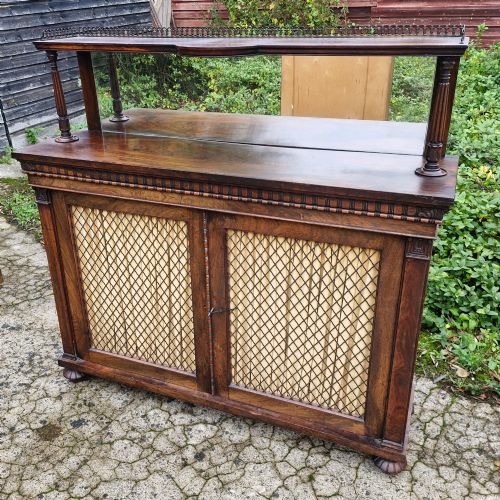
When you search for an english regency buffet, you enter a category defined by formal sideboards, serving tables, and chiffoniers from the early nineteenth century. These sturdy wooden forms served dining rooms by holding silver, linen, and dishes during large meals.
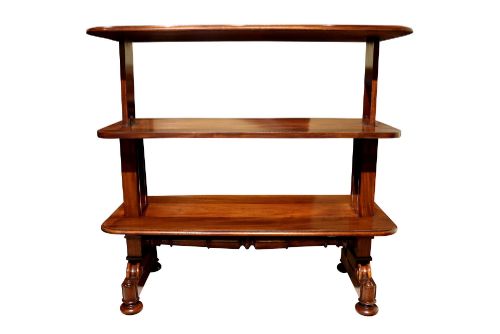
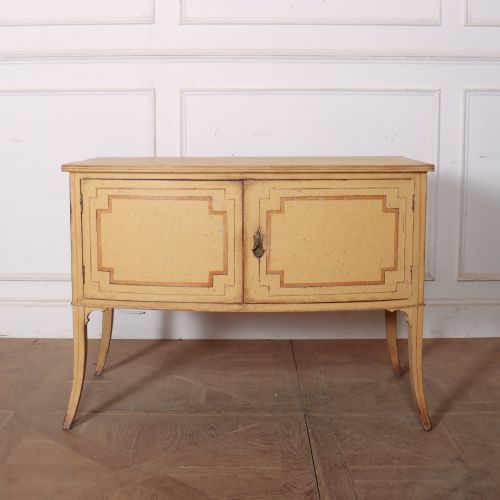
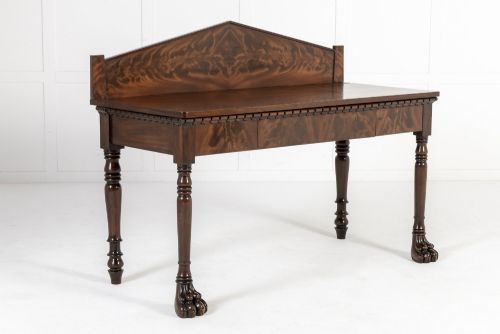
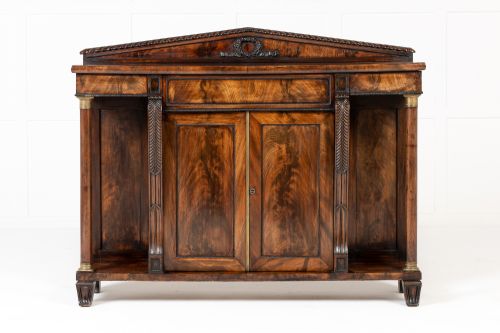
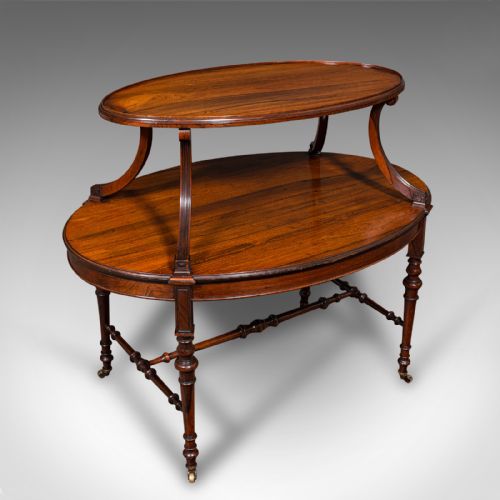
The pieces appearing on this page extend beyond strict Regency dates into the William IV, Georgian, and Victorian eras, alongside later revival pieces. Mahogany and rosewood dominate the selection, often taking the form of breakfront cabinets, pedestal sideboards, and tiered serving stands.
Evaluating Quality
Quality rests heavily on the selection of timber veneers and the precision of the cabinet work. Pieces featuring book-matched flame mahogany or richly figured rosewood demonstrate superior material choice by the maker.
Proportion and architectural detailing dictate the standing of a piece. Well-executed classical mouldings, integrated brass details, and balanced proportions separate standard utility furniture from finer drawing room examples.
English Regency Buffet Retail Price Guide 2026
Typical asking prices for english regency buffet among the pieces listed under this phrase on Sellingantiques today, from the lower quarter to the upper quarter. They describe what is for sale here now, not the wider market.
Copper samovars make occasional appearances here, standing ready to provide perpetual hot water for demanding nineteenth century tea drinkers.
Gillows
The English Regency Buffet Glossary
- Buffet
- A piece of dining room furniture used for serving food and storing tableware. These forms include multi-tiered stands and serving tables.
- Chiffonier
- A compact sideboard or cabinet often fitted with shelves or enclosed lower doors. They gained popularity during the Regency and William IV periods.
- Breakfront
- A cabinet design where the central section projects forward from the flanking wings. This creates a stronger architectural shadow.
- Flame Mahogany
- Timber cut at an angle to the branch junction to produce a distinctive flickering flame pattern. Cabinetmakers prized this veneer for principal doors and drawer fronts.
- Dumb Waiter
- A tiered stand used in dining rooms to hold dishes without requiring a servant present. Examples range from revolving wooden trays to multi-tiered stationary shelves.
English Regency Buffet: Frequently Asked Questions
What is an english regency buffet?
An english regency buffet is a serving piece or sideboard dating from the early nineteenth century or later revival periods. They provided practical storage and surface space in formal dining rooms.
These items range from simple mahogany serving tables to elaborate rosewood breakfront cabinets with brass and mirror details.
How do I style a buffet in a modern home?
Position the piece against a main wall in a dining room, hallway, or living space to anchor the room. Use the top surface for lamps, ceramics, or serving pieces.
Keep the interior shelves utilised for dinnerware or books, allowing the timber grain and classical proportions to stand out.
How do I distinguish Regency from William IV pieces?
Regency pieces often display refined classical restraint, drawing inspiration from Greek and Roman design with slender proportions. Rosewood and finely figured mahogany are common.
William IV furniture tends toward heavier, bolder proportions with robust pedestals and more assertive architectural presence.
Were these pieces used only for dining?
While primarily designed for dining rooms to hold silver and serving dishes, many forms served multiple domestic purposes. Chiffoniers and side cabinets also functioned in drawing rooms for displaying decorative objects.
Tiered serving tables and dumb waiters were specifically adapted for holding food and drink during extended meals.