


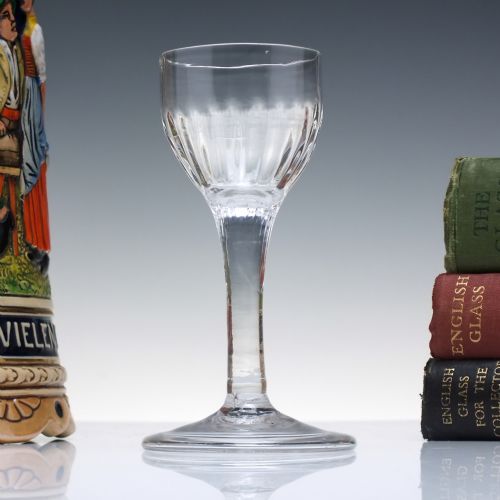


English Plain Stem Glass
These English plain stem glass examples are tactile eighteenth-century vessels valued for their sturdy proportions and straightforward optical clarity.
English Plain Stem Glass
An English plain stem glass belongs firmly to the Georgian era and the eighteenth century, taking the form of wine glasses, ale glasses, goblets, cordials, dram glasses, and firing glasses. You encounter vessels shaped with trumpet bowls, ribbed bowls, and folded feet, reflecting the drinking habits of the period.
The defining characteristic is the straight, unadorned stem connecting the bowl to the foot. These pieces span decades from roughly fourteen-forty through seventeen-seventy, showing modest variations in height and bowl capacity.
Materials and construction
The manufacture relies on lead glass, clear glass, flint glass, and lead crystal produced through blowing techniques. Makers also incorporated trapped air bubbles, known as air tears, inside the stems during manipulation of the molten material.
Vessels feature applied details such as folded feet for stability and nut moulded or hop and barley engravings applied to the exterior bowls. The resulting objects combine substantial weight in the hand with bright transparency.
English Plain Stem Glass Retail Price Guide 2026
Typical asking prices for english plain stem glass among the pieces listed under this phrase on Sellingantiques today, from the lower quarter to the upper quarter. They describe what is for sale here now, not the wider market.
Eighteenth-century drinkers banged firing glass bases on tables so hard the thick feet cracked the wood instead of the glass.
Judging quality and character
Quality rests upon the purity of the metal and the balance of the proportions between bowl, stem, and foot. Subtleties like an even distribution of lead crystal, crispness in wheel engraving, and symmetry in the folded foot elevate certain examples.
The English Plain Stem Glass Glossary
- Plain stem
- A straight, cylindrical or slightly tapered glass stem lacking knops, twists, or facet cutting. This provides a clean architectural line between the foot and the bowl.
- Folded foot
- A glass foot edge turned underneath and pressed flat to create a thickened, rounded rim. This technique adds structural strength and weight to the base of the vessel.
- Air tear
- An elongated bubble intentionally or accidentally trapped within the molten glass of the stem. Makers sometimes used these as a decorative inclusion.
- Firing glass
- A heavy-footed drinking vessel designed with a thick base for slamming onto a wooden table. Members of eighteenth-century societies used them to signal applause.
- Nut moulded
- A bowl pattern featuring surface moulding that resembles the texture of a nut shell. This technique creates tactile relief on the exterior wall.
English Plain Stem Glass: Frequently Asked Questions
What is an English plain stem glass?
An English plain stem glass is an eighteenth-century drinking vessel characterised by a straight, unadorned stem supporting a blown glass bowl. These pieces date from the Georgian period and include wine glasses, cordials, and ales.
They represent a shift towards simpler, robust vessel designs following the repeal of the glass duties in the early eighteenth century. Collectors prize them for their honesty of form and tactile weight.
How do I date an 18th century glass?
Dating relies on observing changes in bowl shapes, metal composition, and foot styles across the decades. Pieces from the middle of the eighteenth century often feature folded feet and heavier lead metal.
Foot styles and engraving motifs also provide chronological clues. Comparing specific traits like trumpet bowls helps narrow the window of manufacture.
How were these glasses used?
These vessels served for consuming wine, ale, drams, and cordials during Georgian social gatherings and dining occasions. Specialised forms like firing glasses participated in toasts and club rituals.
The sturdy construction suited active domestic and tavern environments. Their forms reflect the specific drinks popular in the eighteenth century.
How do I care for antique glass?
Care requires gentle hand washing in lukewarm water using mild detergent without harsh abrasives. Avoid sudden temperature changes to protect the historic lead glass fabric.
Store pieces on stable surfaces with adequate space between items to prevent rim chipping. Proper handling preserves the optical clarity of the material.