

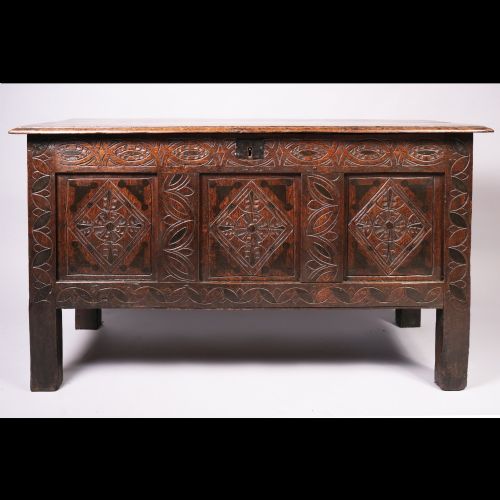
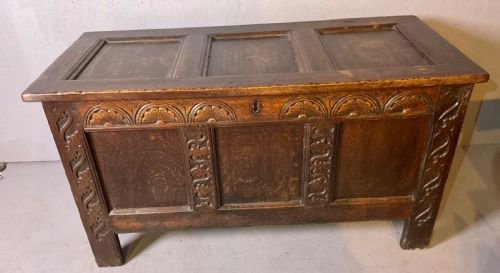


English Oak Storage Trunk
An english oak storage trunk brings centuries of robust craftsmanship and practical utility into a room.
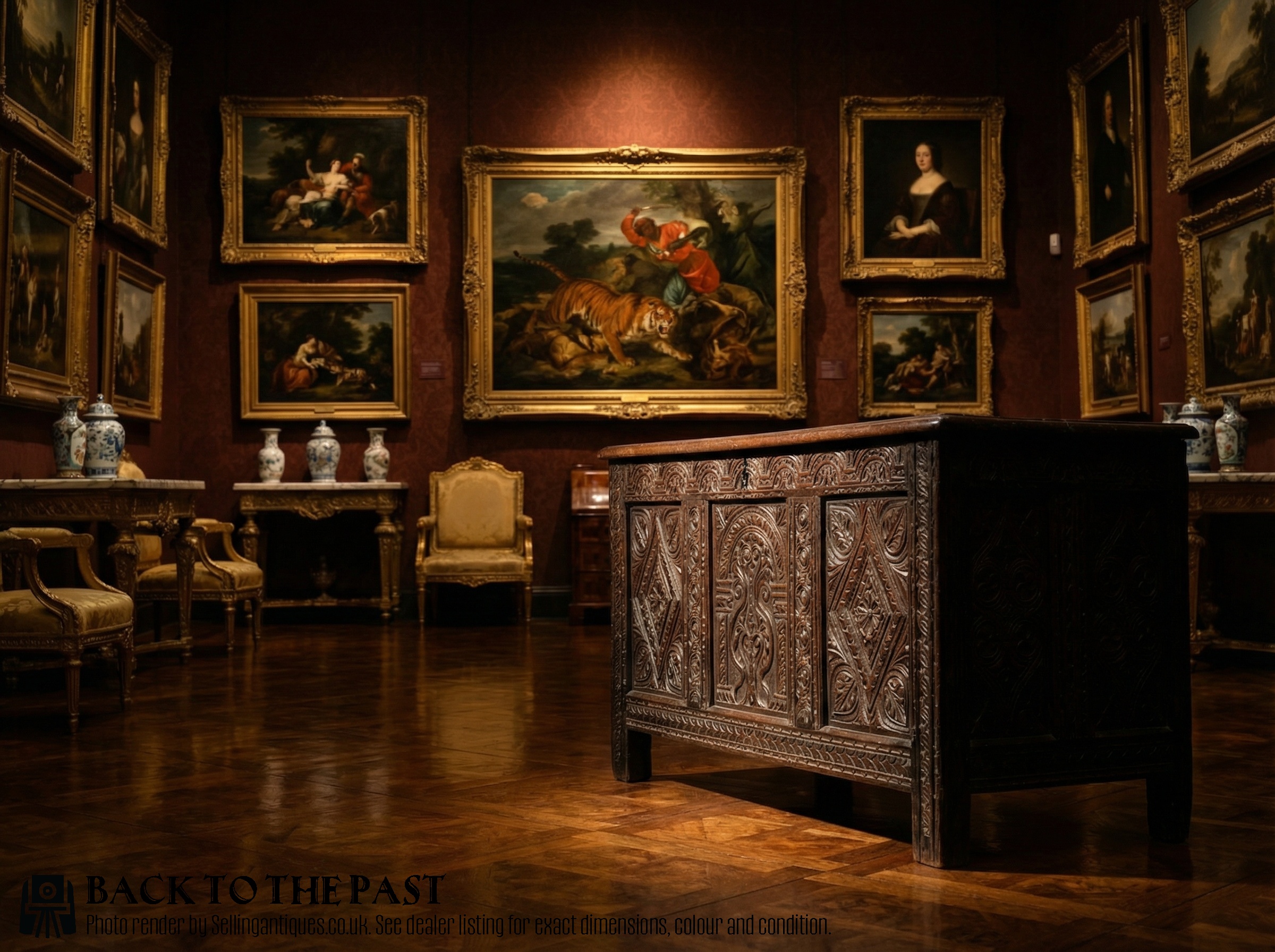
English Oak Storage Trunk
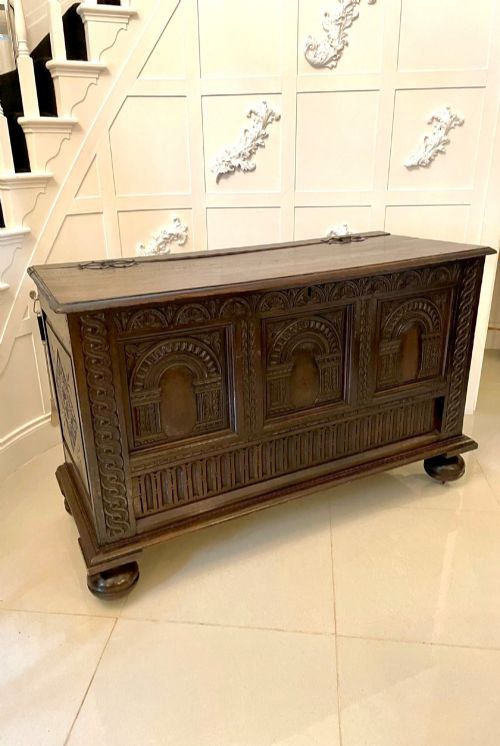
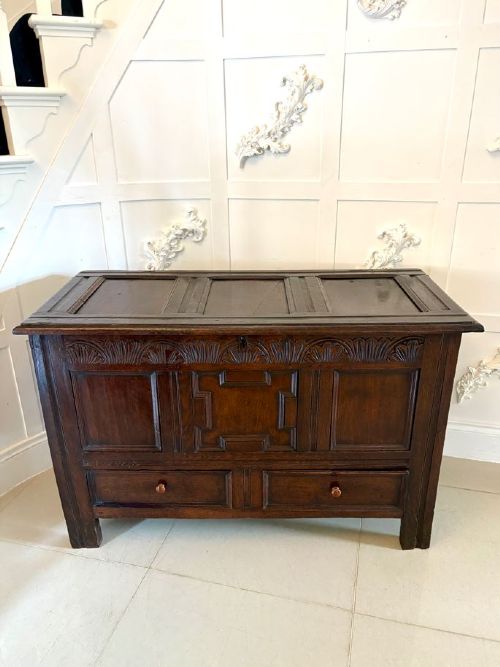
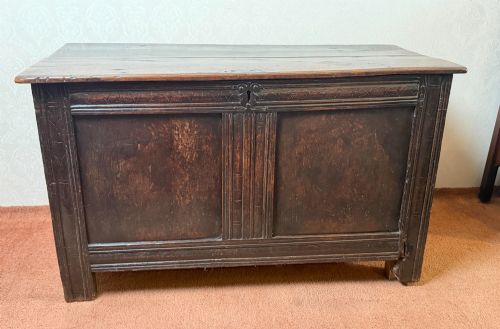
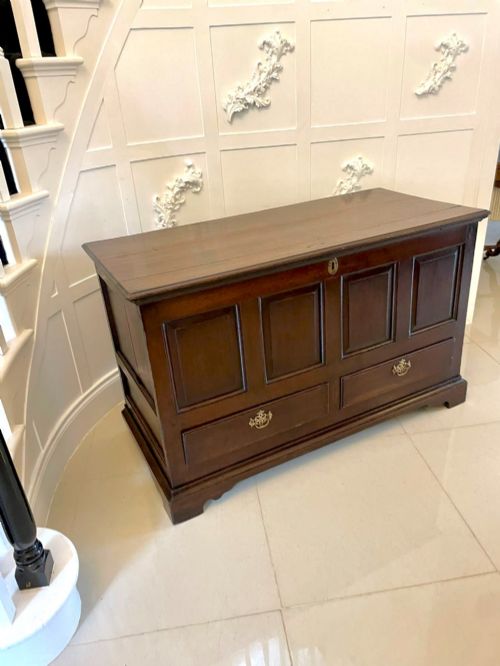
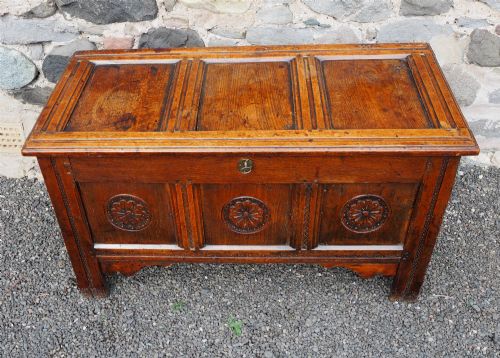
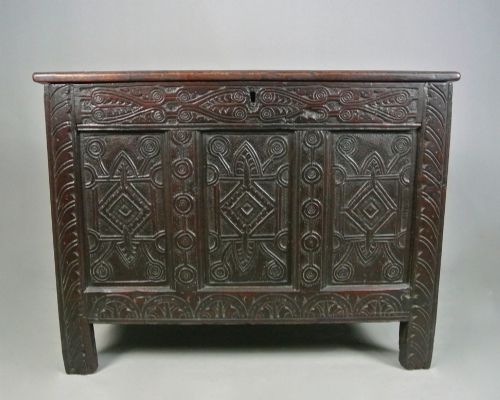
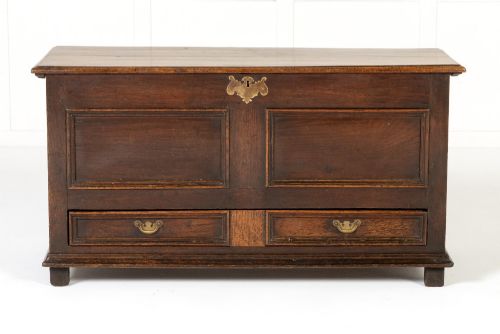
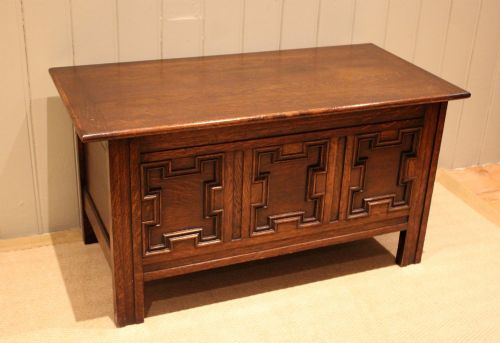
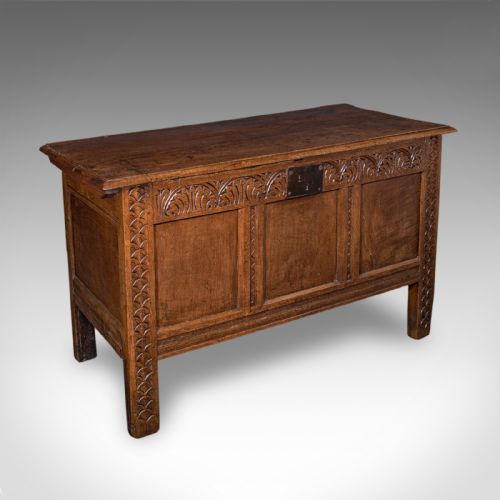
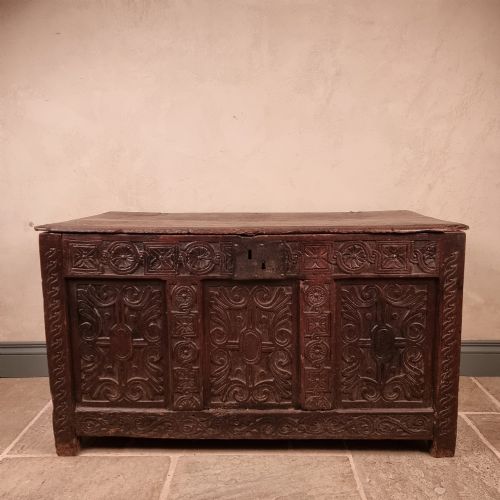
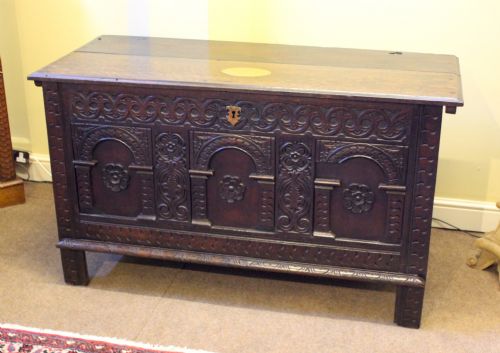
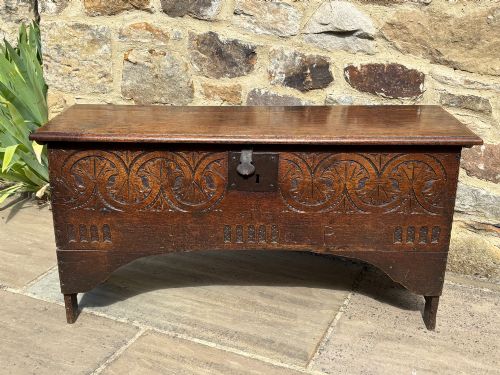
An english oak storage trunk encompasses heavy timber coffers, blanket boxes, mule chests and iron-bound shipping chests originating from the sixteenth century through to the Victorian era. The selection met here leans heavily towards seventeenth-century panelled and carved coffers alongside eighteenth-century mule chests and Georgian storage pieces.
These items served domestic and travel needs, storing textiles, silver and valuables while doubling as seating or tables in period interiors. Carpenters built them to last, utilising local timber and traditional jointing methods that survive centuries of use.
Buyers encounter regional variations such as Dorset coffers, alongside pieces displaying Jacobean, Tudor, William III and Georgian stylistic influences. The forms range from plain boarded constructions to intricately carved panel designs and metal-strapped trunks.
How They Were Made
Joiners constructed these pieces primarily from solid oak, utilising frame-and-panel techniques that allowed the timber to expand and contract naturally without splitting. Early examples utilised boarded construction with pegged joints, while later pieces incorporated drawer structures and hinged lids.
Decoration relied on hand-carved motifs such as arcading, linenfold patterns and geometric panels, executed with chisels and gouges. Hardware played a crucial structural and protective role, with blacksmiths forging iron, steel and brass hinges, brackets and binding straps.
English Oak Storage Trunk Retail Price Guide 2026
Typical asking prices for english oak storage trunk among the pieces listed under this phrase on Sellingantiques today, from the lower quarter to the upper quarter. They describe what is for sale here now, not the wider market.
Many sixteenth-century boards still bear the rough marks of the pit saw, reminding you of the carpenter's sweat centuries ago.
What Varies in Quality
The degree of original survival dictates the standing of a piece, separating examples retaining their authentic boarded bottoms, hinges and locks from those heavily altered or rebuilt over time. Crispness and depth in the hand-carved panels demonstrate the skill of the original carpenter, distinguishing masterwork from provincial utilitarian items.
Proportion and scale influence desirability, with smaller coffer boxes and well-balanced mule chests commanding greater attention than clumsy or disproportionate forms. The patina of the timber, developed through centuries of wax and handling, marks the difference between a dry, stripped surface and a rich, untouched skin.
The English Oak Storage Trunk Glossary
- Coffer
- A heavy wooden chest traditionally used for storing valuables, linen or documents. These form the bulk of early domestic storage furniture.
- Mule chest
- A storage chest featuring one or more drawers built into the base beneath the main compartment. They bridge the evolution between simple coffers and modern chest of drawers.
- Arcading
- A decorative carved row of arches supported by columns, commonly found on seventeenth-century panels. This architectural motif dates many pieces to the Jacobean and Tudor periods.
- Boarded construction
- A primitive method of joining solid planks edge-to-edge with wooden pins or nails rather than frame-and-panel joinery. This technique appears on the earliest sixteenth-century examples.
- Linenfold
- A style of carved wooden panelling that resembles folded fabric, popular during the Tudor and Elizabethan eras. It adds subtle texture to the front elevations of early chests.
English Oak Storage Trunk: Frequently Asked Questions
How are these trunks dated?
Carpenters and dealers date these pieces by examining construction techniques, joinery methods, tool marks and stylistic motifs specific to reigns and centuries. Changes from pegged frame-and-panel systems to dovetail joints provide clear chronological markers.
Hardware such as forged iron strap hinges and till lock mechanisms also offer reliable clues to the period of manufacture. Comparing carved details against documented examples helps narrow down the decade.
Were mule chests used for mules?
Mule chests have no connection to animals, deriving their name instead from being a hybrid cross between a traditional coffer and a chest of drawers. The addition of bottom drawers created a more versatile piece of furniture for household storage.
They allowed owners to keep smaller garments in the drawers while storing bulky blankets and linens in the top well. This innovation became popular during the Georgian period.
Can I use an old coffer as a coffee table?
Many buyers repurpose these sturdy oak pieces as coffee tables in living rooms, utilising the flat top surface for display and daily use. Their low profile and generous proportions make them practical centrepieces for modern seating arrangements.
When using them this way, ensure the antique hinges and lids remain protected from heavy downward pressure or spills. Placing a discreet glass top or using coasters preserves the historic timber surface.
How do I care for antique oak timber?
Maintaining historic oak requires simple dusting with a dry cloth and occasional application of traditional beeswax to nourish the dry wood. Avoid placing these chests near direct heat sources, radiators or strong sunlight, which can cause the timber to warp and split.
Good ventilation around the piece prevents moisture buildup, particularly in older rooms. Respecting the natural patina keeps the surface stable and rich without stripping away centuries of history.