

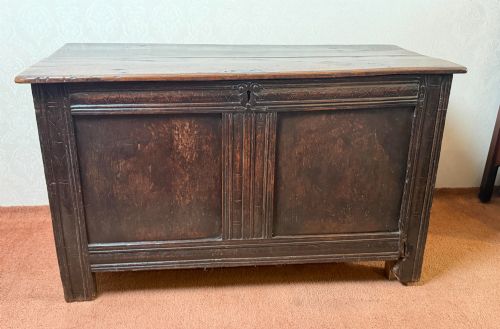
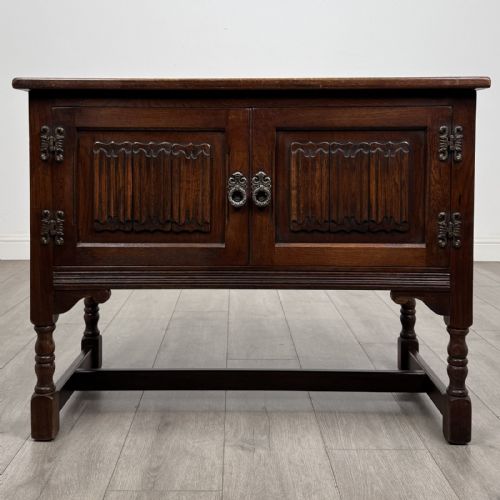
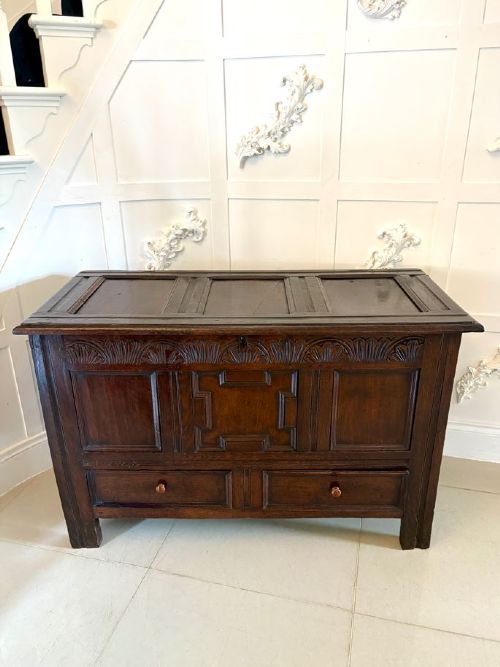
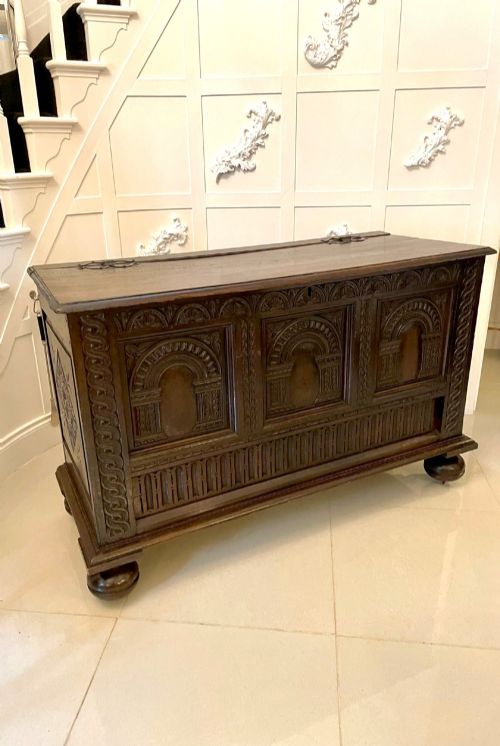
English Oak Storage Box
An English oak storage box brings centuries of utilitarian craft into a room, offering robust construction and rich timber patination.
English Oak Storage Box
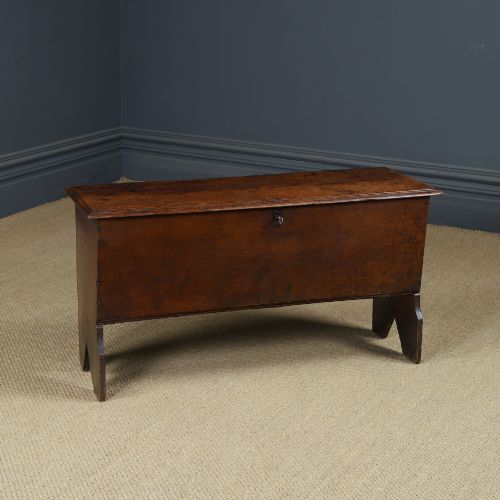
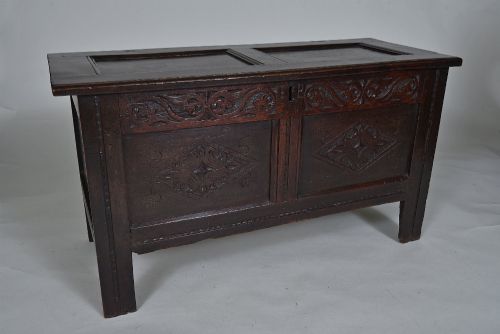
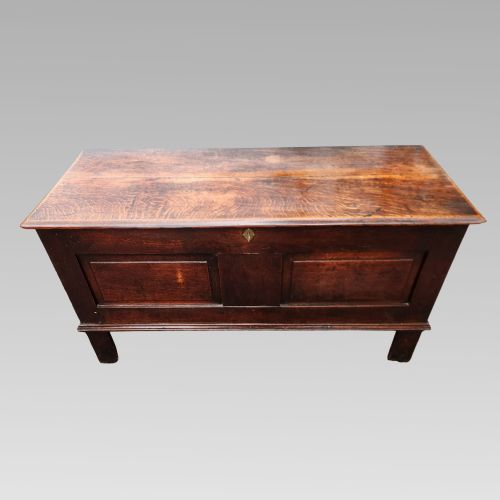
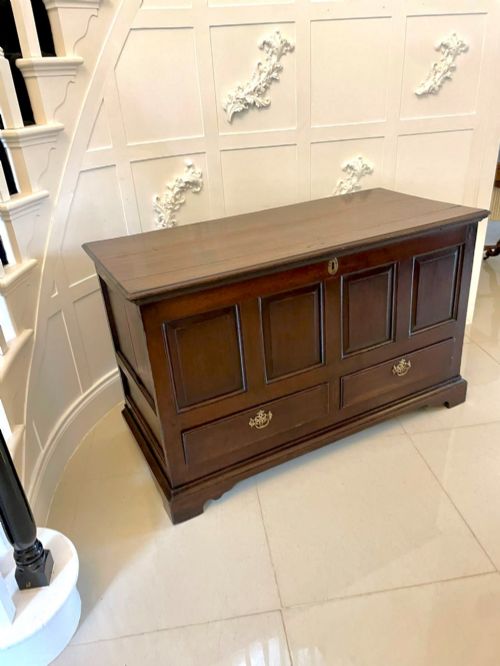
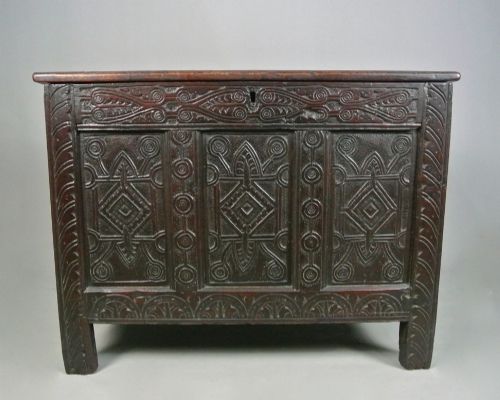
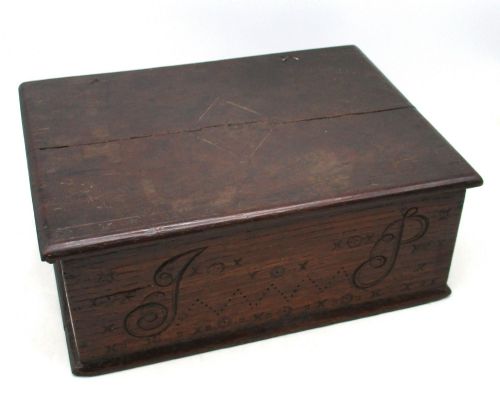
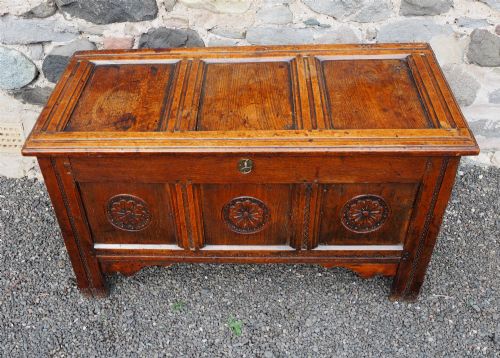
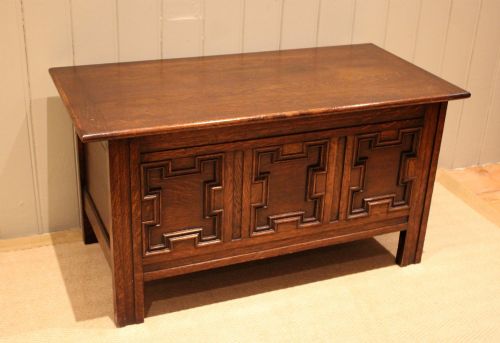
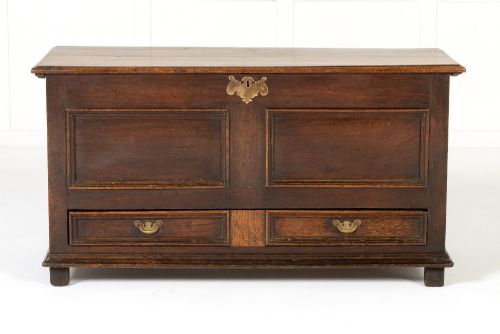
An English oak storage box encompasses everything from small tabletop document cases and Bible boxes to large blanket chests, coffers, and mule chests designed for household containment. These pieces date across several periods, spanning from the 16th century through the 17th, 18th, Georgian, Victorian, and Edwardian eras.
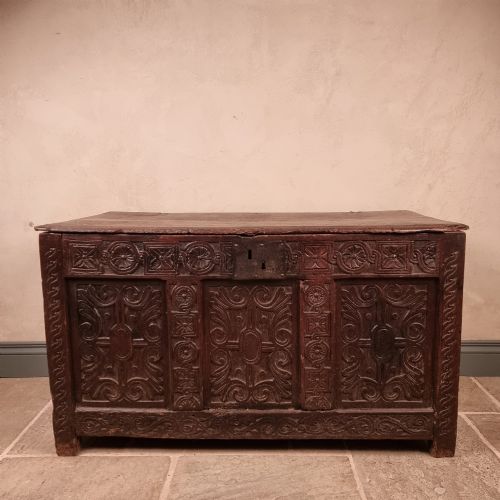
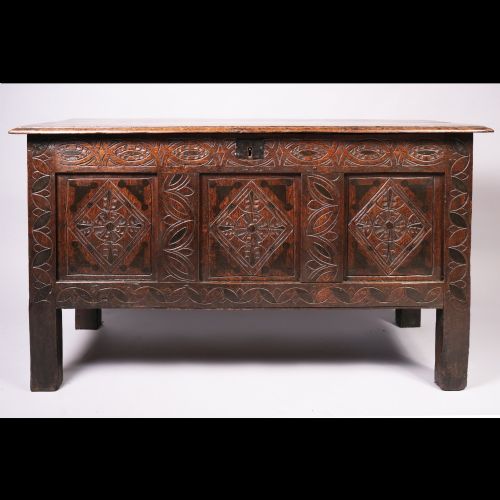
Buyers browsing this selection frequently encounter sturdy 17th century coffers and 18th century mule chests featuring lift tops and internal till compartments. Forms range from boarded construction to panelled chests adorned with carved details, arcading, and linenfold motifs.
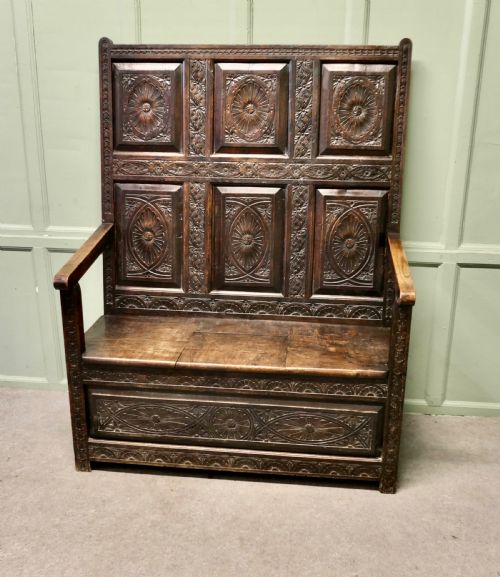
Originating primarily from domestic English contexts, these containers served practical storage needs for textiles, documents, and valuables before evolving into decorative furniture such as box settles and window seats.
Materials and construction
Makers utilised solid oak boards joined using traditional methods like mortise and tenon joinery, pegged framing, and boarded construction. Iron and brass hardware, including strap hinges, locks, and binding plates, reinforced the heavy timber structures.
Surface ornamentation involved hand carving, panel moulding, and occasional wood inlay to embellish the fronts and lids. Timber surfaces gained their distinct appearance through decades of handling, waxing, and natural ageing of the oak grain.
English Oak Storage Box Retail Price Guide 2026
Typical asking prices for english oak storage box among the pieces listed under this phrase on Sellingantiques today, from the lower quarter to the upper quarter. They describe what is for sale here now, not the wider market.
Some medical and smoking cabinets disguised their contents as ordinary boxes to keep doctor's remedies safely out of sight.
Evaluating craftsmanship and survival
Quality rests in the integrity of the timber, the crispness of the hand carving, and the survival of original structural elements like hinges, feet, and lids. Pieces displaying untouched surfaces and period joinery hold greater distinction than heavily restored examples.
Proportions and decorative ambition separate utilitarian containers from high status items, with arcaded panels, Dorset framing, and well-executed geometric or figurative carving indicating superior workshop origin.
The English Oak Storage Box Glossary
- Coffer
- A heavy wooden chest with a hinged lid, traditionally used for storing valuables, linens, and documents in domestic or ecclesiastical settings.
- Mule chest
- A storage chest featuring one or more drawers beneath the main compartment, combining the function of a coffer with drawer storage.
- Bible box
- A small tabletop box with a sloping or flat lid, originally built to house large family Bibles and important manuscripts.
- Boarded construction
- A method of building simple chests by nailing or pegging solid vertical planks of timber together at the corners.
- Arcaded
- Decorated with a series of arches supported by columns, commonly seen in relief carving on 17th century panels.
English Oak Storage Box: Frequently Asked Questions
What were these boxes used for originally?
These containers held precious textiles, legal documents, silverware, and household provisions securely in rooms across the home. Many served multiple purposes, functioning as seating benches or tables when closed.
Larger chests travelled on ships or carriages, while smaller boxes rested on tables or desks to keep private papers locked away.
How do I care for antique oak furniture?
Keep the timber away from direct heat sources and rapid temperature shifts that cause the wood to dry out and split. Apply a microcrystalline wax periodically to nourish the surface and maintain the natural lustre.
Avoid chemical cleaning sprays and simply dust the carvings gently with a soft dry cloth.
How can I tell the period of an oak chest?
Examine the construction methods, tool marks on the interior boards, and the style of any surface carving. Sixteenth and seventeenth-century pieces typically feature pegged frames and boarded panels, while later Georgian and Victorian items show different hinge types and drawer configurations.
Hardware, lock plates, and timber shrinkage patterns also offer clues regarding the date of manufacture.
Can I use an antique chest as a window seat?
Many solid oak coffers and blanket chests feature flat tops sturdy enough to function as casual seating or window benches. Adding a loose cushion provides comfort without altering the historic structure of the lid.
Ensure the hinges and internal structure are stable before using any chest for regular seating.