




English Oak Barrel
An English oak barrel is a staved vessel made to hold wine, biscuits, or walking sticks, prized for its honest craft and rich timber.
English Oak Barrel
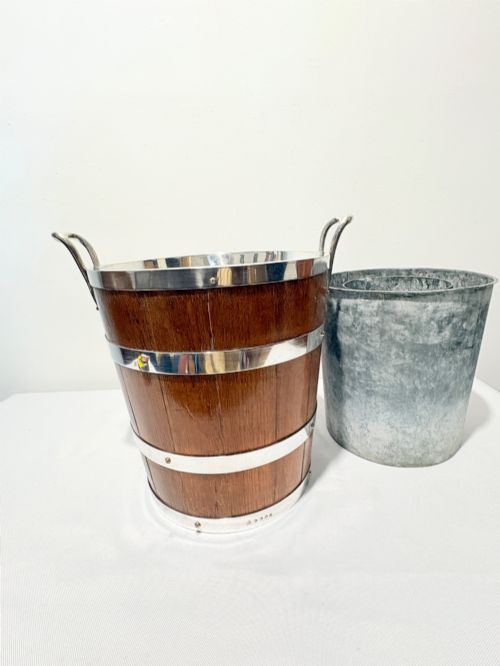
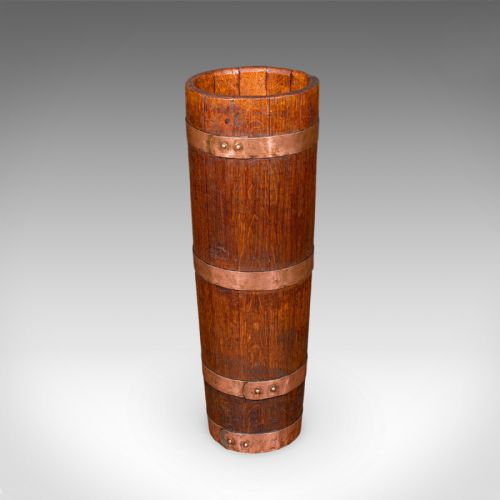
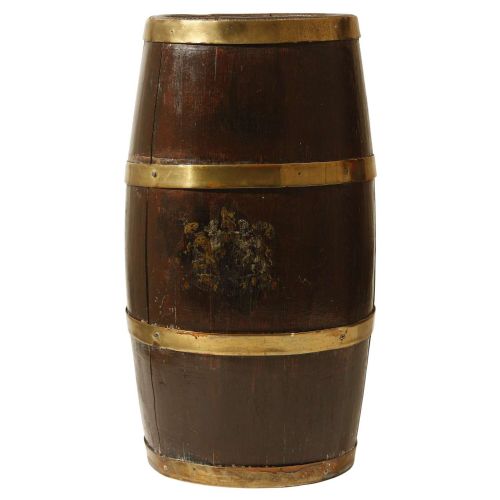
An english oak barrel on this page takes several domestic forms, appearing most frequently as umbrella stands, stick stands, and table biscuit boxes. These vessels range from sturdy coopered hall stands with brass or metal braces to small drum-form boxes mounted with silver plate.
The domestic selection spans the Victorian and Edwardian eras, reflecting the late nineteenth and early twentieth centuries. Makers adapted the traditional stave-and-hoop construction of larger casks into functional items for the country house hall or the dining table.
Forms include oval plant stands, jardiniere planters, and wine coolers alongside traditional umbrella loops. Each piece uses solid timber staves bound by metal bands to create a distinct barrel shape suited for interior display.
How they were made
The primary material is oak, shaped into individual staves that form the curved body of the barrel. Cooperage techniques require precise bevelling of each stave so the vessel holds together tightly before metal or brass braces are applied.
Metalwork plays a structural and decorative role, featuring brass bands, iron braces, and copper fittings. Table biscuit barrels and wine coolers incorporate silver plate mounts, swing handles, and hinged lids for domestic utility.
English Oak Barrel Retail Price Guide 2026
Typical asking prices for english oak barrel among the pieces listed under this phrase on Sellingantiques today, from the lower quarter to the upper quarter. They describe what is for sale here now, not the wider market.
Some biscuit barrels disguise themselves as tiny wooden casks complete with miniature brass hoops and working silver-plated taps.
What varies in quality
Quality rests in the precision of the cooperage and the tightness of the stave joints. Better examples display carefully selected oak grain that follows the curve of the body without splitting or warping over time.
The finish of the metal mounts distinguishes finer pieces, particularly where silver plate and cast brass bands are fitted flush to the wood. Maker attribution also elevates certain biscuit boxes above anonymous utility wares.
John Grinsell And Sons
The English Oak Barrel Glossary
- Coopered
- Constructed from curved wooden staves bound together with hoops. This traditional method forms the watertight or structural body of the barrel.
- Stave
- A narrow strip of oak with bevelled edges that forms the sides of a barrel. Several staves are fitted side by side to create the curved cylinder.
- Jardiniere
- An ornamental pot or stand for holding plants or flowers. In barrel forms, this usually takes the shape of a low, brass-bound staved vessel.
- Silver plate
- A thin layer of silver applied to a base metal such as copper or Britannia metal. It provides the bright finish seen on biscuit box mounts and wine cooler fittings.
- Umbrella loop
- A metal divider or ring fitted to the top of a stick stand to keep canes and umbrellas separate. It is commonly cast in brass or iron.
English Oak Barrel: Frequently Asked Questions
What were oak barrels used for?
These vessels served various domestic purposes depending on their scale and fittings. Large coopered stands held walking sticks and umbrellas in entrance halls.
Smaller drum-form barrels functioned as table biscuit boxes or wine coolers during formal dining.
How do I date an English oak barrel?
Dating relies on construction methods, hardware styles, and silver plate marks. Victorian and Edwardian examples often feature machine-rolled brass bands and specific handle designs.
Secondary materials like copper linings and interior mounts also help narrow the period.
Are umbrella stands coopered?
Most umbrella and stick stands on this page use traditional cooperage. Makers shaped individual oak staves to create the characteristic curved barrel body.
Metal hoops or brass braces hold the staves firmly in place.
How do I care for antique oak?
Keep staved oak items away from direct heat sources and sudden temperature changes. This prevents the wood from drying out and the metal hoops from loosening.
Apply a traditional wax polish occasionally to maintain the lustre of the timber.