

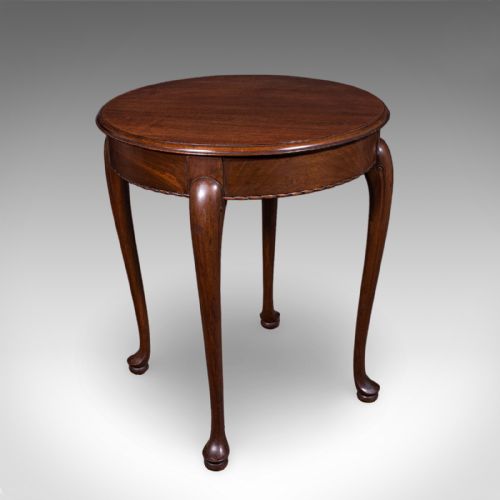


English Mahogany Accent Table
An English mahogany accent table brings dependable timber and compact proportion into a room, serving as a flexible surface for lamps, drinks or books.
English Mahogany Accent Table
The English mahogany accent table encompasses a varied group of small occasional furniture designed for specific domestic tasks. Pieces span the eighteenth century, the Georgian, Regency and Victorian periods, extending into Edwardian and later twentieth-century interpretations.
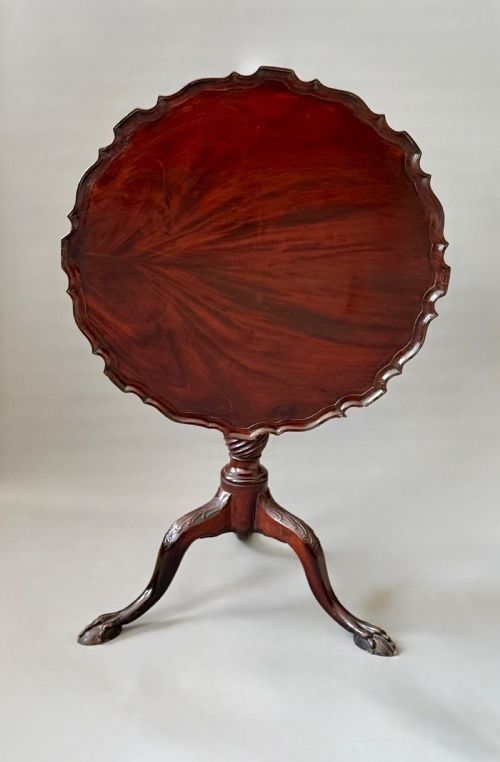
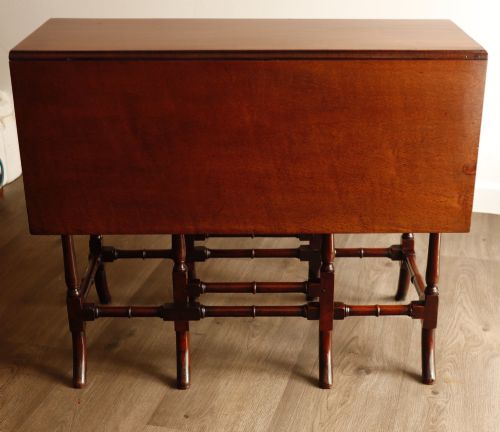
Forms on this page include tripod wine tables, spider leg tea tables, Pembroke tables with drop leaves, and multi-tiered dumbwaiters. These compact formats allow the timber grain and period turnings to function as decorative elements within a room.
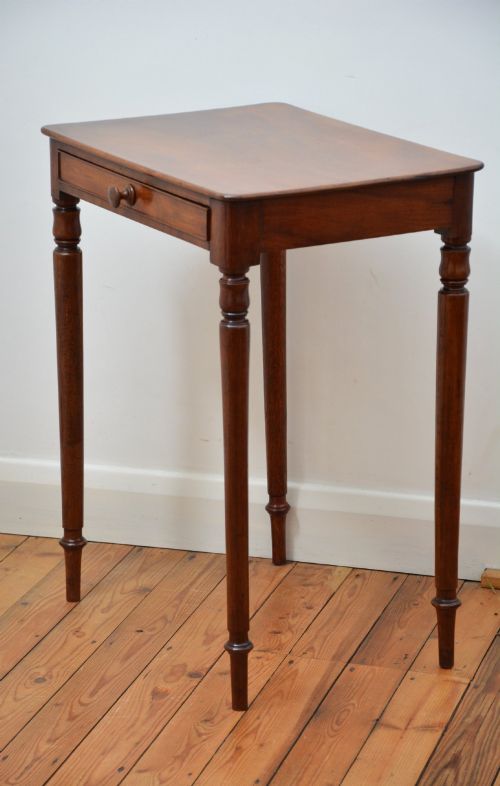
Makers and workshops of the past constructed these smaller tables for tea, bedside use or lamp placement, utilising the rich red-brown tones of solid mahogany and veneer.
Materials and construction
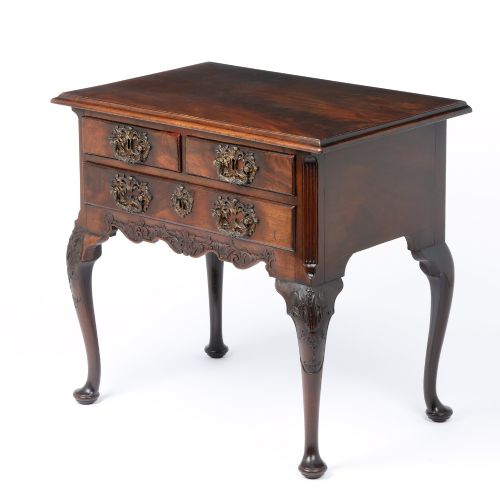
Makers relied primarily on solid mahogany and mahogany veneers, occasionally incorporating secondary timbers alongside brass hardware, leather inserts, and subtle touches of satinwood or gold leaf. Structural integrity depended on traditional joinery, such as mortise and tenon joints for frames and dovetailed drawers on lowboys.
Turning and carving define the decorative language of these pieces, seen in bobbin-turned legs, spiral fluted stems, and tilt-top mechanisms. Surfaces were frequently polished to a warm finish that accentuates the natural grain of the wood without masking its character.
Assessing craftsmanship
Quality rests in the crispness of carved details, such as pie crust edges and tripod pillar mounts, which separate standard production from accomplished cabinet work. The weight and selection of the mahogany timber, alongside the stability of tilt-top ratchets and gate-leg actions, dictate the enduring utility of the piece.
Proportion and authenticity of brass castors, handles, and secondary woods contribute significantly to the standing of an individual table. Modest vernacular pieces show simpler execution, while items attributed to known workshops display refined proportions and superior timber choice.
Waring & Gillow·Gillow Lancaster·Williamson·Ince & Mayhew
The English Mahogany Accent Table Glossary
- Pembroke table
- A small rectangular table with hinged drop leaves on either side, often fitted with a single drawer. It was designed for versatile placement and easy movement around a room.
- Tripod table
- A small occasional table supported by a central pillar resting on three spreading legs. Many examples feature a tilt-top mechanism allowing the table top to be stored vertically.
- Lowboy
- A small dressing table or side table with one or more rows of drawers beneath the working surface. Georgian examples typically feature elegant cabriole legs or straight square legs.
- Pie crust table
- A round occasional table featuring a raised, carved moulded rim shaped in undulating curves resembling pastry work. This technique required skilled hand carving from a solid timber blank.
- Dumbwaiter
- A tiered serving table featuring multiple circular revolving trays supported on a central column. It was utilised in dining rooms for holding dishes without requiring servant attendance.
English Mahogany Accent Table: Frequently Asked Questions
How do I use a tilt-top table?
Tilt-top tables feature a wooden catch or brass latch beneath the surface that releases the top to pivot vertically. This mechanism allowed historical households to store tables flat against walls when not in use.
In modern rooms, you can utilise this feature for occasional display or simply enjoy the historical mechanics and the visual texture of the underside grain.
How do I date a mahogany accent table?
Dating relies on observing construction methods, timber choice, and stylistic cues like leg turns or edge profiles. Eighteenth-century pieces often display hand-cut dovetails and dense timber weights, whereas Victorian and Edwardian examples may show machine-sawn components and different turning styles.
Comparing the decorative vocabulary, such as Chippendale-inspired pie crust edges or Regency reeding, helps narrow down the period of manufacture.
Are these tables suitable for daily use?
These tables were originally engineered for rigorous domestic service, making them well-suited for everyday tasks like holding a morning coffee or an evening lamp. Their solid timber construction handles normal household weight comfortably.
Placing coasters on antique timber surfaces protects the traditional polish from heat and moisture rings while allowing you to enjoy the piece daily.