



English Library Seating
English library seating brings together sturdy mahogany frames, deep upholstery and rich leather to create chairs built for long hours of reading.
English Library Seating
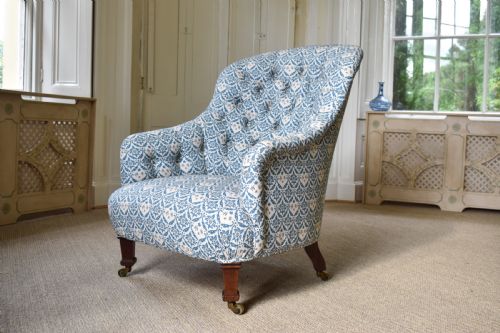
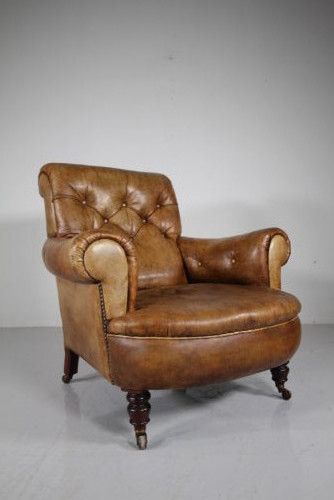
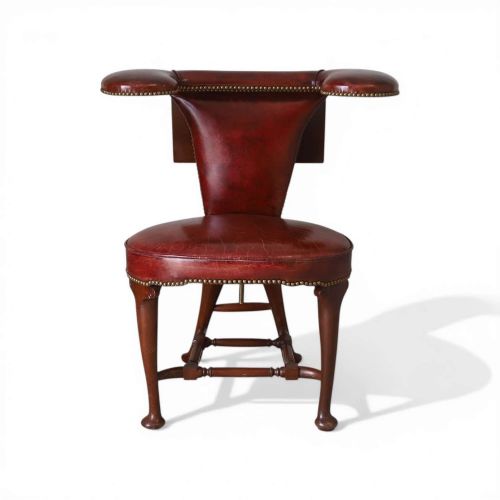
English library seating encompasses heavy armchairs, reading chairs and desk chairs designed for study and comfort across the eighteenth and nineteenth centuries. The pieces on this page lean heavily towards generous mahogany and rosewood frames upholstered in hand-dyed leather, velvet or fabric.
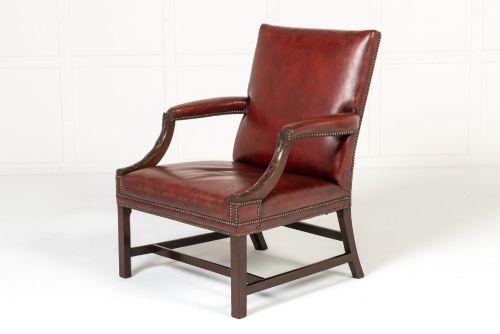
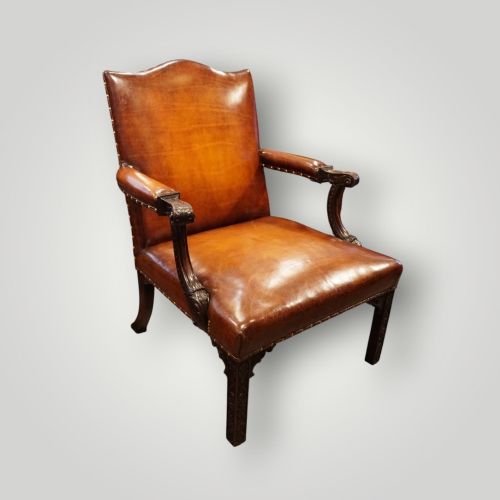
Buyers will encounter robust Gainsborough armchairs, deep-seated Victorian reading chairs and low Regency models intended for studies and country houses. Oak and walnut also appear in earlier pieces, reflecting the solid construction required for daily use in a gentleman's library.
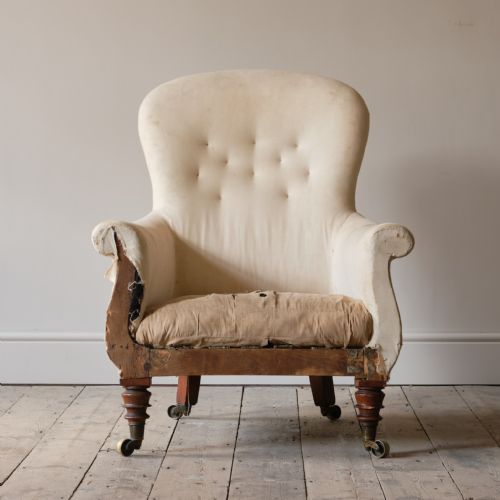
Stately proportions and upholstered seats define the selection, ranging from restrained Georgian designs to ornate Victorian button backs. These chairs combine formal architectural lines with deep padding to support the reader over hours of quiet work.
Construction and Materials
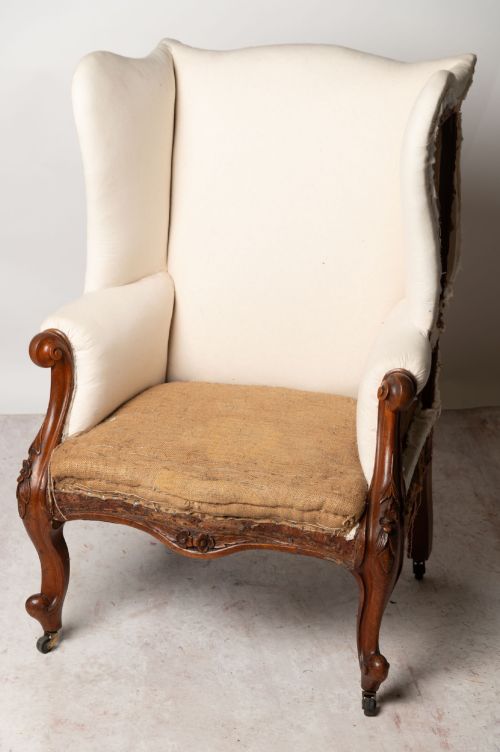
Makers built these frames using dense hardwoods such as mahogany, rosewood, oak and walnut, often shaping the timber with blind carving or sweeping curves. Mahogany and rosewood provide the structural backbone for many Regency and Georgian pieces, while oak anchors the earlier country house examples.
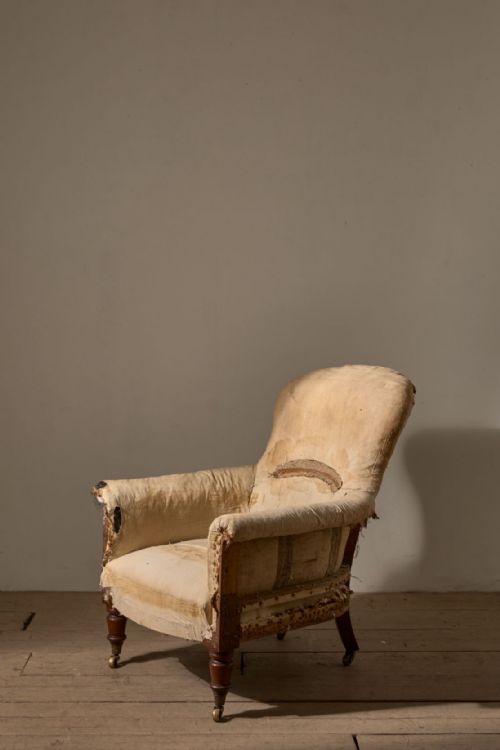
Upholstery relies on traditional stuffing secured beneath top layers of leather, velvet, calico or heavy fabric. Hand-dyed English hide and smooth leather are stretched over deep springs and webbing, finished with close-nailed brass tacks along the borders.
English Library Seating Retail Price Guide 2026
Typical asking prices for english library seating among the pieces listed under this phrase on Sellingantiques today, from the lower quarter to the upper quarter. They describe what is for sale here now, not the wider market.
Listings span the eighteenth, nineteenth and twentieth centuries, featuring woods like mahogany and rosewood paired with leather, velvet and oak.
Judging Quality
Quality rests upon the crispness of the timber carving and the architectural balance of the frame. Superior examples display thoughtful proportions, seamless joinery and timber selected for rich grain rather than heavy staining.
The integrity of the internal stuffing and the quality of the leather upholstery dictate the tactile experience. Hand-dyed hides that show subtle patination elevate a piece far above standard commercial replacements.
Howard and Sons·J.Mills
The English Library Seating Glossary
- Gainsborough chair
- An upholstered armchair with an open-fronted frame, short cabriole legs and padded arms, popular in the eighteenth century.
- Bergère
- An enclosed armchair with sides and back upholstered in cane or fabric, originating in France but widely adopted in English Regency seating.
- Spoon back
- A padded chair back shaped in a concave oval to fit the human spine, commonly seen on Victorian upholstery.
- Blind carving
- Low-relief ornamentation carved directly into the solid surface of the wood without piercing the silhouette.
- Hide
- Natural animal skin dressed for upholstery, valued for its durability and ability to develop a deep patina through use.
English Library Seating: Frequently Asked Questions
How do I identify a true library chair?
A true library chair prioritises deep upholstery, sturdy hardwood framing and ergonomic support designed for prolonged reading or writing at a desk.
Look for generous seat depths, padded armrests and solid timber frames in mahogany, oak or walnut that distinguish these pieces from standard parlour seating.
Where were these chairs used?
These pieces originated in the studies, libraries and drawing rooms of large country houses and town residences during the Georgian and Victorian eras.
They stood near bookcases and writing tables where readers required robust support and comfortable cushioning for long periods of study.
How do I care for leather upholstery?
Leather upholstery requires regular dusting with a soft cloth and occasional treatment with appropriate conservation balms to prevent drying and cracking.
Keep antique hide away from direct sunlight and heat sources to preserve the hand-dyed finish and natural suppleness of the material.